News Flash
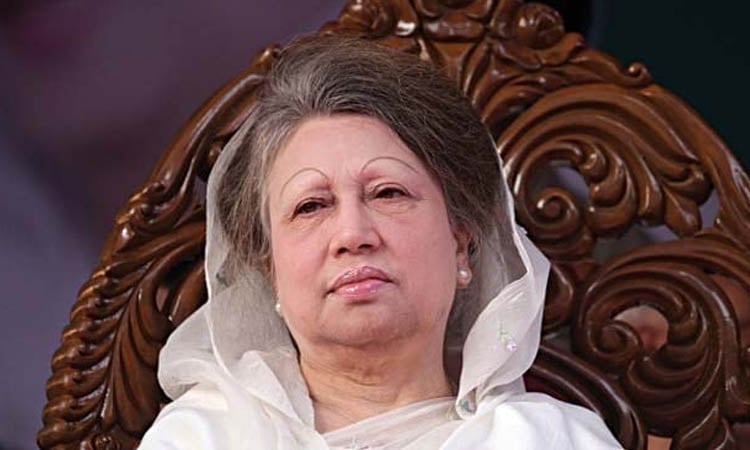
DHAKA, Dec 02, 2025 (BSS) - Student leaders who spearheaded the 2024 July Uprising have expressed deep concern over the critical health condition of BNP Chairperson and former Prime Minister Begum Khaleda Zia, describing her as a symbol of democratic perseverance and national unity.
In a series of social media posts and public statements, former coordinators of the Anti-Discrimination Student Movement (ADSM) -- the platform that played a decisive role in the fall of the fascist Sheikh Hasina government -- prayed for her speedy recovery and reflected on her political contributions.
Md Mahfuj Alam, a key coordinator of the July Uprising and Adviser for Information and Broadcasting, wrote on Facebook that Begum Khaleda Zia is a "symbol of democracy and national unity," whose wisdom and presence remain crucial in the country's ongoing democratic transition, as he prayed for her quick recovery.
Md Nahid Islam, National Citizen Party (NCP) convener and former chief coordinator of ADSM, at a doa mahfil on Monday paid tribute to Khaleda Zia's decades-long political struggle.
"Khaleda Zia's contributions to Bangladesh's democracy will always be remembered. We hope she remains with us for many more years," he said.
NCP chief coordinator Nasiruddin Patwary said her condition remained critical but stable, adding that public prayers were the strongest support she needs right now.
Sarjis Alam, now serving as NCP chief organiser for northern region, prayed for her swift recovery and long life while former ADSM coordinator Mahin Sarker wrote that the former prime minister's condition was extremely critical, adding a brief dua: "May Allah have mercy on her."
On 29 November, Dr Tasnim Jara urged citizens to rise above political divisions and pray for Khaleda Zia, praising her courage, patience and uncompromising endurance through years of adversity.
Several student leaders used stronger political language to underline Khaleda Zia's relevance as the "new Bangladesh" shaped after the July uprising. Abdul Kader, another coordinator of the movement, said Khaleda Zia's "uncompromising fight for democracy is unparalleled," noting that the country needs her "wisdom and presence to rebuild a democratic Bangladesh."
Leaders of the Dhaka University Central Students' Union (DUCSU) also joined in expressing concern. DUCSU Vice President Abu Shadik Kayem wrote that political coexistence and national stability "require her presence," urging prayers for her recovery.
DUCSU General Secretary SM Forhad went further, recalling her rise from a "housewife to prime minister" and her role in confronting authoritarianism.
He highlighted her relationship with Islamic movements, her resistance to political repression and her steadfast leadership under pressure. He said the student-led July uprising which led to the fall of the Hasina administration fulfilled the nation's long struggle against fascism.
Student leaders broadly agree that Khaleda Zia's political legacy -- marked by resistance to authoritarianism and alliance -- building across political and ideological divides -- remains relevant as Bangladesh undergoes a democratic transition.
As the former prime minister remains under intensive medical care, calls for nationwide prayers continue to grow among young leaders who emerged as key voices in the country's reshaped political landscape.