Sunday
09 August, 2026
News Flash
News Flash
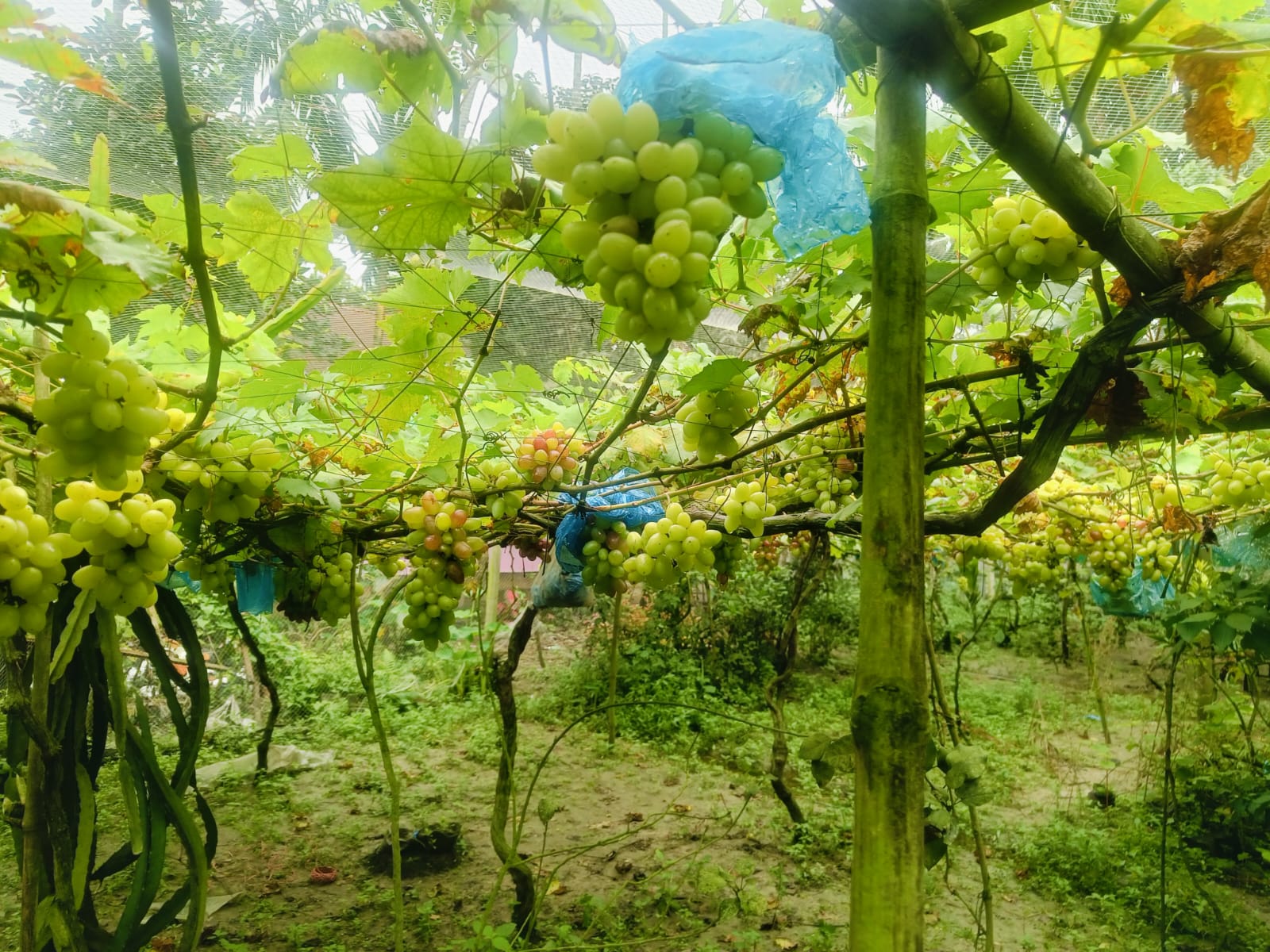
GAIBANDHA, July 8, 2026 (BSS) - Grapes are generally associated with foreign vineyards or a few specific regions of the country, but, challenging that perception, Emdadul Haque Raja, a schoolteacher and agriculture enthusiast of Sundarganj upazila, has achieved remarkable success in cultivating grapes using modern and environment friendly farming techniques.
What began as a hobby has now turned into an inspiring success story. His vineyard, adorned with clusters of grapes of different varieties and colors hanging from trellises, has become a local attraction and is inspiring the aspiring young entrepreneurs in the area.
Raja's home is located in a remote village of Purba Bachhatide, about four kilometers from Sundarganj upazila headquarters. Alongside his teaching profession, his passion for agriculture led him to connect with Ruhul Amin, a banker from Kurigram, whose encouragement sparked his interest in grape cultivation.
A visit to the vineyard reveals that Raja has planted 50 grapevines of various varieties on just seven decimals of land beside a road. He has named the orchard "Krishibid Angur Bagan".
Although the saplings were planted gradually over the past four years, the Baikonur, Green Long, Vallez and Prestige varieties started bearing fruit last year. The vineyard is protected by netting installed over and around the plants.
Visitors entering the orchard are greeted by bunches of grapes hanging beneath the trellises. The light green, pink and deep purple fruits weigh between 400 grams and one kilogram (KG) per bunch. Each vine is expected to produce around 10 to 15 KGs of grapes. Raja says his grapes are sweeter and of better quality than those commonly available in the market, contributing to strong local demand.
Because the vineyard is located beside a road, people from different areas regularly visit to see the grape cultivation firsthand and sample the fruit.
Many visitors say they never believed that grapes could be successfully cultivated in their locality until they saw the orchard with their own eyes. They also remarked that the grapes tasted sweeter and more flavorful than those available in markets.
Visitor A M Masud said, "I had seen grape cultivation in videos but witnessing such a productive vineyard in person is truly impressive. It has encouraged us to consider planting grape saplings ourselves."
Local farmers believe that if grape cultivation expands in the region, it could eventually meet local demand and supply grapes to other parts of the country.
Talking to BSS, Raja said his academic background in agriculture had always motivated him to pursue farming, particularly grape cultivation. After three to four years of dedicated effort, he has achieved significant success.
Raja said he has planted 26 grape varieties, with the Russian varieties Baikonur, Green Long, Vallez and Prestige already producing fruit. This year's harvest is better than last year's and each vine is expected to remain productive for 20 to 30 years.
He attributed the superior sweetness and quality of his grapes to the extensive use of organic fertilizers. He expects the younger plants of the remaining varieties to begin bearing fruit next year.
He estimates this year's production at around 100 to 120 kilograms of grapes, which he is selling at Taka 300 per kilogram.
Raja said sandy loam soil is highly suitable for grape cultivation and that he is producing additional saplings with the aim of expanding commercial production. He also expressed his willingness to assist anyone interested in becoming a grape-growing entrepreneur, saying the venture could both meet household needs and generate additional income.
Upazila Agriculture Officer Md. Kaiyum Chowdhury told BSS that fruit has already appeared on four of the 22 grape varieties planted in Raja's orchard. He described the grapes as exceptionally sweet and said the area's soil is well suited for grape cultivation. He added that the Department of Agricultural Extension would provide support to anyone interested in starting commercial grape farming.