Tuesday
28 July, 2026
News Flash
News Flash
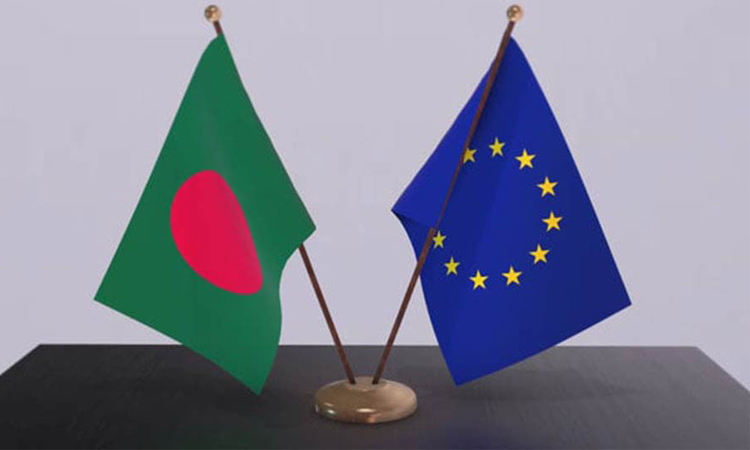
DHAKA, June 10, 2026 (BSS) - The European Union (EU) has reaffirmed its
commitment to deepening economic engagement with Bangladesh, signaling
support for a stronger trade and investment partnership as the country
prepares for graduation from Least Developed Country (LDC) status.
Speaking at the inauguration of the 20th edition of the Bangladesh Denim Expo
at the International Convention City Bashundhara, EU Ambassador to Bangladesh
Michael Miller said the bloc views Bangladesh as entering a new phase of its
economic transformation, where the focus must shift toward higher-value
industries, skilled employment, sustainable growth, and quality investments,
said a press release.
Addressing industry leaders, policymakers and international buyers, Miller
emphasized that Bangladesh's next development stage will require creating
decent jobs, upgrading workforce skills, attracting high-quality investments,
diversifying the economy, accelerating the clean energy transition, and
preparing effectively for LDC graduation.
The ambassador also expressed the EU's expectation that Bangladesh's upcoming
national budget would reflect a bold sustainability agenda and include
measures to improve the business climate and ensure a level playing field for
European investors and businesses.
In a significant diplomatic development, Miller revealed that he had conveyed
an invitation from the President of the European Commission to Prime Minister
Tarique Rahman to attend the next Global Gateway Summit in Brussels.
He further noted that the EU is currently evaluating Bangladesh's proposal
for a free trade agreement (FTA), building on the recently launched
Partnership and Cooperation Agreement, indicating the bloc's willingness to
strengthen long-term economic ties with Dhaka.
Industry leaders at the expo stressed that securing favorable trade
arrangements with major markets such as the EU will be critical as Bangladesh
approaches LDC graduation.
BGMEA President Mahmud Hasan Khan Babu warned that the country's ready-made
garment (RMG) sector, which currently benefits most from preferential market
access, could face significant challenges if post-graduation trade frameworks
are not secured in time.
He noted that Bangladesh has become the largest exporter of denim products to
both the EU and the United States, surpassing China, and emphasized that
maintaining competitiveness after graduation would require collaboration
among manufacturers, international brands, development partners and the
government.
The two-day expo, organized under the theme "Frontline to Future," brought
together global apparel brands, manufacturers, policymakers and development
partners to discuss the future of Bangladesh's denim and apparel industry
amid changing global trade dynamics.
A key panel discussion focused on Bangladesh's trade strategy in the post-LDC
era, examining prospects for trade agreements and continued market access in
major export destinations.
Another session explored the concept of a "just transition" in the apparel
sector, highlighting sustainability, labour welfare, financing and industrial
transformation.
The event will continue through June 11, featuring exhibitions, networking
opportunities and a dedicated Trend Zone showcasing emerging innovations and
future trends in the global denim industry.