Thursday
06 August, 2026
News Flash
News Flash
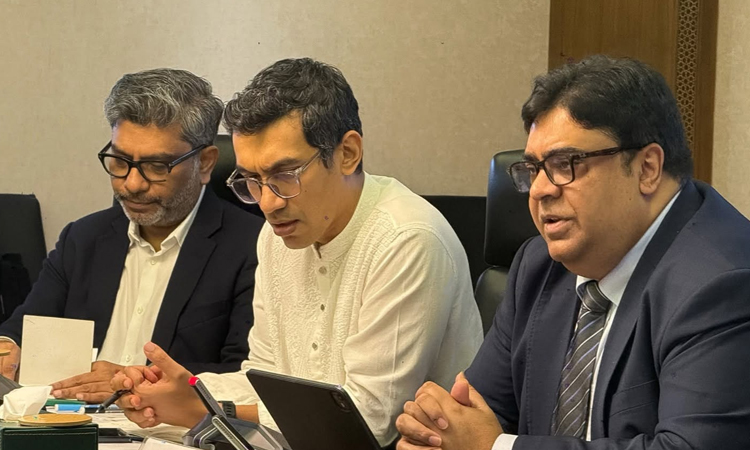
DHAKA, Aug 6, 2026 (BSS) — The Bangladesh Investment Development Authority (BIDA) today briefed investors, business leaders and development partners on key investment-related measures introduced through the national budget for FY 2026–27.
Held at Biniyog Bhaban, Agargaon, the session examined the budget through three priorities: deregulation, long-term tax stability and targeted incentives for strategic sectors, said a press release.
The briefing was chaired by BIDA Executive Chairman Ashik Chowdhury.
Rehan Asif Asad, Adviser to the Prime Minister for Posts, Telecommunications and Information Technology, joined as Chief Guest.
Tanvir Shahriar Ghani, Special Assistant to the Prime Minister for Investment and Capital Market Affairs; and Ahsan Habib, Chairman of the National Board of Revenue (NBR), joined the briefing as Special Guests.
Nahian Rahman Rochi, Executive Member of BIDA, delivered the welcome remarks.
BIDA and NBR officials jointly presented the budget outcomes, which showed that 14 of its 17 sectoral and policy recommendations, or 82%, were reflected fully or partly in the budget. Of its 19 deregulation recommendations, 12, or 63%, were taken up.
The proposals followed four rounds of inter-agency consultations involving BIDA, NBR and other investment promotion agencies, as well as a series of technical pre-budget discussions.
Among the major deregulation measures highlighted at the briefing were a 14-day service-level commitment for single-window business approvals, automatic approval where the stipulated timeline is missed, three-year validity for bond licences and wider operational coverage for bonded facilities.
The budget also expands expedited customs clearance under the Authorised Economic Operator framework and allows testing reports from private laboratories during customs clearance.
Several measures are intended to make capital movement and tax administration more predictable.
These include defined timelines for profit and NITA-account repatriation, a higher threshold for repatriation without prior Bangladesh Bank approval, mandatory electronic VAT filing, automated BIN issuance and refunds, and a one-year deadline for completing audits.
The pre-deposit required to challenge tax assessments has also been reduced substantially.
The budget also removes the minimum 30% value-addition requirement for export goods produced using duty-free imported materials.
Ten additional sectors—including motorcycles, fish processing, diversified jute products, handicrafts and recycled textile products—will be able to import raw materials through bank guarantees without obtaining bond licences.
Beyond annual measures, the budget provides longer policy horizons for several investment categories.
Personal income-tax thresholds and slabs have been set in advance through FY 2030–31, while longer-term tax and VAT provisions have been introduced for sectors including electronics, shipbuilding, semiconductors, electric vehicles, solar power and startups.
A phased 10-year tax exemption has also been provided for edible-oil production using locally grown oilseeds.
Targeted incentives were introduced across ICT and digital services, renewable energy, electric vehicles, apparel and textiles, pharmaceuticals and medical devices, agro-processing, logistics and precious metals.
Measures include reduced or zero duties on selected machinery, components and industrial inputs; support for startup financing; incentives for export-oriented production; and 100% foreign ownership of inland container depots.
“Three things about this budget are clear to me. First, it signals policy continuity and our seriousness about maintaining it, which we have conveyed to both domestic and international stakeholders. We have worked to make this an investment-friendly budget.
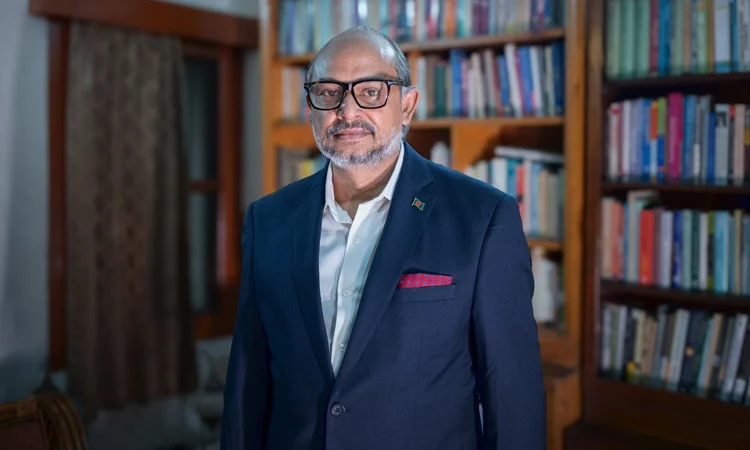
Second, the budget structurally reflects Bangladesh’s priority sectors through targeted interventions. Third, it supports our goal of emerging as a regional manufacturing hub by placing greater emphasis on the logistics and supply chain infrastructure required to attract FDI. There are challenges, and we will work through them together. But our direction of travel is clear,” said Ashik Chowdhury, Executive Chairman of BIDA.
The briefing was attended by representatives of the diplomatic missions of China, Japan, the Republic of Korea and the United States, alongside JETRO, KOTRA, FICCI, EuroCham, AmCham, CEAB, OCIAB, BGMEA and the Bangladesh Semiconductor Industry Association. Representatives of local and international companies also participated.
BIDA and NBR will continue their consultations on the remaining proposals, with particular emphasis on translating the announced measures into consistent implementation at the field level.
Regular consultation among NBR, BIDA and other investment promotion agencies is also expected to resume.