Wednesday
26 August, 2026
News Flash
News Flash
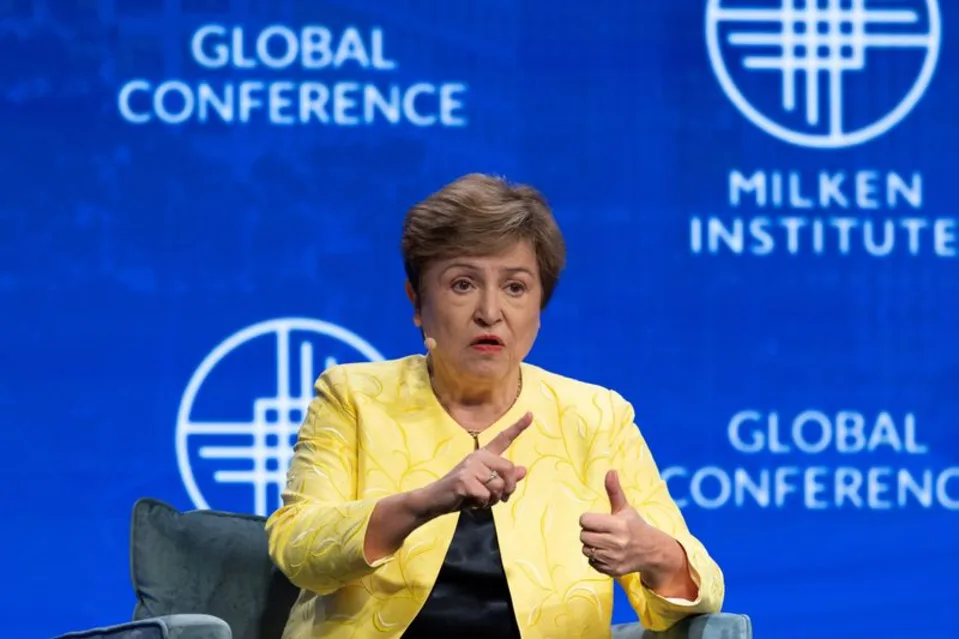
WASHINGTON, United States, Aug 25, 2026 (BSS/AFP) - The International Monetary Fund chief on Tuesday compared the global economy to a "storm-tossed vessel," caught between high inflation, debt and trade wars while driven by tailwinds from the AI revolution.
Kristalina Georgieva told journalists in Washington that the global economy had so far "weathered the energy shock caused by the closure of the Strait of Hormuz better than we feared."
Worldwide energy prices have skyrocketed since the United States and Israel launched their war on Iran, engulfing the Middle East in violence as Tehran's retaliatory action targeted US allies and blocked the vital Strait of Hormuz.
In July, the IMF cut its global growth projection for the second time this year, flagging "uncertainty and risks" related to the war in the Middle East.
Global economic growth is estimated at 3.0 percent this year, the IMF said in its update to its World Economic Outlook at the time, down from 3.1 percent in its April forecast.
Georgieva on Tuesday said the impact of the war had been "asymmetric," based on countries' exposure to Gulf oil imports and their overall macroeconomic stability.
Global inflation -- driven by high energy prices -- was also being pushed in a "tug of war" by the "positive demand shock from AI," she said, referring to an increase in economic demand due to massive investments in the new technology.
"Risks to the outlook are more balanced than they were around our Spring Meetings (in April), but still tilted to the downside, and uncertainty remains high," she said.
Georgieva warned that with winter approaching in the northern hemisphere, energy demand would only increase, possibly pushing a renewed rise in prices.
"This means the energy shock is not over. A renewed rise in oil prices could fuel inflation, forcing central banks to retain a restrictive policy stance with knock-on implications on debt service costs and on economic activity."
She was, however, optimistic about the broad impact of AI on the world economy, and said positive effects were being seen in more countries than just the United States, the leader in the technology so far.
Georgieva warned that there were "significant unknowns" when it came to AI, and that the risk of falling behind was "most profound" in developing countries.
Despite the global economy showing more resilience than feared to the shock of the Iran war, there was "no room for complacency," she said.
She called on countries to address fiscal imbalances -- especially with regards to debt -- and for central banks to be "laser-focused" on inflation.