News Flash
SYDNEY, March 26, 2025 (AFP) - An Australian coal mine may have significantly underestimated how much greenhouse gas it belches into the atmosphere, researchers said Wednesday after publishing the findings of a monitoring mission.
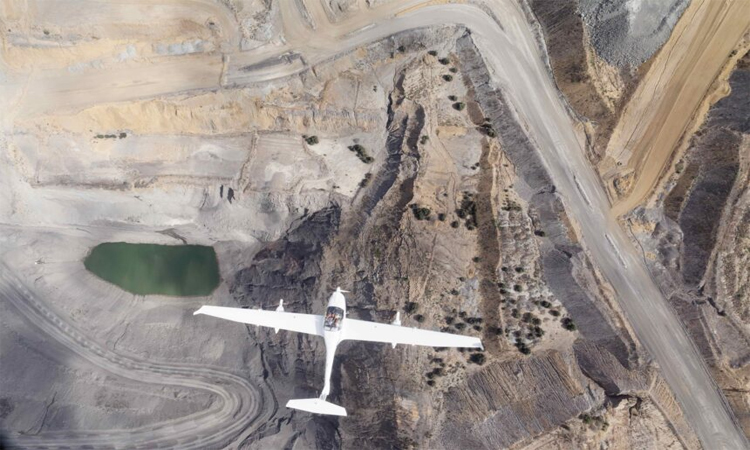
The UN's international methane observatory worked with Australian scientists to fly sophisticated sensors over Queensland's vast Hail Creek mine, run by commodities giant Glencore.
Two monitoring flights in 2023 found the mine's methane emissions may have been as much as eight times higher than Glencore's published estimates.
"We need precise, reliable data to guide efforts to curb atmospheric pollution and slow climate change," said Australian researcher Bryce Kelly, who was involved in the study.
Methane is a highly potent greenhouse gas that collects in underground coal deposits before leaking out when miners dig up the ground.
Coal mines are a major global source of methane emissions, according to the International Energy Agency.
"Reducing methane emissions is a fast, cost-effective way to slow global warming in the near term," said Stephen Harris, an Australian scientist who works with the UN's methane observatory.
The researchers sampled plumes of methane gas downstream of the mine -- about 130 kilometres (80 miles) west of port city Mackay -- in September 2023.
If the measured emissions were consistent throughout the year, they would have been "three to eight times higher" than Glencore's estimates, the researchers said.
But Glencore, one of Australia's largest export coal producers, said the findings were based on a limited sample that "lacks credibility".
"This limited data was then used to extrapolate an annual emissions inventory for the mine," it said in a statement.
The Anglo-Swiss company said it had since 2023 moved to a more accurate method of counting methane emissions and it had "significant doubts" about the findings.
Atmospheric concentrations of methane have doubled in 200 years, according to NASA, driving some 30 percent of global temperature rise.
While far less abundant in the atmosphere than carbon dioxide, methane is about 80 times more potent over a 20-year timescale at warming the planet.
The findings were published in peer-reviewed journal Environmental Science and Technology Letters.