Tuesday
11 August, 2026
News Flash
News Flash
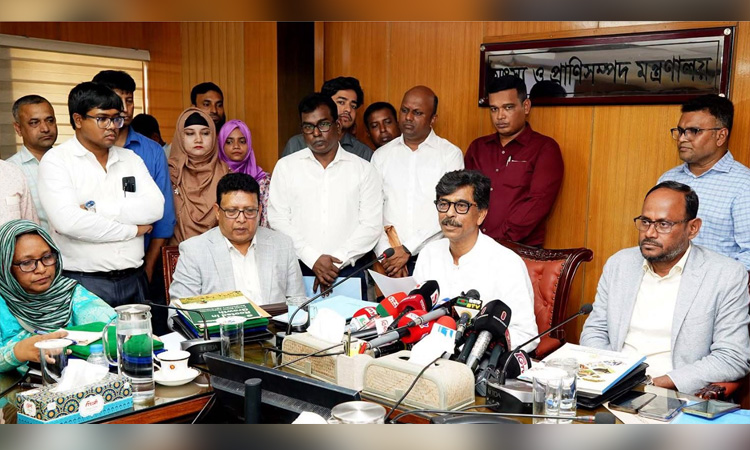
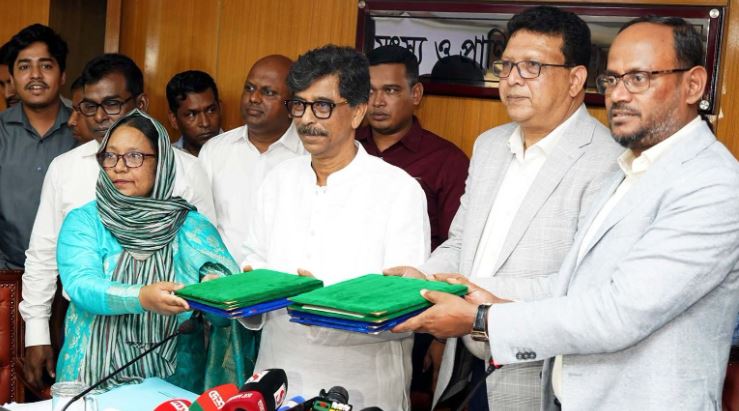
DHAKA, Aug 11, 2026, (BSS) - Vaccines for avian influenza and Gumboro disease developed by the Bangladesh Livestock Research Institute (BLRI) have been formally handed over to the Department of Livestock Services (DLS) for commercial production and expansion at the farmers’ level, said Fisheries and Livestock Minister Mohammad Amin Ur Rashid.
“The vaccines, developed through indigenous technology and research, would play an important role in controlling diseases in the country’s poultry sector, reducing production costs and decreasing dependence on imports,” he said.
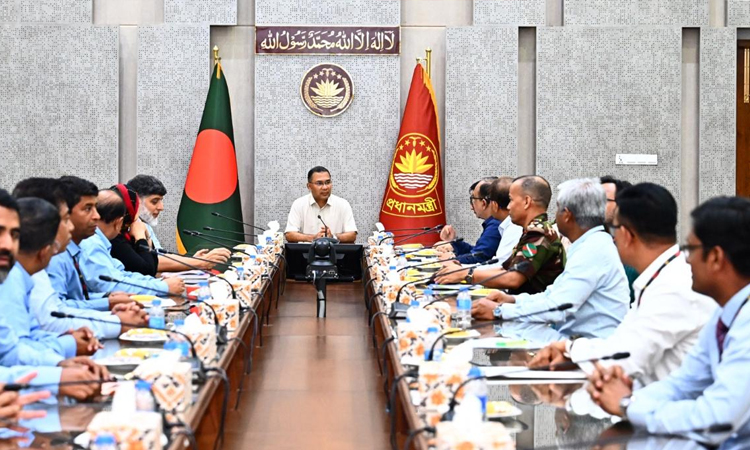
He made the remarks at a vaccine handover ceremony held today at the conference room of the ministry at the secretariat here.
Senior officials of the Ministry of Fisheries and Livestock, director general of the Department of Livestock Services and Bangladesh Livestock Research Institute, scientists and researchers, university teachers and veterinarians, industry entrepreneurs, representatives of farmers and representatives of vaccine-producing companies attended the programme.
Director General of the Department of Livestock Services Md. Shahnewaz Khan and Director General of the Bangladesh Livestock Research Institute Dr. Shakila Faruk, among other officials, were also present.
Rashid said today’s event was not merely a formal handover of vaccines, but an important step towards taking knowledge and innovations achieved in laboratories to farmers at the field level.
BLRI scientists and researchers developed the two vaccines using indigenous technology through years of research, testing and trials despite various challenges, he added.
He said an invention completed in a laboratory cannot deliver its full benefit unless it is brought into practical use for ordinary people.
Therefore, he said, the priority now is to take research-based innovations to the stage of commercial production and ensure their use at the farmers’ level.
The minister said the BLRI-developed vaccines for avian influenza and Gumboro disease had been handed over to the Department of Livestock Services for commercial production.
This has opened a new window of opportunity for the country’s poultry sector, he said, adding that if the concerned institutions work in coordination, it will be possible to make the vaccines available to farmers within a short time.
He congratulated all scientists, researchers, officials and employees of BLRI involved in developing the vaccines, as well as those concerned with the Department of Livestock Services.
He particularly expressed gratitude to those who worked in laboratories for a long time and contributed to developing the vaccines through testing and trials using indigenous technology and materials.
At the programme, the minister also highlighted various government initiatives aimed at supporting agriculture and farmers.
The country’s economy will also improve with the development of agriculture, he said, adding that the government is working to advance the overall economy by strengthening farmers and agriculture.
Mohammad Amin Ur Rashid said the farmers’ economy would become stronger if they received fair prices for their products. Improvement in the economic condition of farmers would have a positive impact on the national economy, he said.
As Bangladesh is an agriculture-based country, he said, agriculture needs to be further strengthened as one of the major driving forces of the economy in the coming days.
Referring to the financial difficulties faced by farmers, the minister said the government has taken initiatives to resolve the longstanding loan-related problems of small and marginal farmers.
He said loans of up to Taka 10,000 taken by small and marginal farmers who had faced difficulties in repaying them had been waived.
The minister said the banks concerned did not suffer losses due to the loan waiver, as the government paid the banks the amount on behalf of the farmers.
As a result, the farmers’ debt burden was reduced while the lending banks also received their dues, he said.
Referring to various agriculture-based government programmes, he said initiatives including Family Card, Farmer Card and canal excavation programmes had been undertaken.
He said the drainage system had weakened as canal excavation activities had remained largely suspended for a long time. As a result, even slight excessive rainfall caused waterlogging and sudden flooding in various areas.
The minister said the government has adopted a five-year plan to revive canals across the country.
Under the plan, excavation of designated canals is being carried out every year. The Ministry of Agriculture and other relevant departments are working according to their respective responsibilities.
He said around 90 percent of canal excavation work under the Ministry of Agriculture had already been completed this year. The government institutions assigned with responsibilities must not merely show progress on paper, but prove progress through actual work, he added.
Highlighting the importance of the Farmer Card in ensuring production and fair prices for farmers, the minister said the card would play an important role in providing farmers with advance information on which products would bring them greater profits at a particular time, which products are in demand in the market and what kind of assistance is required for production.
Mohammad Amin Ur Rashid said farmers would also be provided with more effective support, from supplying necessary production inputs, including fertiliser and seeds, to ensuring fair prices for their products.
He said if accurate information is delivered to farmers at the right time, production planning would become more effective and the risk of unnecessary supply shortages or overproduction in the market could be reduced.
The minister also said registration for the Farmer Card was progressing rapidly. So far, registration of around 1.3 million farmers has been completed, he added.
Although the government has a three-year plan for the programme, efforts are being made to complete the Farmer Card registration process ahead of the stipulated timeframe, he said.
The minister said the livestock sector is also an important part of the country’s agricultural economy. If diseases in the poultry and livestock sectors are not controlled, farmers may face substantial financial losses, he said.