Tuesday
01 September, 2026
News Flash
News Flash
DHAKA, Sept 01, 2026 (BSS) - Jatiya Sangsad Speaker Hafiz Uddin Ahmad, Bir Bikram, today said the Sheikh Hasina government created a culture of enforced disappearances and fear through extrajudicial killings during its “mafia rule”.
He said the persecution, torture, enforced disappearance and killing of people holding opposition political views deprived the people of their freedom of expression.
Describing the brutality of Sheikh Hasina’s rule, the Speaker said people in Bangladesh had not faced such a culture of enforced disappearances and persecution since the Second World War.
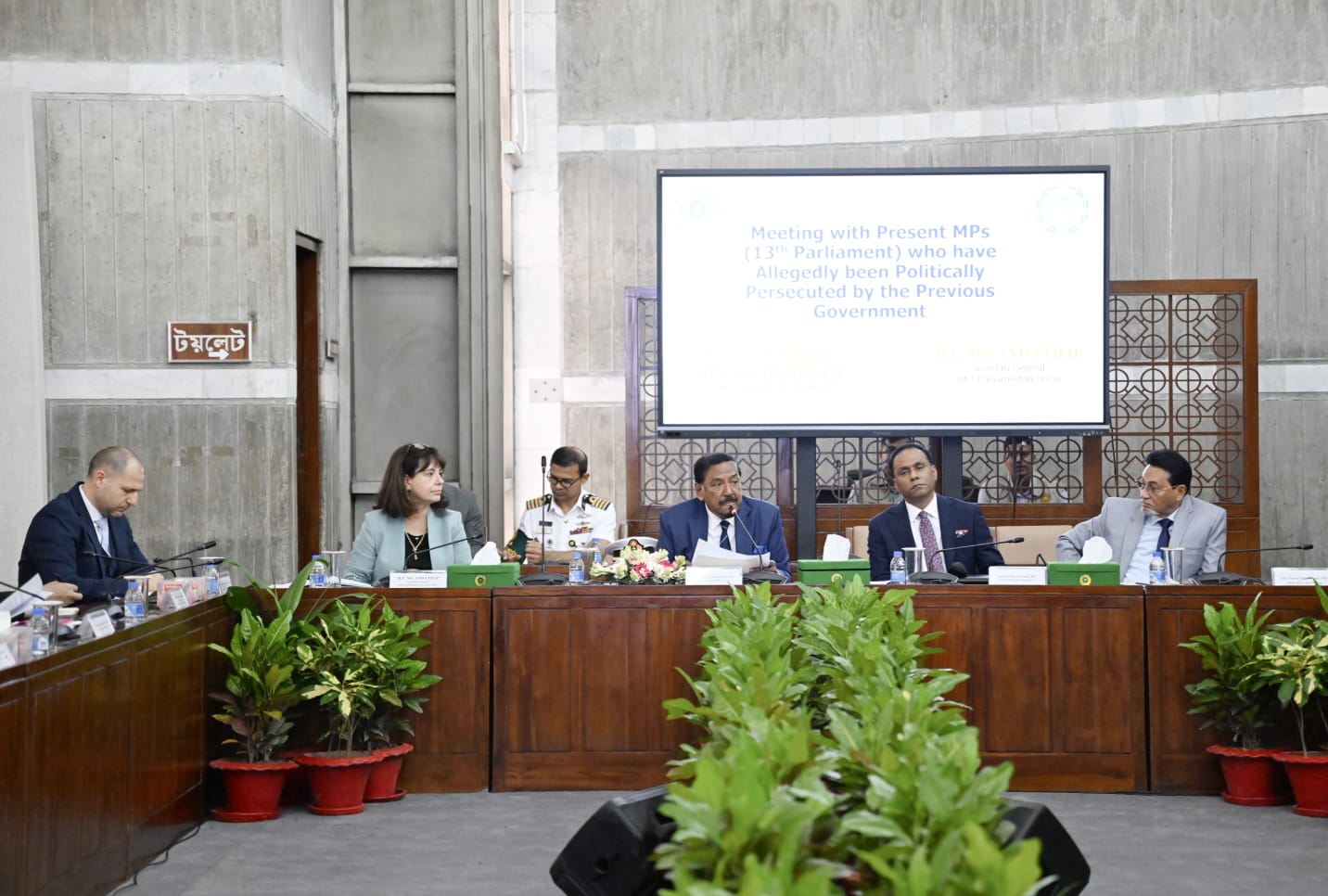
He made the remarks while chairing a meeting between Secretary General of the Inter-Parliamentary Union (IPU) Anda Filip and incumbent members of the 13th Jatiya Sangsad who alleged that the previous government politically persecuted them.
The meeting took place at the Cabinet Room of the Jatiya Sangsad Bhaban. Deputy Speaker Barrister Kayser Kamal and Chief Whip Md. Nurul Islam Moni attended the meeting.
Hafiz Uddin Ahmad said that during Sheikh Hasina’s 15-year rule, the government created an atmosphere of systematic state-sponsored enforced disappearance and repression to silence leaders and activists of opposition political parties and dissenters.
He alleged that the government used enforced disappearances, extrajudicial killings, secret detention centres such as “Aynaghar” and the misuse of “black laws”, including the Digital Security Act and Cyber Security Act, to suppress dissent.
MP Sanjida Islam gave an emotional account of the prolonged disappearance of her brother, Sajedul Islam Sumon.
A documentation titled “From Persecution to Revolution: Uncovering Systematic Human Rights Violations by the State” presented what it described as evidence of institutionalised enforced disappearances and repression against political figures and ordinary citizens during the previous regime.
MP Barrister Mir Ahmad Bin Quasem Arman recounted his experience of enforced disappearance and persecution during his detention at Aynaghar.
MP Humam Quader Chowdhury also described what he said were seven months of inhumane and systematic detention and torture at a secret detention facility operated by a military intelligence agency, commonly known as Aynaghar.
MP Tahsina Rushdir Luna said the disappearance of her husband, Ilias Ali, on April 17, 2012, first brought the term “enforced disappearance” prominently into public consciousness in Bangladesh.
She alleged that the then Awami League government abducted Ilias Ali to consolidate its hold on power and expressed a firm commitment to bringing those responsible for enforced disappearances and extrajudicial killings to justice.
The invited MPs shared their experiences of prolonged political persecution and what they described as a culture of enforced disappearances and fear under the previous government.
IPU Secretary General Anda Filip said the killings, enforced disappearances and persecution of people holding opposing political views in Bangladesh were inhumane and abhorrent.
She said she could see similarities between the repression during the previous government in Bangladesh and the brutal repression carried out under Nicolae Ceausescu in her home country Romania.
Filip said she would submit a comprehensive report to the IPU Governing Bodies after completing her visit, covering enforced disappearances, killings and persecution that allegedly occurred in Bangladesh during the previous authoritarian rule.
Members of parliament including Barrister Muhammad Nawshad Zamir, Jahrat Adib Chowdhury, Tahsina Rushdir, Humam Quader Chowdhury, Mir Ahmad Bin Quasem Arman, Mohammad Najibur Rahman, Anisur Rahman, Sanjida Islam and Madhabi Marma, along with Secretary of the Jatiya Sangsad Secretariat and relevant officials, attended the programme.