Tuesday
28 July, 2026
News Flash
News Flash
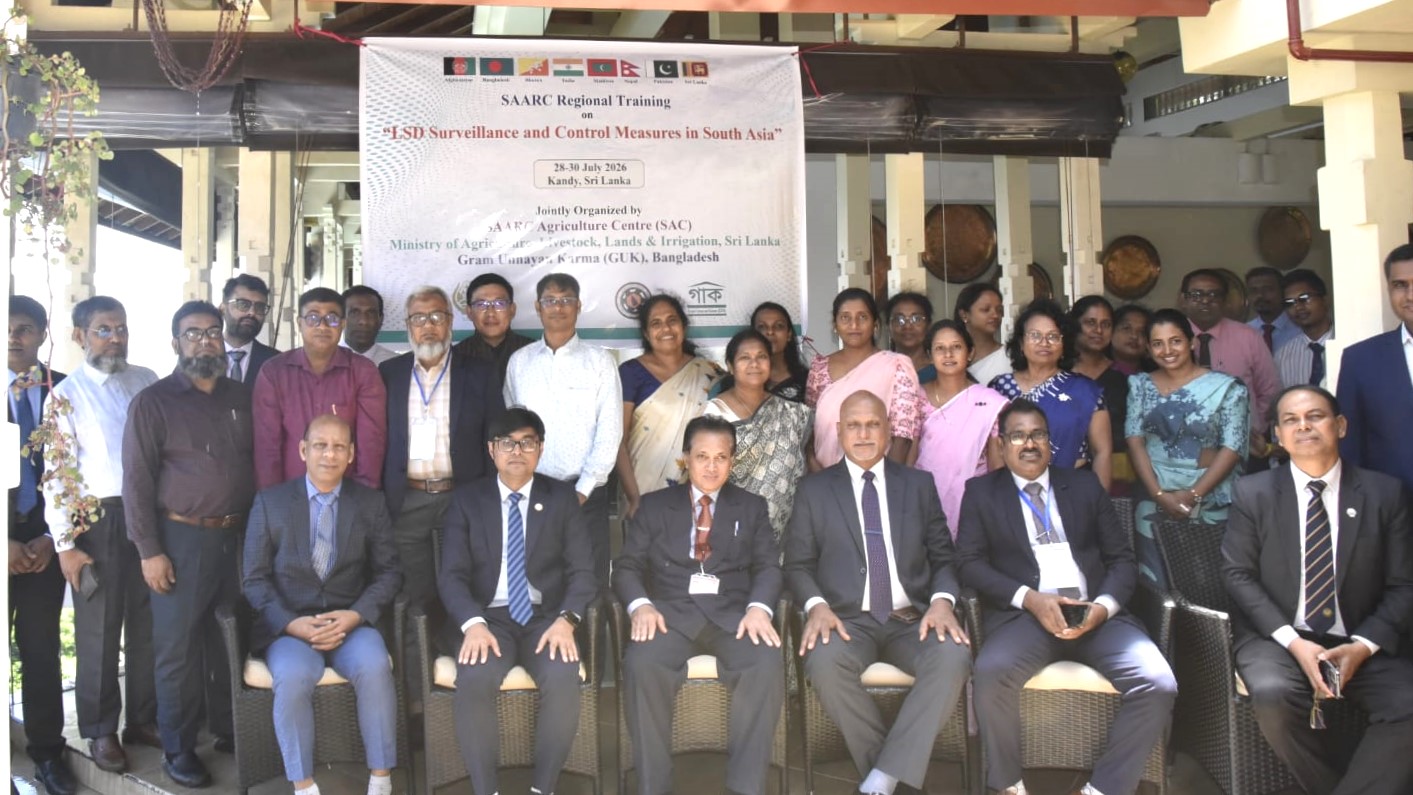
DHAKA, July 28, 2026 (BSS) – A three-day SAARC regional training programme aimed at strengthening South Asia's capacity to prevent and control lumpy skin disease (LSD) began today in Kandy, Sri Lanka.
The training, titled "Surveillance and Control System for Lumpy Skin Disease in South Asia," has been jointly organised by the Dhaka-based SAARC Agriculture Centre (SAC), Sri Lanka's Ministry of Agriculture and Livestock, and Bangladesh's Gram Unnayan Karma (GUK).
Livestock and veterinary experts from Bangladesh, Bhutan, Nepal, Pakistan and Sri Lanka are participating in the programme.
Speaking at the inaugural session, Director General of Sri Lanka's Department of Animal Production and Health and Chairperson of the SAARC Chief Veterinary Officers' Forum, Dr BSS Perera, underscored the importance of regional cooperation in combating transboundary animal diseases.
Senior Programme Specialist (Livestock) at the SAARC Agriculture Centre, Dr Md Yunus Ali, outlined the objectives of the training, highlighting the need to strengthen disease surveillance, ensure early detection and establish coordinated response mechanisms across South Asia.
Presenting the keynote paper, virologist Dr S. Poovanendran of Sri Lanka's Veterinary Research Institute said LSD is primarily transmitted by blood-feeding insects such as mosquitoes, flies and ticks.
"The virus can survive for prolonged periods in skin lesions and dried scabs of infected animals, while warm and humid weather, livestock movement and inadequate vector control further facilitate its spread," he said.
GUK Director Md Mokhlesur Rahman stressed the need to raise farmers' awareness and strengthen coordination among livestock owners, veterinarians and development organisations to effectively contain the disease.
SAARC Agriculture Centre Director Dr Md Harunur Rashid said coordinated regional efforts are essential to tackling LSD, emphasising the importance of information sharing, technical cooperation and capacity building.
Director General of Sri Lanka's Department of Agriculture and Governing Board Member of the SAARC Agriculture Centre, Dr WART Wickramarachchi, called for integrating research, surveillance systems and policy support to minimise the economic losses caused by the disease in the livestock sector.
SAARC Secretariat Director (ARD & SDF) Tanvir Ahmed Tarafdar described LSD as a major challenge to livestock development and rural livelihoods across South Asia and reaffirmed the member states' commitment to sustained cooperation, knowledge sharing and joint initiatives for disease prevention and control.
Dean of the University of Peradeniya, Dr A Kalupahana, attended the inaugural session as the chief guest, while Additional Secretary of Sri Lanka's Ministry of Agriculture, Dr S. Piyasiri, was present as the special guest.
Both speakers underscored the importance of research-based strategies, effective vaccination programmes and strengthened veterinary services to curb the spread of the disease.