Monday
27 July, 2026
News Flash
News Flash
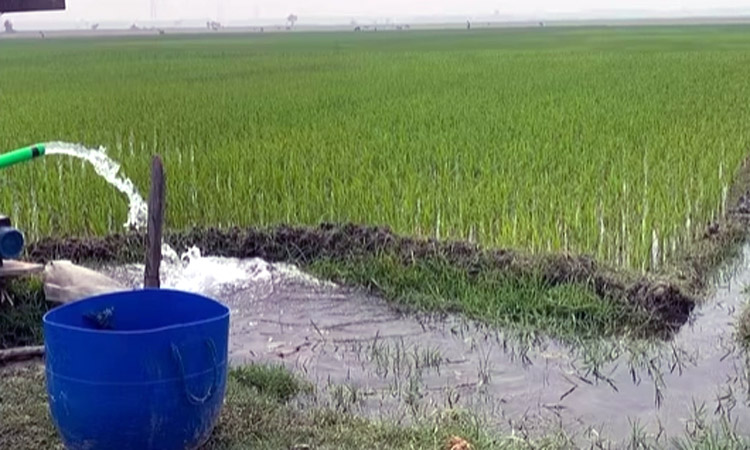
KUSHTIA, June 9, 2026 (BSS) - The Ganges-Kobadak (GK) Irrigation Project, the country's largest surface irrigation network, has undertaken a major overhauling and redesign of its pumping system.
The move aims to ensure uninterrupted water extraction from the Ganges River even during drastically low water levels caused by upstream diversion in the dry season.
Under the new engineering blueprint, the project authorities plan to lower the minimum required water level at its intake channel to 2.5 metres from the existing 3.9 metres. This strategic adjustment will allow the massive pumps to remain functional even when the river level plummets significantly during the lean period.
Mizanur Rahman, Executive Engineer of the GK Project Pump House, disclosed the development to BSS recently in Kushtia.
Launched in 1962, the GK Project stands as a cornerstone of Bangladesh’s agricultural infrastructure, critical to sustaining food production in the southwestern region. It features a vast command area of 197,500 hectares and an irrigable area of around 95,500 hectares.
However, due to aging infrastructure, inoperable pumps, and silted canals, its effective coverage has shrunk to 55,000 hectares over the decades.
Project officials noted that operational disruptions trigger whenever the Ganges water level drops below 4.5 metres. This crisis has intensified since the commissioning of India's Farakka Barrage in West Bengal in 1975, which fundamentally altered the dry-season hydrology of the river system.
Highlighting the gravity of the situation, Executive Engineer Mizanur Rahman recalled that the vulnerabilities became starkly evident in 2024. During that lean season, the water level near the Hardinge Bridge point dipped below four metres, completely rendering the pumps incapable of lifting water and forcing a total halt to all irrigation activities.
“The pumps simply could not operate, leaving the entire project area without vital irrigation support,” he said.
To mitigate this recurring threat, the government has initiated the Taka 1,200 crore redesign project, which is slated for completion by 2029.
The initiative is expected to heavily boost the project's resilience to climate variability and seasonal water scarcities by enabling extraction at lower river stages.
The GK officials, however, balanced optimism with caution, stating that structural interventions alone might fall short if the river's base flow continues to deplete.
“Even if we successfully lower the minimum operating threshold by 1.5 metres, the ultimate benefits will hinge on receiving an adequate, steady flow of water from upstream,” Rahman observed.
The GK Project holds a pioneering position in the country's agrarian history. Initial surveys commenced in 1951, with physical implementation starting in the mid-1950s. Designed as a lift-cum-gravity irrigation system, it lifts water from the Ganges and feeds a massive network of canals running through Kushtia, Chuadanga, Jhenaidah, and Magura districts.
Over the years, a combination of reduced upstream availability, heavy sedimentation in the intake channel, and obsolete machinery has crippled its optimum performance.
Experts and historical logs verify that the original design criteria of the pumps matched river conditions that simply no longer exist during the dry months.
Meanwhile, Sayed Tipu Sultan, Chairman of the International Farakka Committee, recently led a team of media professionals to inspect the Ganges-dependent zones in Kushtia and Rajbari.
Commenting on the ongoing issues, he urged that the longstanding Ganges water-sharing dispute should be tabled at the United Nations if a fair, mutual bilateral solution remains elusive.
With hundreds of kilometres of primary and secondary canals, the GK network remains indispensable to rural livelihoods and national food security.