Tuesday
25 August, 2026
News Flash
News Flash

By Anower Hossain Shahmim
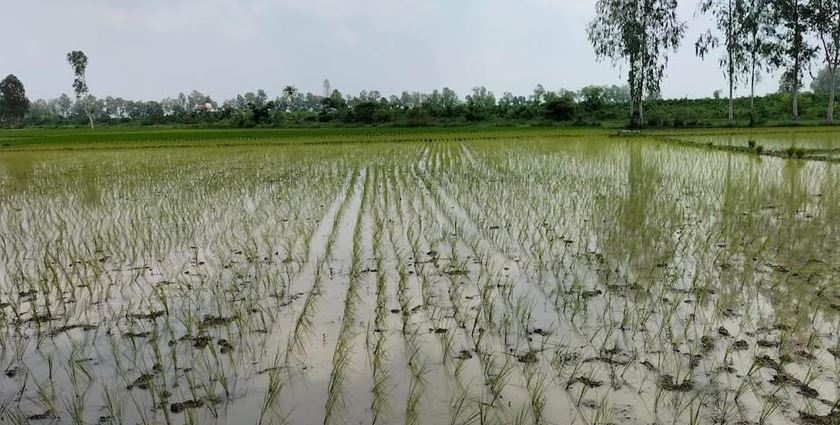
GAIBANDHA, July 21, 2026 (BSS) – Incessant rainfall coupled with upstream water flow has submerged 132 hectares of Aman paddy seedbeds in Gaibandha district, causing significant losses to farmers ahead of the transplantation season.
Of the affected seedbeds, 33.5 hectares have been completely damaged, while nearly 310 hectares of vegetable fields have remained waterlogged across the district.
According to the Department of Agricultural Extension (DAE), a target has been set to cultivate Aman paddy on 133,120 hectares of land in the district this season, with seedbeds prepared on 7,025 hectares.
However, incessant rainfall over the past week has caused widespread waterlogging in many areas, damaging a substantial portion of the seedbeds.
Agriculture officials said Gaibandha, which comprises seven upazilas, 81 unions and four municipalities, is highly vulnerable to flooding due to its riverine geography.
Around 175 chars (river islands) are located in Gaibandha Sadar, Sundarganj, Fulchhari and Saghatta upazilas, where rainwater accumulates quickly.
A visit to different parts of the district revealed that many seedbeds were inundated before the seedlings became ready for transplantation.
In several areas, both the roots and shoots of the seedlings have started rotting, forcing farmers to prepare fresh seedbeds at additional costs.
Farmer Saju Mia of Shital village under Nakai union in Gobindaganj upazila told BSS, “I have prepared seedbeds for cultivating Aman on 10 bighas of land, but the 10-12-day-old seedlings were destroyed after remaining under water for a week.”
Another farmer, Azizar Rahman of Dhankhania village in the same upazila, said he was preparing new seedbeds after the earlier seedlings were damaged by excessive rainfall.
Abdul Sobhan Mia of Harinathpur village in Palashbari upazila said the 20-22-day-old seedlings intended for eight bighas of Aman cultivation had remained submerged for a week, causing severe rotting and rendering them unsuitable for transplantation.
Farmer Bakul Mia of the same village said all seedlings in seedbeds prepared for five bighas of land had been damaged.
“I’m now considering producing new seedlings or buying them from elsewhere, which will increase production costs,” he said.
Habibur Rahman of Gopinathpur village under Pabnapur union said his seedbeds, prepared 15 days ago, were now under water.
“Not only are mine, but most farmers in the area facing the same situation,” he added.
Azam Ali, a farmer from Sundarganj upazila, said frequent rainfall had pushed many seedlings to the brink of destruction. The need to purchase additional seed has raised cultivation costs and may delay Aman farming by several weeks.
Deputy Director of the DAE in Gaibandha Atikul Islam told BSS that many seedbeds in low-lying areas remained submerged due to continuous rainfall.
“Proper care after the water recedes can help minimise the damage. Agricultural officials are regularly providing necessary guidance to farmers at the field level,” he said.