Wednesday
19 August, 2026
News Flash
News Flash
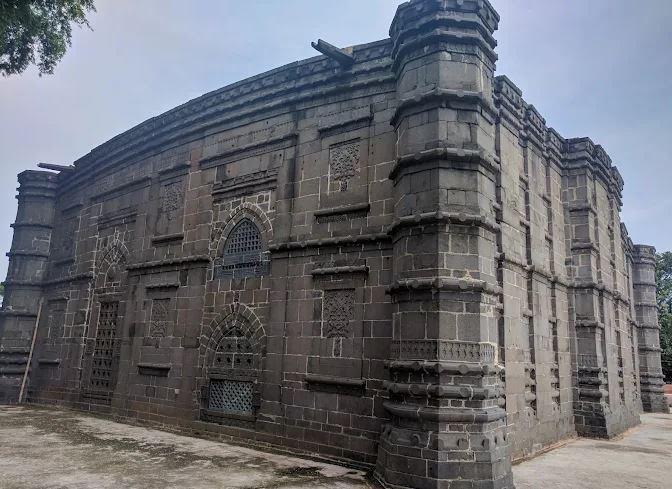
RAJSHAHI, June 2, 2026 (BSS) - The historic Kusumba Mosque is located in Manda Upazila of Naogaon, an agriculture-dependent district in the northern region of Bangladesh.
Nearly five centuries old, this mosque is not merely a religious structure but a unique testament to Bangladesh's history, heritage, and architectural artistry. Because of its extraordinary design and beauty, an image of Kusumba Mosque has been featured on the country's five taka banknote.
Located about 35 kilometers away from Naogaon district town, in Kusumba village of Kusumba Union, the mosque is enlivened daily by the footsteps of hundreds of visitors and worshippers.
Situated on the western side of Manda Bridge on the Rajshahi-Naogaon highway, this structure is one of the main attractions of the Barind region.
To the north and south of the mosque lies a vast water tank covering about 100 bighas.
Measuring approximately 1,200 feet long and 900 feet wide, this reservoir once met the water needs of local residents and worshippers. Today, it further enhances the mosque's beauty.
The Kusumba Mosque extends about 58 feet north-south and about 42 feet east-west. Its nearly six-foot-thick walls and stone-clad exterior give the mosque a distinctive character.
The front facade features three arched entrances. At the four corners stand four octagonal towers. Six domes arranged in two rows on the roof carry the beauty of Sultanate architecture.
Although several domes were damaged in the devastating earthquake of 1897, the Department of Archaeology later restored them and revived its splendour.
Inside the mosque, two massive stone pillars support the entire weight of the roof.
The three ‘Mihrabs’ on the western wall, adorned with delicate carvings of hanging chains, flowers, and foliage, showcase the excellence of Sultanate art. Inside the mosque there was once a two-storied chamber known as the zenana gallery, or women's prayer room.
It was built on stone pillars in front of the northern ‘Mihrab. In front of the mosque lies an open courtyard with stone-paved steps leading directly down to the tank. Near the entrance stands a box-shaped black stone.
However, historians differ somewhat on the mosque's date of construction.
According to the main inscription, it was built in 1558 during the reign of Afghan Sultan Ghiyasuddin Bahadur Shah.
Another inscription suggests its foundation was laid in 1498 during the reign of Sultan Alauddin Husain Shah.
Thus the mosque is believed to be between 468 and 528 years old. Local lore holds that the area was named Kusumba after Kusum Bibi, the wife of Sultan Alauddin Husain Shah of Gaur, and the mosque was later named after the locality. However, no reliable historical evidence has been found to support this.
Visitors come daily from across the country to see the mosque.
Fariha Hossain Kripa, a seventh-grade student at PM Girls' High School in Naogaon town, said, "After seeing this mosque on the five-taka note, I had wanted to come here for a long time. The surroundings are very beautiful.
I'm really enjoying being here.
If a rest house were built here, it would be much more convenient for visitors coming from far away."
Irin Zaman, a student of the Fine Arts Department at Rajshahi University, said, "I have never seen such a beautiful and eye-catching mosque before.
I had seen it in pictures, but seeing it in person makes its beauty even more striking. The huge tank in front and the surrounding environment are truly enchanting."
Every day, countless worshippers come from far and wide to pray here. Especially during Friday prayers and Eid congregations, the entire courtyard fills with devotees.
The mosque's khatib, Maulana Mostafa Al-Amin, said, "Inside the mosque, about 80 worshippers can pray in four rows. In addition, around 700 worshippers can offer congregational prayers in the open courtyard in front. Taraweeh (Tarabih) prayers are also held here during the holy month of Ramadan."
Naogaon Deputy Commissioner Mohammad Saiful Islam said, "Visitors come daily from home and abroad to see this ancient mosque.
Various plans have been undertaken to further enhance its tourism potential."
Experts believe that with proper preservation and tourism-friendly development, Kusumba Mosque could become one of the leading tourist destinations in northern Bangladesh.
As a unique blend of history, architecture, and religious heritage, Kusumba Mosque continues to bear witness to Bangladesh's glorious past.