Wednesday
12 August, 2026
News Flash
News Flash
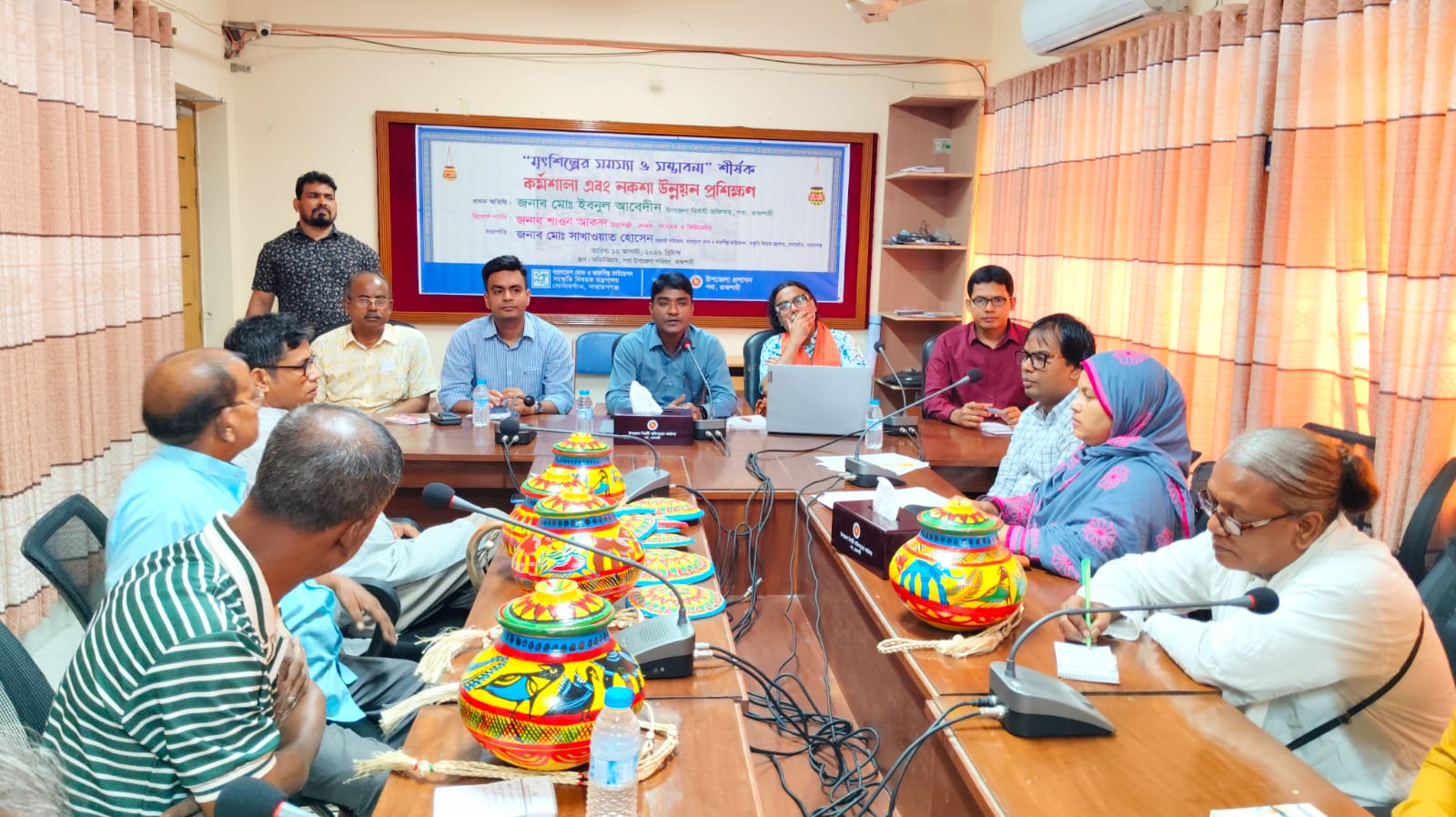
RAJSHAHI, Aug 12, 2026 (BSS) - A daylong workshop on Shokher Hari (decorative earthen pot) was held in Paba upazila today to explore ways to preserve and promote the traditional pottery amid rising production costs and a shortage of raw materials.
Decorated with colorful motifs of fish, birds, lotuses and combs, Shokher Hari reflects the rural life and folk traditions of Bengal. The distinctive earthenware produced by artisans in Basantapur and Ulapur of Paba is regarded as an important part of the region's cultural heritage.
The workshop and design development training titled 'Heritage, Problems and Prospects of Pottery and Shokher Hari' was organized by the Bangladesh Folk and Crafts Foundation at the Paba Upazila Parishad conference room.
Paba Upazila Nirbahi Officer Ibnul Abedin attended the workshop as the chief guest.
He said a nation's identity is preserved through its folk culture, art and heritage and Shokher Hari is an integral part of Paba's cultural identity.
He called for joint efforts by the government, administration and society to sustain the traditional craft.
He also suggested encouraging the use of aesthetically designed earthenware instead of plastic at government and private events as well as family functions to expand the domestic market for Shokher Hari.
Professor Uday Shankar Biswas of the Department of Folklore at Rajshahi University said the pottery crisis should not be viewed merely as a problem faced by artisans.
He said the availability of clay and rising prices of firewood, colors and other materials have placed pottery makers under increasing pressure, requiring effective government initiatives and long-term planning to preserve the heritage.
The workshop was presided over by Md Sakhawat Hossain, assistant director of the Bangladesh Folk and Crafts Foundation.
He said Shokher Hari produced by artisans of Basantapur and Ulapur is not only a cultural symbol of Rajshahi but also a unique symbol of Bangladesh's cultural heritage.
He noted that Shokher Hari has received government recognition as a Geographical Indication (GI) product, while the craftsmanship of local potters has earned international appreciation, with one artisan receiving a UNESCO award.
The workshop focused on improving the design and quality of Shokher Hari, expanding its market, introducing contemporary designs and diversifying products to make earthenware more appealing to younger consumers.
Speakers said the pottery market could be expanded further by developing products suited to contemporary demand while retaining the distinctive characteristics of the traditional craft.
Painter, writer, researcher and curator Shaon Akand conducted the training as the resource person.
The programme was moderated by Mizanur Rahman, senior divisional assistant of the Bangladesh Folk and Crafts Foundation.
Assistant Commissioner (Land) Mohammad Mehedi Hasan, BRAC District Coordinator Mohsin Ali, Women Affairs Officer Fatema Khatun and Banchar Asha Cultural Organization President Mostafa Sarker Bijli, among others, spoke at the event.
Certificates were distributed among the trainees at the end of the daylong workshop.
The participants and stakeholders expressed the hope that coordinated efforts involving easier access to raw materials, government support, skills development, contemporary designs and effective marketing would help Paba's pottery industry overcome its present challenges and regain its market.
They said such initiatives could help the colorful tradition of Shokher Hari flourish anew as a vibrant expression of Bangladesh's folk heritage.