News Flash

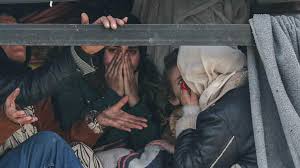
DAMASCUS, Jan 7, 2026 (BSS/AFP) - Schools and public institutions were shut in north Syria's Aleppo on Wednesday, as sporadic clashes between government troops and Kurdish-led forces continued into their second day, according to state media.
Tuesday's clashes, which killed nine people, were the worst between the two sides, who have so far failed to implement a March deal to merge the Kurds' semi-autonomous administration and military into Syria's new Islamist government.
"At night, Aleppo was a ghost town, no movement, the shops were closed, and many streets were dark with no electricity," Abdul Karim Baqi, 50, told AFP.
Baqi, who lives in one of Aleppo's two Kurdish-majority neighbourhoods, escaped the violence and sought refuge at a relative's home.
Syria's official news agency SANA on Wednesday reported shelling from Kurdish neighbourhoods on government-held areas, adding that Syrian troops had returned fire.
Abdul Karim Omar, representative of the Kurds' autonomous administration in Damascus, told AFP that "there are efforts towards de-escalation".
Omar said Aleppo's Kurdish-majority neighbourhoods of Ashrafieh and Sheikh Maqsud were "completely besieged" and denied that any shells had been fired from these areas, arguing that they are controlled by the Kurds' Asayish domestic security forces "who only have light weapons".
On Tuesday, civil aviation authorities announced "the suspension of flights to and from Aleppo airport for 24 hours and their diversion to Damascus airport" due to the violence, SANA reported.
Schools, universities and government offices were also closed.
Tuesday's clashes killed nine people, mostly civilians, with both sides trading blame over who started the fighting.
Joud Serjian, a 53-year-old housewife and resident of the Syriac Quarter, said the violence "reminded us of the war".
Living in the Syriac Quarter near Ashrafieh, Serjian said "we have nowhere else to go, so we'll stay in our home".
During the Syrian civil war, Aleppo was the scene of fierce fighting between rebels and forces of ousted President Bashar al-Assad before he regained control of the city in 2016.
Assad was ousted in a lightning Islamist-led offensive in 2024.
The March agreement on the Kurdish authority's integration into the state was supposed to be implemented by the end of 2025.
The Kurds are pushing for decentralised rule, an idea which Syria's new authorities have rejected.