Saturday
15 August, 2026
News Flash
News Flash
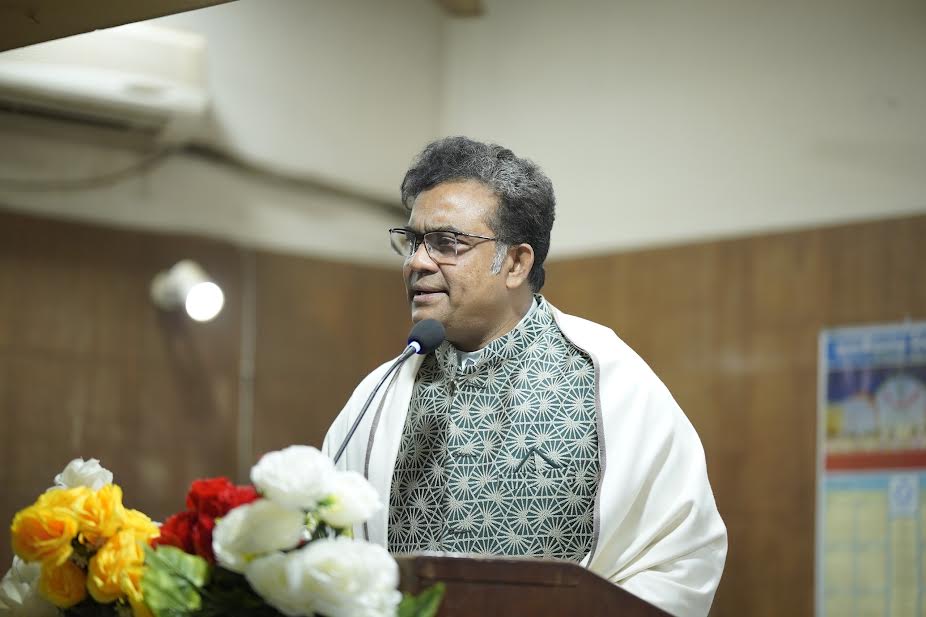
By Mah Alam
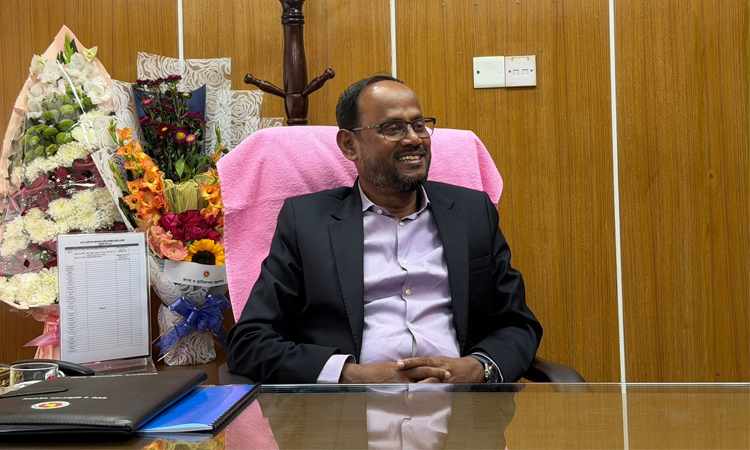
JAHANGIRNAGAR UNIVERSITY, Aug 15, 2026 (BSS) - Jahangirnagar University (JU) Vice-Chancellor Prof Dr Mohammad Kamrul Ahsan today said the political journey of former Prime Minister Begum Khaleda Zia from a homemaker to a national leader symbolises a prolonged struggle for democracy, national sovereignty and the fulfilment of people's democratic aspirations.
"Her political life is not merely a story of personal political ascent; it is closely intertwined with Bangladesh's democratic struggles, changes in the state system, people's aspirations for rights and the country's long political history," he said.
He made the remarks in an interview with Bangladesh Sangbad Sangstha (BSS) on the occasion of the 82nd birth anniversary of Begum Khaleda Zia.
The JU VC said Begum Khaleda Zia did not enter politics through a planned political career; rather, an unexpected and painful national political situation brought her to the centre of politics.
Following the assassination of President Ziaur Rahman on May 30, 1981, her life underwent a profound transformation, he said, adding that she had to overcome personal grief while simultaneously facing a major national political crisis.
"From that point, a woman who had largely lived within the private sphere gradually entered the broader arena of national politics. This marked the beginning of her journey from homemaker to political leader," Prof Kamrul said.
He said Khaleda Zia formally joined the Bangladesh Nationalist Party (BNP) in 1982 and assumed the party's chairpersonship in 1984, at a time when Bangladesh was passing through political instability, military rule and restrictions on political rights.
Her role in the anti-Ershad movement subsequently established her not only as a BNP leader but also as one of the key political figures in the movement for restoration of democracy, he said.
"Through prolonged movements, rallies, meetings, arrests, obstacles and political pressure, her leadership developed a distinctive character marked by firmness and determination," the VC said.
He said late BNP Chairperson Begum Khaleda Zia also played an important role in Bangladesh's transition to parliamentary democracy and the rebuilding of democratic institutions.
The JU VC said a political leader should not be evaluated only by the period spent in power but also by how he or she confronts political adversity and personal crises while maintaining political convictions.
"In Khaleda Zia's political life, this aspect is particularly notable," he said.
Referring to her later years, Prof Kamrul said prolonged legal cases, arrest and imprisonment had a profound impact on her personal life, while her health and treatment became major issues of national political discussion.
He said her imprisonment was viewed by her supporters not merely as the confinement of an individual but as part of a broader political struggle.
The VC also highlighted Begum Zia's treatment abroad and her subsequent return to Bangladesh, saying the return was a significant moment in her political life.
"There had been discussions that she might not return to the country after going abroad for treatment. But she returned. Her return was consistent with the belief that Bangladesh was her final destination," he said.
Prof Kamrul identified national sovereignty and institutionalisation of democracy as two important aspects of Khaleda Zia's political outlook.
"Sovereignty is not merely a matter of geographical boundaries. It also involves the political rights of citizens, the state's ability to make independent decisions and its accountability to the aspirations of the people," he said.
Similarly, he said, democracy cannot be confined to holding elections alone.
"It encompasses freedom of expression, political participation, the rule of law, human dignity and accountability of state institutions," the VC added.
He said Khaleda Zia's political life should be assessed within this broader framework.
The JU VC stressed the importance of maintaining objectivity while evaluating a political figure.
"Future researchers will analyse her political legacy from different perspectives. But there is no denying her long political struggle and influence on Bangladesh's democratic politics," he said.
Prof Kamrul also referred to Prime Minister Tarique Rahman, Begum Khaleda Zia's son, saying her political legacy has also been carried forward by the next generation of her family.
He said Tarique Rahman's political journey is also part of the family's long involvement in Bangladesh's political life and democratic movement.
Turning to the younger generation, Prof Kamrul said political ideals should not remain confined to slogans but should be connected with education, knowledge and strong democratic institutions.
"Today's young generation will lead Bangladesh's state, society, administration, economy, education and culture in the coming decades. Therefore, they must start preparing themselves from now," he said.
He also stressed the importance of political tolerance and unity amid diversity, saying differences of opinion should not weaken national interests and democratic values.
"The strength of a country lies in unity amid diversity. The young generation should focus on long-term statecraft based on independence, sovereignty, democracy and the aspirations of the people," he said.
He said historical experiences should also be preserved through written history, oral history and digital archives so that future generations can understand the country's political developments objectively.
"History ultimately determines how a political legacy is assessed. But Begum Khaleda Zia's chapter in Bangladesh's political history is undoubtedly long, significant and multifaceted," Prof Kamrul said.
He said historical assessment was not only about remembering the past but also about shaping the future.
"If the young generation learns from her political life the value of democracy, sovereignty, political tolerance, education, knowledge and responsibility towards the country, her political journey will continue to have significance for future Bangladesh," he added.