Wednesday
05 August, 2026
News Flash
News Flash
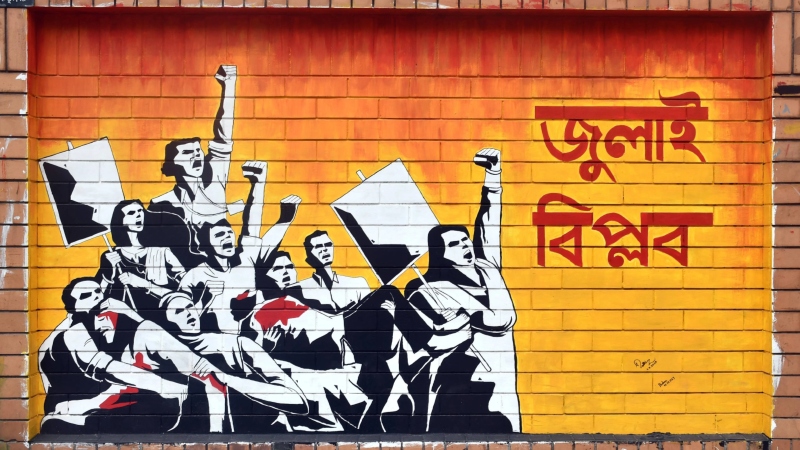
DHAKA, Aug 04, 2026 (BSS) - Bangladesh will observe the "July Mass Uprising Day" tomorrow, marking two years of the fall of the Hasina-led fascist government amid a student-led mass uprising that changed the nation's political course.
To commemorate the occasion, the government, political parties and socio-cultural organisations have taken various programmes to honour the sacrifices of those including students who took to the streets against misrule and autocracy.
Tomorrow's observance will include tributes, processions and cultural performances, highlighting the importance of the day.
Acting President Hafiz Uddin Ahmed, Bir Bikram and Prime Minister Tarique Rahman have issued separate messages marking the day.
In his message, Acting President Hafiz Uddin Ahmad, Bir Bikram, called for building a discrimination-free, democratic, accountable and justice-based Bangladesh in line with the sacrifices and aspirations of the martyrs and the injured of the July Mass Uprising.
He said, "Let us all, inspired by the spirit of the great July Mass Uprising, remain united in building a democratic, justice-based, humane, discrimination-free and happy-prosperous new Bangladesh. At the same time, let us work together to realise the dreams, ideals and aspirations of the martyrs who sacrificed their lives in the great Liberation War and the Mass Uprising."
On August 5, 2024, the prolonged discriminatory and fascist rule came to an end in the face of the united resistance of unarmed students and people, while the fascist government was forced to flee the country amid overwhelming public outrage, the message reads.
He extended his heartfelt greetings and congratulations to the valiant July Warriors and all patriotic citizens on the second anniversary of the uprising.
The Acting President remembered thousands of heroic martyrs who laid down their lives in the movement, including Abu Sayed, Mugdha, Wasim, Yamin, Farhan, Nafiz, Taim, Naima, child Riya Gop and Ahad with profound respect and gratitude.
He also expressed his deep respect and sincere sympathy for the July fighters who were permanently disabled during the movement. "The nation would remember forever their rare sacrifice, immense courage and extraordinary contributions, which would remain an eternal source of inspiration," he said.
The Acting President described the July Mass Uprising as the irresistible manifestation of the accumulated public anger against the misrule.
He said that the intense public resentment and dissatisfaction accumulated over a prolonged period due to state irregularities, repression, and corruption turned into a nationwide mass uprising following the brutal killings of unarmed students and people during the quota reform movement.
Describing all participants in the movement as July warriors, he said, "People from all walks of life including students and teachers, youths, political activists, workers, professionals, brothers, sisters, daughters, wives, and mothers spontaneously took to the streets with immense courage and determination to sacrifice.
He said the people are the source of all state power, and the Mass Uprising has proved this again. "To uphold the dignity of the martyrs' sacrifices, a humane Bangladesh for the common people must be built where fascism, autocracy, and extremism will never again find a place," he said.
He expressed the hope that Bangladesh would move forward with greater determination on the path of peace, equality, progress, and prosperity and prayed for eternal peace and forgiveness for the souls of all the martyrs of the July Mass Uprising.
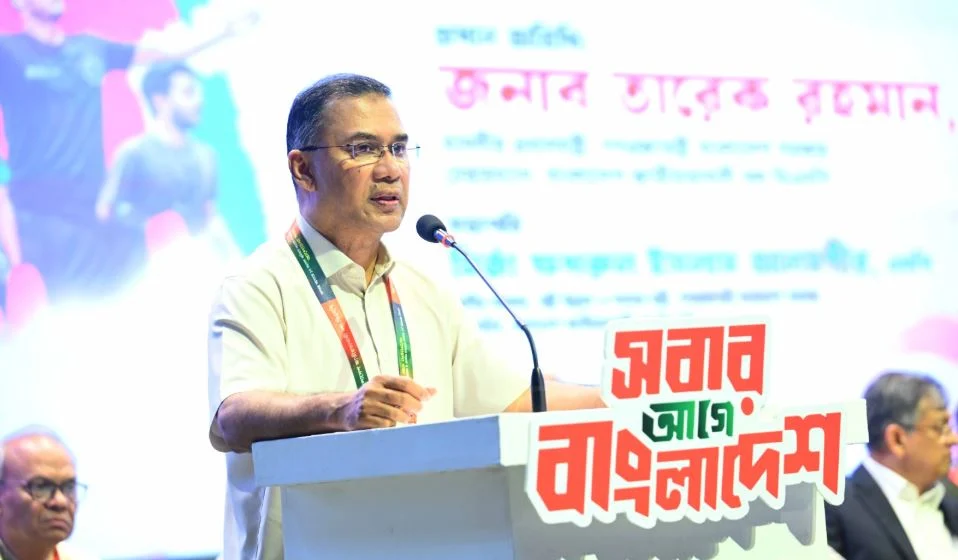
In his message, Prime Minister Tarique Rahman said, "For all those who cherish freedom and democracy, August 5 is a day of joy, a day of victory and a day of the restoration of democratic political rights. Exactly two years ago today, on August 5, 2024, the heroic students and people of this country secured a historic victory by bringing to an end more than one and a half decades of fascist rule.
In the face of the mass uprising, he said, the fascist government was forced to flee the country. Bangladesh was freed from its grip. This blood-soaked day of the heroic students and people is being observed nationally as 'July Mass Uprising Day', he added.
For more than one and a half decades, the Premier said, in the struggle against fascism and for the restoration of the people's right to vote and their democratic rights, the BNP, other anti-fascist political parties, and the people of differing views had to endure limitless persecution and repression.
He said countless people became victims of enforced disappearance, murder, abduction, assaults, false cases, torture and oppression. In leading this movement, the uncompromising leader of the nation, former Prime Minister late Begum Khaleda Zia, was also forced to spend years in the prison of the oppressors on false charges.
To silence the voices of those who stood for democracy, Prime Minister Tarique Rahman said, the fugitive autocrat, on its orders, established hundreds of secret detention centres across the country-known as 'Aynaghar'. In the dark cells of these secret facilities, countless people were held in a state of endless uncertainty for months and even years. Many were disappeared forever. The whereabouts of many leaders and activists, including former BNP MP Ilias Ali and Commissioner Chowdhury Alam, remain unknown to this day, he said.
He said the judiciary, the Election Commission and other constitutional and statutory institutions of the country had been rendered ineffective. The Constitution was disregarded, the people's voting rights were taken away, and elections were reduced to a farce. The country's politics, economy, education and healthcare systems were devastated, and Bangladesh was turned into a subservient state.
He said the banking sector was pushed to the brink of collapse, while irregularities, corruption, plunder and money laundering were normalised. A personality cult was established. Yet, in the end, it could not survive, he added.
He said people from every walk of life-the heroic students, farmers, workers, rickshaw-pullers, day-labourers, garment workers, hotel and restaurant employees, transport workers, journalists, intellectuals, cultural activists, homemakers, women, children, and people from all sections of society-united and took to the streets during the July-August Mass Uprising of 2024.
Desperate to crush the uprising, he said, the fascist government opened fire on pro-democracy citizens, killing people as though they were birds. It even fired upon the people from helicopters. Not even infants in their mothers' arms were spared from the reckless gunfire of the autocrats.
Standing before the guns of the autocrats, the outstretched chest of brave martyr Abu Sayed of Rangpur, martyr Wasim Akram of Chattogram, martyr Mugdho of Dhaka, and countless other courageous sons of this soil became enduring sources of inspiration for all who stood for democracy, he said.
During the July-August Mass Uprising alone, the Premier said thousands of people were martyred. At least 30,000 people were injured. Hundreds lost limbs and were permanently disabled, while many lost their eyesight for life, he added.
He said the sacrifice of thousands of lives did not go in vain. Through the united movement of the pro-democracy people, the fascists fled Ganabhaban on 5 August. The so-called members of parliament fled the Jatiya Sangsad (National Parliament). The Chief Justice fled the Supreme Court. The Chief Khatib fled Baitul Mukarram. Ministers fled the Cabinet. The collaborators of fascism went into hiding. What happened in Bangladesh on 5 August was not only unprecedented in the history of Bangladesh, but also in the history of the world, he said.
From 1971 to the present day, millions have made sacrifices at every turning point in the struggle for the country's independence and its defence, in movements against autocracy and fascism, and in the fight to restore democracy.
"On this historic day, I remember with profound respect all the martyrs. By sacrificing their lives for the freedom, rights and dignity of the country and its people, they have left us in their debt. Bangladesh owes an enduring debt to every martyr's family. Now it is our turn to repay that debt," he said.
Tarique Rahman said, "Let our pledge be to honour that debt through our sincere efforts to build a just, self-reliant, democratic and humane Bangladesh by ensuring the political and economic empowerment of people and by establishing equality, human dignity and social justice."
He said, "The year 1971 was the war to achieve independence, while 2024 was the struggle to defend the freedom of the country and its people. Bangladesh has never forgotten the martyrs of the Liberation War of 1971 and it will never forget the martyrs of the Mass Uprising of 2024."
Newspapers will publish special articles, literary features, magazines and supplements to mark the occasion.
Prime Minister Tarique Rahman will inaugurate the July Mass Uprising Memorial Museum at 9:00 am on August 5.
On the same day, at 11:00 am, a reception for the families of the July martyrs and the July fighters, along with a discussion highlighting the significance of the day, will be held at the Bangladesh-China Friendship Conference Centre in Dhaka. Acting President Hafiz Uddin Ahmed, Bir Bikram, is expected to attend the programme as the chief guest.
Bangladesh Television, Bangladesh Betar, private television channels, private radio stations, FM and community radio stations will broadcast special programmes, including discussion sessions on the July Mass Uprising.
Educational institutions across the country will organise discussions on the significance of the day, as well as essay writing, recitation and drawing competitions.
Bangladesh missions abroad will also arrange discussion programmes to mark the occasion.
Religious institutions across the country will organise special munajat and prayers after Zuhr prayers or at a convenient time on the same day.
Major roads and traffic islands in Dhaka and other cities across the country will be decorated with the national flag, banners, festoons and colourful pennants. July memorials will also be illuminated. A commemorative postage stamp will be issued to mark the day.
Government, private and autonomous museums will remain open to the public free of charge from morning until evening on the day.
All government and private recreational facilities across the country will remain open to children from morning until evening with free admission.
Special meals will be arranged at all government hospitals, prisons, government children's homes, child rehabilitation centres, disability welfare centres, day-care and child development centres, and shelters for the homeless across the country to mark the observance.