Tuesday
11 August, 2026
News Flash
News Flash
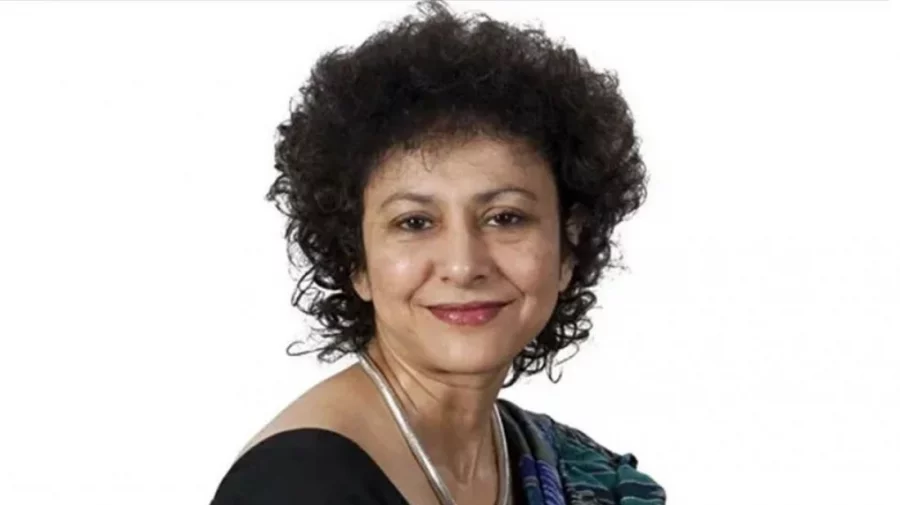
DHAKA, Aug 11, 2026 (BSS) — Bangladesh Permanent Representative to the United Nations (UN) in New York, Irene Khan has called upon the international community and development partners to strengthen their support for the country’s efforts to accelerate the implementation of the Sustainable Development Goals (SDGs) and ensure a sustainable graduation from the Least Developed Country (LDC) category.
Irene Khan said this while addressing a session on the second day of the three-day national conference titled “Navigating Five Year Strategic Framework for Achieving SDGs: Policy, Partnership and Priorities”.
The parallel session titled “Role of Development Partners on Implementing Five Year Strategic Framework for Reform and Development (July 2026-June 2031) and SDGs” was held at the Bangladesh-China Friendship Conference Centre (BCFCC) today which brought together representatives of the United Nations, development partners and government officials to discuss key development priorities and partnership needs.
Irene Khan said the country was going through a rare “window of opportunity” to make a major breakthrough in its development journey.
She said the government is keen to engage with the international community to broaden and deepen discussions on development priorities and implementation of the SDGs.
Irene Khan said her role as Bangladesh’s Permanent Representative to the UN would also be to act as a bridge between the country’s development efforts and the international community, ensuring that the issues discussed at the national level receive due attention at the global level.
She noted that Bangladesh had performed well in achieving the Millennium Development Goals (MDGs), but the SDGs are considerably more comprehensive, interconnected and demanding.
She stressed that the remaining period for achieving the goals would be a difficult but important journey for Bangladesh.
Referring to the government’s commitment, Khan said it is focusing on investment in key sectors, strengthening implementation and monitoring, and working closely with development partners to make up for lost time.
She also underscored the importance of domestic partners, particularly civil society and local communities, in achieving the SDGs.
“Civil society and communities have an incredibly important role to play because you’re the ones who go out there and actually are the last mile of the delivery,” she said.
She also highlighted the strong linkage between Bangladesh’s SDG implementation and its LDC graduation process.
Referring to Bangladesh’s request for a time-bound extension of the LDC graduation preparation period, Irene Khan said the extension would help the country achieve a sustainable and irreversible transition out of the LDC category.
She said the two processes create a “double incentive” for Bangladesh to accelerate reforms and development initiatives.
Irene Khan pointed out that several priorities identified in Bangladesh’s roadmap for the requested extension are closely linked to SDG implementation. These include reforms to strengthen the financial sector, improving the investment climate, enhancing domestic resource mobilisation, facilitating trade and negotiating new trade agreements.
“We would like to do, in the next three years, many of these reforms while simultaneously investing in and accelerating the delivery of the SDGs,” she said.
She urged development partners to take these two interconnected priorities into account and encourage Bangladesh on both fronts.
Describing the present period as a rare opportunity in the country’s history, Irene Khan said there is growing enthusiasm from communities to the highest levels of leadership to achieve a major development breakthrough.
She acknowledged that Bangladesh is facing difficult circumstances and resource constraints, saying the country would need to be creative and make the best possible use of its limited resources.
At the same time, she said Bangladesh has no shortage of energy, creativity and innovation and expressed confidence that these strengths can be effectively utilised to accelerate development.
Irene Khan called on the international community to stand beside Bangladesh and provide the necessary support during this critical phase of its development journey.
“We have to be creative. We have to squeeze the last penny that we have because money is short. But at the same time, there is no shortage of energy or creativity or innovation in this country,” she said.
She concluded by assuring development partners that Bangladesh would continue to engage with them at national and international levels to advance its SDG and development priorities.
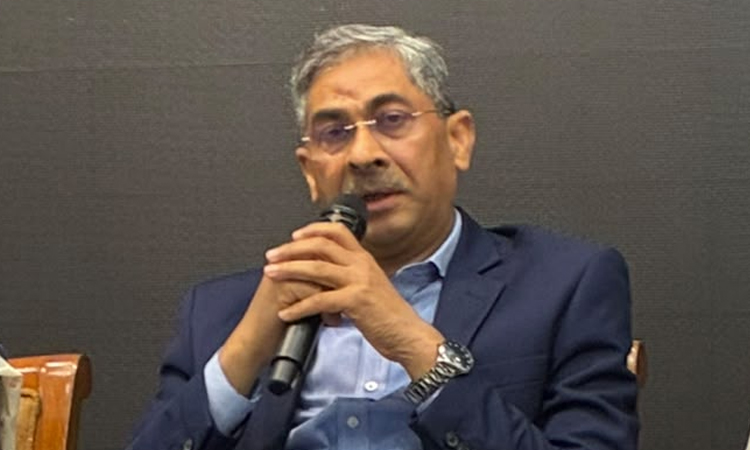
Principal Coordinator on SDG Affairs at the Prime Minister’s Office Dr SM Abdul-Awal while making his presentation sought enhanced support from development partners, including concessional financing, debt relief and technical assistance, to accelerate the country’s progress towards achieving the SDGs by 2030.
Awal said Bangladesh needs stronger partnerships and resources to implement its development priorities, particularly for marginalized and vulnerable communities.
He said Bangladesh’s performance remains weak in several SDG indicators, particularly in health, water and sanitation, affordable clean energy and other areas, while the country has made relatively better progress in poverty reduction, education and gender equality.
He identified poverty and vulnerability reduction, health and education, job creation, skills development, investment and export diversification, food security, rural enterprises, clean energy, climate resilience, and transparent and efficient service delivery as key priorities for accelerating SDG implementation by 2030.
Highlighting several flagship initiatives, including the Family Card, farmers’ initiatives, plantation programmes, e-healthcare, primary healthcare centres, education reforms, youth employment, skills development, startup funding and rural entrepreneurship, he said these programmes are aimed at improving the socioeconomic conditions of marginalized people.
“We need your support,” Abdul-Awal told development partners, seeking concessional loans, debt relief, technical assistance and increased access to development financing to support Bangladesh’s socioeconomic transformation and ensure that no one is left behind.
UN Resident Coordinator in Bangladesh Carol Flore-Smereczniak who moderated the session said development partners are ready to align their support with Bangladesh’s nationally led five-year strategic framework and help accelerate progress towards the Sustainable Development Goals (SDGs).
She said the SDGs should not be treated as a parallel agenda, but as a practical vehicle for achieving Bangladesh’s aspirations for stronger institutions, inclusive growth, resilience and prosperity.
She said the government has set the objective of transforming Bangladesh into a trillion-dollar economy by 2034.
“Our role as development partners is to support implementation where possible and bring practical solutions that people can see and feel,” she added.
She said LDC graduation would create new opportunities but also require greater competitiveness, export diversification, stronger institutions and diversified sources of financing.
“Closing the finance gap will require a mix of domestic resource mobilization, the quality of public spending, greater private sector participation, climate finance and continued international support,” she said.
UN Women Representative Gitanjali Singh, Dr Valentine Achancho, Country Director, IFAD, Diepak Elmer, the Charge d’ Affaires and Head of Cooperation at the Embassy of Switzerland, Adam Aspden, British High Commission, Edwin Koekkoek, First Counsellor, Acting Head of Cooperation, EU, Sonali Dayaratne, Deputy Resident Representative, UNDP, Felix Helgesson, Deputy Head of Development Cooperation, Embassy of Sweden, Hasina Begum, Social Policy Manager, UNICEF, Dr Farzana Dorin, National Professional Officer, Policies for Prevention of NCDs, WHO, Dhruv Sharma, Senior Economist, World Bank, Owais Parray, Senior Economist, UNDP, and Sardar Asaduzzaman, Assistant Resident Representative, UNDP, spoke among others at the session.