Monday
03 August, 2026
News Flash
News Flash
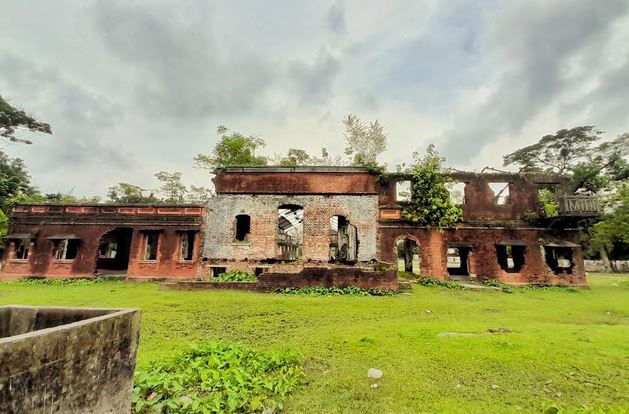
LALMONIRHAT, Aug 2, 2026 (BSS) - The historic M.T. Hossain Institute, a 121-year-old cultural landmark in Lalmonirhat, is in urgent need of restoration as years of neglect and inadequate maintenance have left the building on the verge of collapse.
Located on Ramakrishna Mission Road in Lalmonirhat town, the institute once served as one of the leading centers for literature, drama, music, and cultural activities in northern Bangladesh. Built on approximately 2.73 acres of Bangladesh Railway land, the historic structure also functioned as one of the district's prominent cinema halls in its early years.
A recent visit to the site revealed extensive deterioration. Doors, windows, tin roofing and much of the wooden framework have suffered severe damage. Cracks have appeared in several walls, bricks are falling off and the surrounding area has become overgrown with weeds, creating an abandoned appearance. Local residents fear that without immediate conservation efforts, the building may be lost forever.
Ashraf Hossain and Tulu Mia, elderly residents of Ward No. 7, told BSS that the institute was once home to a revolving stage, a well-equipped library, regular theatrical performances, musical events, literary gatherings and film screenings.
They recalled that writers, poets, dramatists and cultural personalities from different parts of the country, as well as from West Bengal in then undivided India, frequently participated in its events.
According to historical records, the institution was established in 1905 by British railway officials under the name "Indian Institute." It was later renamed "Pears Institute". In 1934, following the untimely death of M.T. Hossain, the chief ticket examiner of the railway and a supporter of the anti-British movement, railway employees demanded that the institute be renamed in his honor.
Veteran cultural personality, lyricist, and composer Satyendranath Roy said that even after Bangladesh's independence, the M.T. Hossain Institute remained the region's principal center for literary and cultural activities. Regular cinema screenings were also held there. However, prolonged neglect has gradually diminished its historical significance and cultural role.
He urged the authorities to take immediate steps to preserve the institution.
Writer Nishikanta Roy alleged that some dishonest railway officials and local land grabbers had attempted on several occasions to loot the institute's assets and occupy its land. However, he said those attempts were successfully resisted through protests by local cultural activists and conscious citizens.
Veteran Bhawaiya singer Tajul Chowdhury, who has performed on Bangladesh Betar and Bangladesh Television, described the institute as "not merely a building but an important part of Lalmonirhat's cultural history." He warned that failure to restore it would mean losing an invaluable piece of the district's heritage.
District Cultural Officer Md. Hamidur Rahman stressed the need to renovate the century-old establishment and reopen it for cultural activities. He called on the government to undertake immediate preservation and restoration initiatives.
Bangladesh Railway's Divisional Estate Officer and Executive Magistrate Md. Monjur Hossain said the authorities were aware of the building's deteriorating condition and that necessary measures would be taken in accordance with decisions made by higher authorities.
Lalmonirhat Deputy Commissioner Muhammad Rashidul Haque Pradhan also assured that discussions would be held with the relevant departments to determine appropriate steps for preserving the historic site.
Local cultural activists believe that the M.T. Hossain Institute is more than an old building—it is one of the most important symbols of Lalmonirhat's cultural heritage. They have urged the government to restore the institute and revive it as a vibrant center for literature, theatre, music and cultural activities, warning that further delays could result in the permanent loss of a significant chapter of the district's history.