Tuesday
28 July, 2026
News Flash
News Flash
By Md Aynal Haque
RAJSHAHI, June 7, 2026 (BSS)- Due to water shortages in the dry season, cultivation on thousands of hectares of land in the Rajshahi region is disrupted. Farmers incur losses every year.
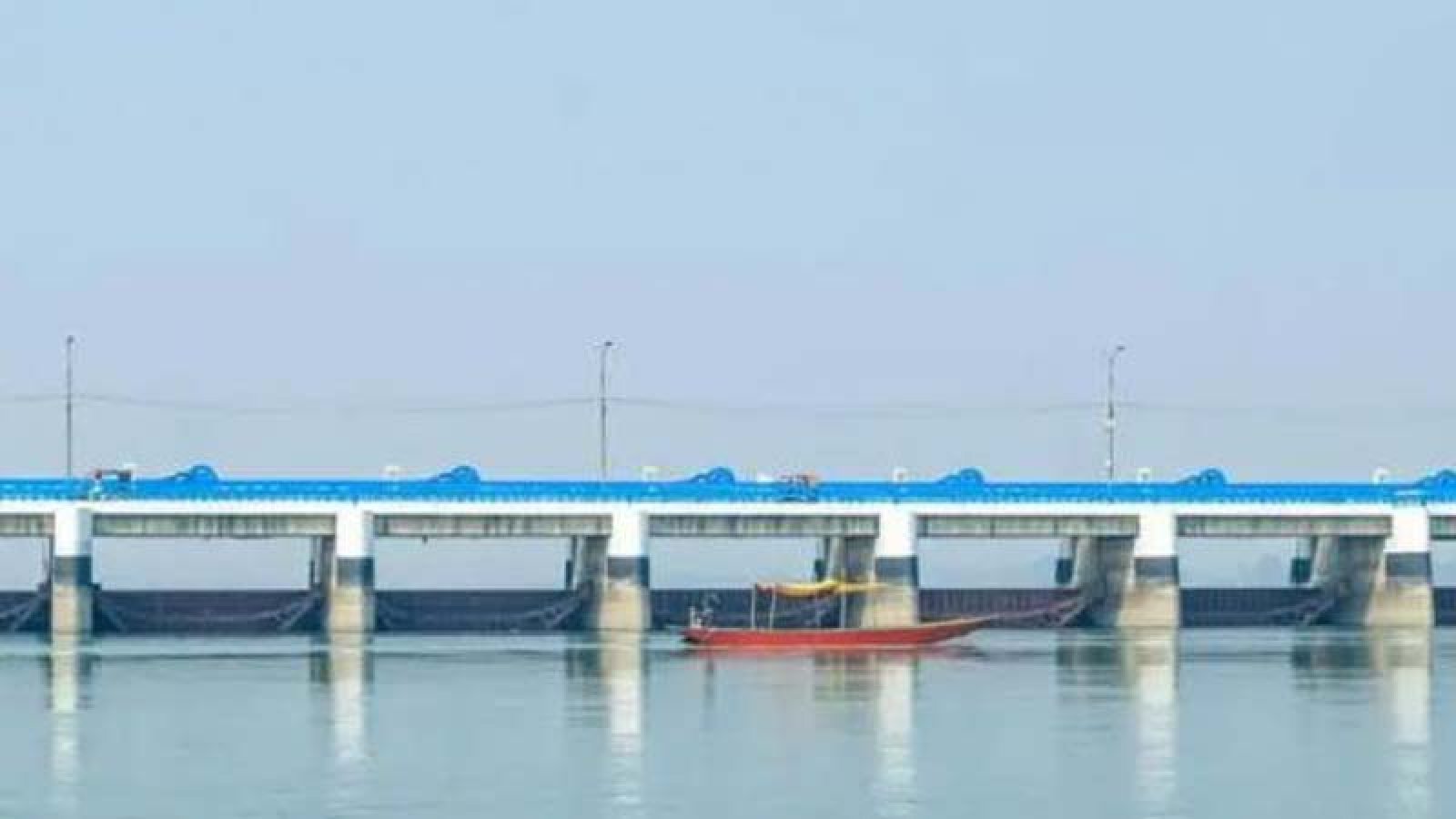
This time, the Padma Barrage is bringing hope to agriculture. If water is conserved, several lakh people in the Rajshahi region will benefit.
The Padma Barrage is set to be built in Pangsha, Rajbari, to protect groundwater levels. Through it, the massive volume of monsoon water can be stored.
Officials from the Agriculture Department and Water Development Board say the barrage will radically change the fate of farmers.
According to officials, this integrated water management will restore navigability to the tributaries of the Padma.
The Sundarbans can be protected by preventing salinity. In addition, the water supply for the Rooppur Nuclear Power Plant will also be uninterrupted.
The Water Development Board says this project is set to be a ‘game changer’ not just regionally but for the national economy as well.
Rezaul Karim, Executive Engineer of the Water Development Board in Rajshahi, said, “We are now heavily dependent on groundwater.
Instead of extracting that groundwater, we will be able to use surface water for irrigation.”
He also said: “The Rooppur Power Plant has been built; we will also have sufficient water for their cooling purposes.
The long-standing demands of the farmers of our region, for which we have been protesting, will definitely be successful.”
Before the election, Prime Minister Tarique Rahman had promised the Padma Barrage at a public meeting in Rajshahi.
He said the Padma Barrage would be built to solve the agricultural and water problems of the Rajshahi region.
At that time he said, “If a government of sheaf of'paddy' is formed, Inshallah, we will start the work of constructing the Padma Barrage. If we can build the Padma Barrage, the people of this entire area will benefit – the people of Rajshahi, Natore, Chapai we will begin work on the Padma Barrage.”
Farmers in Rajshahi say that paddy cannot be cultivated due to lack of water. Because of this, they have to turn to alternative crops. If water is available, it will be good for us.
Abu Taher, a farmer from Borgachi village in Godagari Upazila, said, “If water in the Padma remains stable, then there will be no problem with water in deep tube wells.
Then there will be no problem with cultivation. Especially those of us who farm on the chars will benefit the most.”
Abdul Bashir, a farmer from Kishorepur village in Bagha Upazila, said, “Water recedes from the Padma from winter onward. At that time we faced problems with cultivation. We face the most problems for water in the month of Chaitra.
If water can be retained, there will be benefits in many ways. Also, travel to and from the chars will become much easier for people.”
River researcher Mahbub Siddiqui said that if water is retained by constructing the Padma Barrage, it will be possible to keep the water level of the river from Rajshahi to Chapainawabganj relatively high.
The water stored in the barrage will be diverted through various river routes, with the goal of keeping water flow active in these rivers during the dry season.
At the same time, water scarcity in the southwest and northwest regions will be reduced.
Through the Padma Barrage, it will be possible to store about 2,900 billion liters of water. Irrigation projects will also be revived.
The Padma Barrage and Ganges Off-Take Structure will also have provisions for hydropower generation.
About 113 megawatts of electricity can be generated annually. At the same time, about 2,900 million cubic meters of water will be conserved during the dry season, which will restore flow to the Hisna-Mathabhanga, Gorai-Madhumati, Chandana-Barasia, Ichamati, and Baral river systems.
In addition, about 340 kilometers will be dredged to revive the Gorai and Baral rivers. There are plans to release a minimum of 570 cubic meters per second of water through this barrage during the dry season.