Wednesday
05 August, 2026
News Flash
News Flash
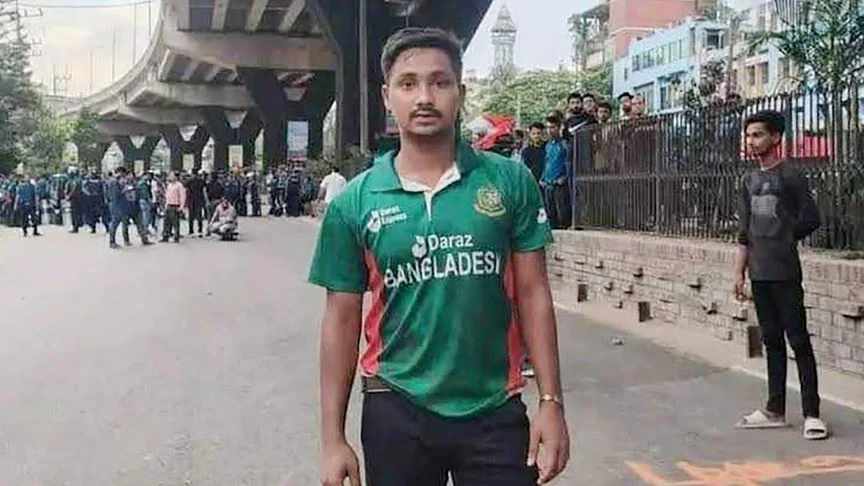
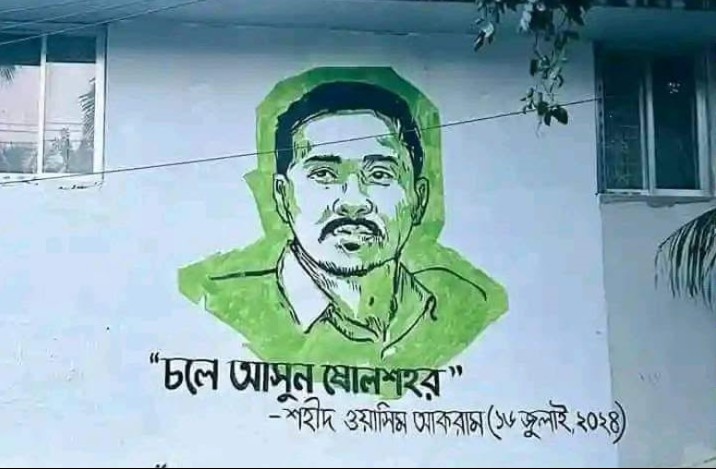
CHATTAGRAM, Aug 4, 2026 (BSS) - At around 3 pm on July 16, 2024, a call appeared on Facebook - “Come to Sholashahar.” Md. Wasim Akram, a third-year student of Sociology Department of Chattogram College and a Jatiyatabadi Chhatra Dal (JCD) leader, posted the status on his Facebook and responding to his call, hundreds of students and young people took to the streets.
Shortly thereafter he issued a second post saying “My beloved organisation stands beside the students. I will die as a martyr with this identity” and then and headed to Sholashahar himself.
Within two hours of posting the second status, Akram was shot in the Muradpur area of the city as his call simultaneously prompted the “gundas of ’the fascist government” to be equipped with lethal weapons to prevent the protestors.
Akram’s comrades rushed him to Chattogram Medical College (CMC) Hospital, where he succumbed to his injuries at around 5:00 pm, while the news spread like a wildfire, igniting the anger of the port city people giving the momentum to the uprising.
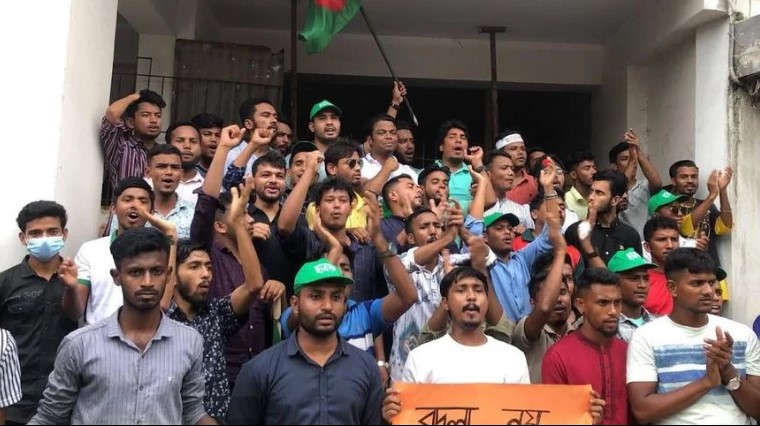
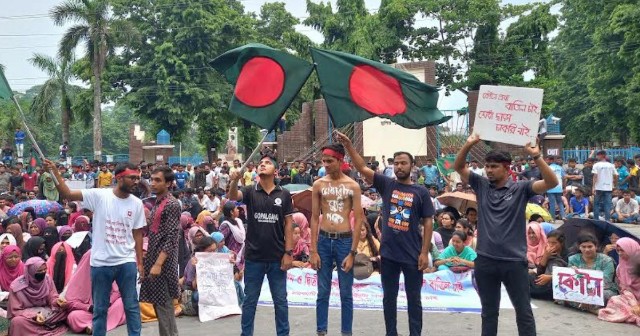
From the following day, students, young people and citizens from almost all educational institutions in Chattogram joined the anti-quota movement and demanded justice for killing rallying at most major points across the city. The spark generated by his death eventually culminating in a mass upsurge that toppled the regime forced Sheikh Hasina to flee the country on August 5.
Like elsewhere in the country the student movement in Chattogram continued to intensify from the second week of July 2024, defying various forms of repression when “armed mastans” of the ruling party alongside police were attacking the protestors.
Yet the youth-led movement on the streets did not lose its momentum, rather, it grew stronger day by day. The government had cut off internet connectivity, rendering social media platforms inoperative, making it difficult to know what was happening where. Akram’s death gave the uprising a new dimension leading to their fierce clashes with police and ruling party “gundas”.
Among those who had close contact with Akram regarding movement programmes and participation since the beginning of the anti-discrimination student movement in Chattogram were Chattogram Metropolitan Chhatra Dal Joint Convener Salauddin Shahed and Chittagong University unit of Jatiyatabadi Chhatra Dal General Secretary Abdullah Al Noman.
Noman told BSS their initial plan for the July 16 programme was to gather near Sholashahar Railway Station but it became difficult to approach the area because of the armed presence of Chhatra League and Jubo League activists. “So, we moved to Muradpur. There was also an armed presence of police and Chhatra League-Jubo League activists in the Muradpur area. But we decided to move forward,” he said.
He recalled that police and Chhatra League-Jubo League activists launched a three-pronged attack on the protesters prompting them to be split into different groups and “at that time, Wasim was shot near the Chattogram Education Board.”
Noman said during his last call Akram told him “I am near the Education Board with senior leaders of College Chhatra Dal. (Chattogram city JCD Joint Convener) Salauddin Shahed is also here. Tell me where you are going to take position before the procession starts, I will come there.”
Noman said he asked Akram to stay where he was adding “I will contact (JCD leader) Mizan and let you know where I will take the position. You come there”.
Chattogram Metropolitan JCD Joint Convener Salauddin Shahed told BSS on that day he took a position at the Muradpur Education Board area with Akram and others when they came under brutal attack by police and Chhatra League activists, forcing them to take shelter on the second floor of the board building.“We were tactically making our way out from there. Just after I crossed the road, Wasim (Akram) put up resistance and was shot there,” he said.
Shahed said even at the hospital they came under attack and after going through several horrific situations, “I took his (Akram’s) body to Pekua, where I buried him with my own hands”.
“Dring the munajat that day, I prayed to Allah, ‘O Allah, in exchange for the body of this innocent and oppressed person, free our country and its people from the hands of fascist Hasina.’ Allah accepted that prayer of ours,” he said said. Shahed said he personally built Akram up as an activist and “I was his organisational guardian”.
He said the organisation’s central leadership had instructed them to remain at the forefront of the movement identifying themselves as “general students” and “we were joining the movement every day in accordance with that directive”.
Asked about the status of the murder case over the Akram killing, Shahed said the recording of witness testimonies was yet to be completed at the International Crimes Tribunal (ICT-BD) while a prosecution team took his statement few months ago.
Status of murder cases
A month after Akram’s death on July 16, his mother Jochhna Begum filed a murder case with Panchlaish Police Station accusing deposed prime minister Sheikh Hasina and former road transport and bridges minister Obaidul Quader along with nearly 250 people as perpetrators.
Later, a case was filed with the International Crimes Tribunal over crimes against humanity in connection with the deaths of 11 people, including Akram, in Chattogram.Following an investigation into the case, the prosecution submitted a formal charge against 22 people over the killing of six people, including Akram.
On April 4, a formal charge was submitted at the ICT-BBD against 22 people accusing them of crimes against humanity while they included former ministers including Hasan Mahmud, Mohibul Hasan Chowdhury Nowfel and ABM Fazle Karim Chowdhury.
The other accused are former Chattogram City Corporation mayors AJM Nasir Uddin and Rezaul Karim, Mahiuddin Bacchu, Helal Akbar, Nurul Azim Rony, Shaibal Das Suman, Mohammad Firoz, Abu Salek, Esrarul Haque, HM Mithu, Nur Mostafa Tinu, Debashish Pal Debu, Zamir Uddin, Azizur Rahman, Imran Hasan Mahmud, Zakaria Dastagir, Mahiuddin Farhad, Suman Dey and Towhidul Islam.
Of the 22 accused named in the charge, former MP Fazle Karim Chowdhury had already been arrested in another case. On February 5, he was also shown arrested in the Akram murder case.
Akram was a resident of Mehernama Bazarpara in Pekua upazila of Cox’s Bazar, was the third among five siblings of them his while his two younger sisters are school students. His elder brother was staying abroad and returned home after his death.
Akram academically meritorious as he had passed his third-year honours examinations with first-class, while the result was published after his death.
Approached by BSS Akram’s father said “the country was freed from the grip of fascist rule at the cost of the lives of many of our children, including Wasim”.
“Those who killed my son should be brought to justice quickly. I want to live long enough to see justice for the killing of my son,” he said.