Wednesday
05 August, 2026
News Flash
News Flash
By Md Mamun Islam
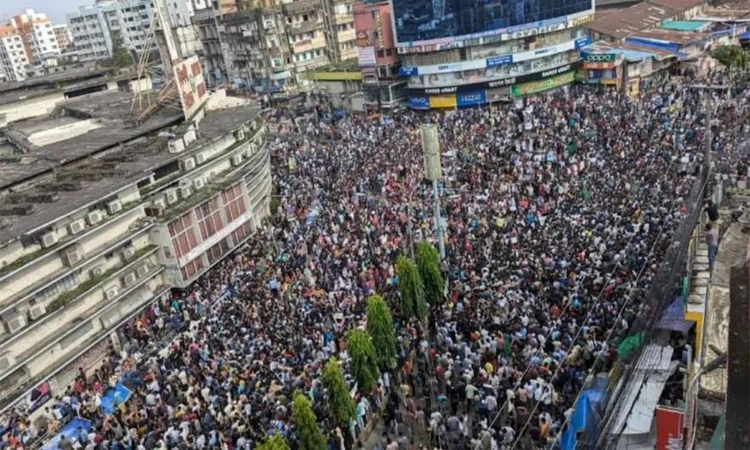
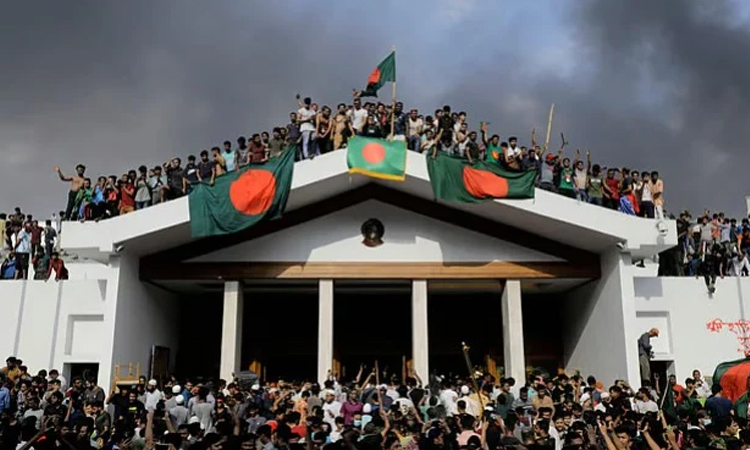
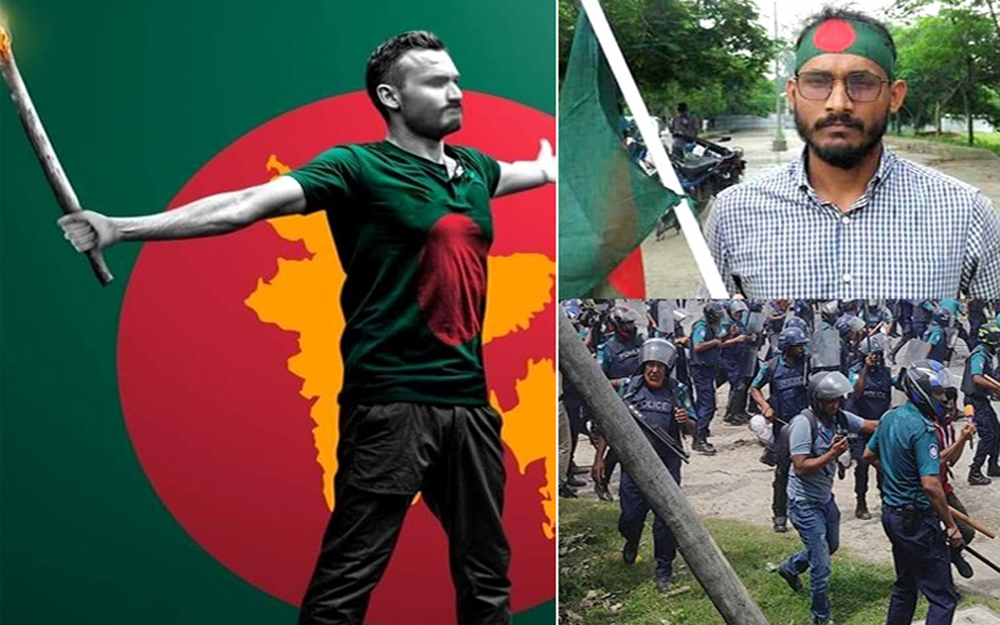
RANGPUR, August 5, 2026 (BSS) – Two years ago today, on August 5, thousands of people took to the streets of martyr Abu Sayeed's Rangpur to celebrate after news spread that Sheikh Hasina had fled the country in the face of the student-people mass uprising.
Eyewitnesses said students from educational institutions, along with children, teenagers, youths and elderly people, took to the streets carrying national flags to express patriotism, uphold revolutionary values and participate in the victory celebrations with various slogans.
At around 3:30 pm, thousands of people brought out jubilant processions from Zilla School Mour, Shapla Chattar, Paira Chattar, Lalbagh Chattar, Park Mour, Modern Mour, Press Club Chattar, Jahaz Company Mour and Town Hall Chattar, among other areas of the city.
Thousands of protesting students also marched to Shaheed Abu Sayeed Chattar in front of the main gate of Begum Rokeya University, Rangpur (BRUR), where they held a victory rally.
Processions were also brought out by the then anti-government political parties, including BNP, Jamaat-e-Islami, Gano Sanghati Andolan, Islami Andolan and Gano Adhikar Parishad, along with their affiliated organisations.
Participants distributed sweets at various places, while students and members of the public offered prayers and thanksgiving in some locations.
On August 5, 2024, a mob vandalised the mural of Sheikh Mujibur Rahman at the Rangpur Zilla School intersection, as well as the district and metropolitan Awami League offices and the houses of several party leaders.
Following the killing of Abu Sayeed, who was shot dead with his arms outstretched in Rangpur city on July 16, 2024, public participation in the Anti-Discrimination Student Movement increased dramatically across the country.
This became evident on August 3, when the general public joined students in large numbers on the streets.
The movement, which gained momentum with the announcement of a one-point demand for the resignation of the autocratic regime at the Central Shaheed Minar in Dhaka and the launch of the non-cooperation movement, eventually transformed into a nationwide mass uprising involving people from all walks of life.
Despite the rain, large numbers of teachers, students, physicians, engineers, lawyers, businesspeople, cultural activists and guardians joined demonstrations in Rangpur.
Eyewitnesses and local sources said six people, including two students, two businessmen, an auto-rickshaw driver and a goldsmith, were killed in police firing in Rangpur city between July 16 and July 19, 2024.
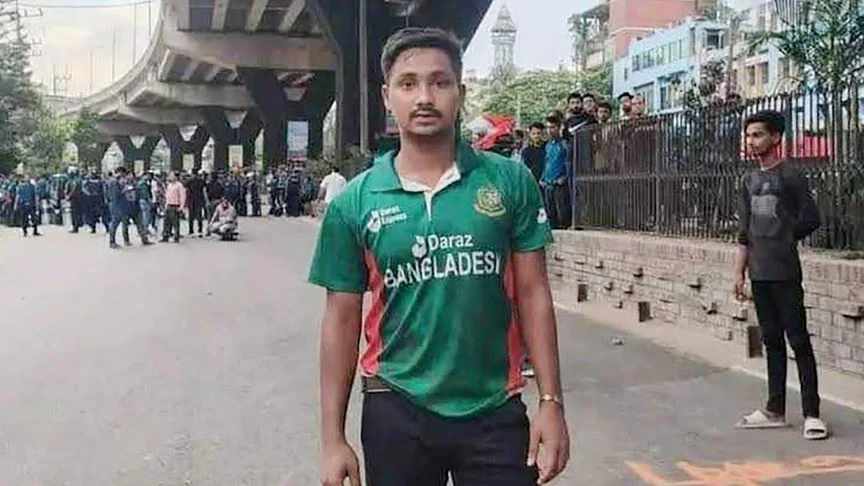
Abu Sayeed, a brilliant student of the Department of English at Begum Rokeya University and a student coordinator, was shot dead on July 16 while standing with his arms outstretched in front of police.
His death during the Anti-Discrimination Student Movement shook the nation, touched people's conscience and drew international attention.
The autocratic regime's repressive policies deeply affected the minds of students. The movement ignited by Abu Sayeed's supreme sacrifice eventually turned into a nationwide mass uprising.
On the afternoon of July 18, fierce clashes erupted between students and members of the public on one side and police on the other at Modern intersection in Rangpur city, where auto-rickshaw driver Manik Mia of Ghaghot Purbo Para was killed in police firing.
On that day, angry students and members of the public vandalised and set fire to the district and metropolitan Awami League offices, the Jatiya Sramik League office, the Metropolitan Police Detective Branch office, Tajhat Police Station and the Nawabganj Police Outpost.
On July 19 at around 3 pm, the district and metropolitan BNP organised a protest march and rally from the party office at the Grand Hotel intersection.
Several thousand leaders and activists of BNP and its affiliated organisations later joined the procession, along with thousands of students and members of the public from different parts of the city.
As the procession moved towards the City Corporation area, clashes broke out between protesters and police.
Eyewitnesses said the area turned into a battlefield as law enforcement agencies, including police and Border Guard Bangladesh (BGB), fired rubber bullets, sound grenades and tear gas shells.
A chase and counter-chase ensued as students and protesters resisted the police with bricks and stones. At one stage, police opened fire indiscriminately on the protesters.
Sajjad Hossain, a vegetable seller from Purbo Shalbon; Moslem Uddin Milon, a goldsmith from Purbo Ganeshpur; Merajul Islam, a fruit seller from New Jummapara; and Abdullah-Al Tahir, a student of the Bangladesh Institute of Glass and Ceramics in Dhaka and a resident of Purbo Shalbon, were killed on the spot.
On August 4, 2024, a day before the fall of the government, Sheikh Hasina's administration took a hard-line stance. A writ petition seeking a directive prohibiting the use of firearms against protesters was also dismissed that day.
Meanwhile, the 'March to Dhaka' programme was announced, and student coordinators called on students and people across the country to travel to Dhaka to join the programme.
On August 4, a large presence of Awami League leaders and activists and their affiliated organisations from different upazilas of Rangpur was seen in the city.
They were reportedly seen taking positions in different areas carrying locally made weapons as well as pistols.
Earlier in the day, protesters had begun gathering on the Rangpur Town Hall premises.
Tension escalated around noon when leaders and activists of the ruling party, who had assembled in the Jahaz Company Mour area, brought out a protest procession.
They later marched towards the Town Hall and chased protesters in the City Bazar and Supermarket areas.
Awami League leaders and activists attacked protesters with pistols, sticks and iron rods.
After repeated clashes and chases, protesters took control of several areas, including the City Corporation front, Supermarket, Jahaz Company Mour and Paira Chattar.
Five people were killed in clashes between protesters and Awami League leaders and activists in different parts of Rangpur city that day.
Eyewitnesses alleged that councillor Haradhan Roy Hara and Awami League leaders and activists openly fired on students and members of the public.
The violence spread from Rangpur city to the upazila level on August 4 as students, members of the public and activists of anti-government political parties put up resistance.
More than 100 injured people were rescued and admitted to Rangpur Medical College Hospital and several private hospitals.
Many later left the hospital without completing treatment to avoid possible police harassment.
Rahamat Ali, a former student coordinator of Begum Rokeya University and a close associate of Abu Sayeed, said Hasina's misrule could not survive despite the many lives lost in her attempt to cling to power.
"This is a historic event for Bangladesh after the independence of 1971," he said.
"This awakening of the people against Hasina's anti-people dictatorial rule is a new warning not only for future autocrats in Bangladesh but also for authoritarian governments around the world," he added.
Imran Ahmed, former convener of the Rangpur district Anti-Discrimination Student Movement committee, said the countdown to the fall of Sheikh Hasina's repressive rule began the moment Abu Sayeed stood fearlessly before police with his chest outstretched.
"We will never forget Abu Sayeed's courageous self-sacrifice. His outstretched arms inspired people across the country to join the students on the streets. Hasina's fall began with Abu Sayeed's defiant stand," he said.
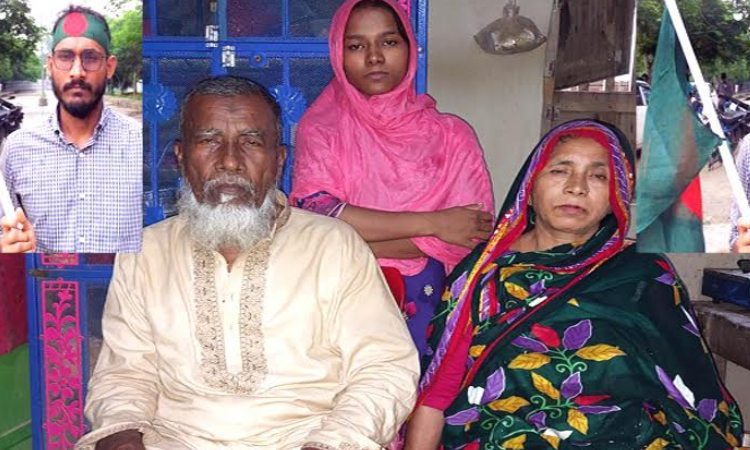
Nazmeem Islam, widow of martyr Merajul Islam, said tearfully, "My husband was killed in police firing in front of City Bazar. My two sons have lost their father, and I have lost my husband. I want justice."
"Like every family of the July martyrs, I also seek justice for the July massacre. I believe the current government will ensure justice promptly and uphold the spirit of the July uprising," she said.