News Flash
DHAKA, June 4, 2026 (BSS) - The Centre for Policy Dialogue (CPD) today emphasized the importance of governance reforms and institutional strengthening to help Bangladesh navigate ongoing economic challenges and build a more resilient growth trajectory.
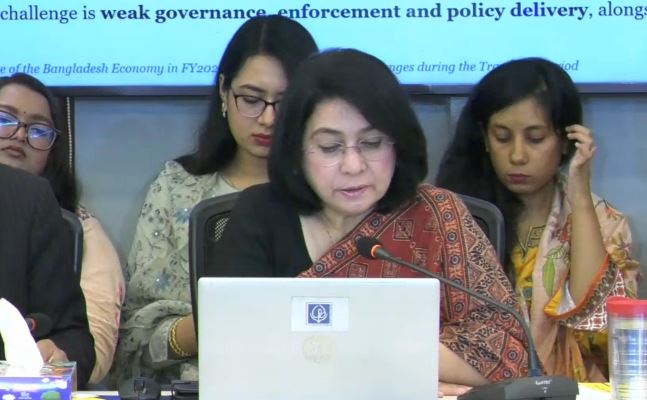
Presenting a keynote paper titled "State of the Bangladesh Economy in FY2025-26: Multidimensional Challenges during the Transition Period" at a media briefing in the city, CPD Executive Director Dr. Fahmida Khatun noted that while the economy is facing a number of pressures, there are also encouraging signs of resilience that can support recovery and future growth.
She highlighted that inflation remains a key concern, with the headline- inflation standing at 9.04 percent in April 2026.
At the same time, CPD stressed the need for effective policy measures to protect purchasing power and support low-income households.
The think tank also underscored the importance of strengthening revenue mobilization and improving fiscal management to create greater space for development spending and private-sector-led growth.
In the banking sector, CPD called for accelerated reforms to enhance financial stability, improve governance and strengthen confidence in the financial system.
The organization recommended stricter enforcement of regulations and measures to address long-standing structural weaknesses.
Despite domestic and global challenges, Bangladesh's external sector demonstrated notable resilience.
According to the CPD assessment, the balance of payments recorded a surplus of US$3.6 billion in FY26, reversing a deficit of US$1.1 billion in the previous fiscal year.
The improvement was driven by a strong 19.8 percent growth in remittance inflows and increased external financing.
The report noted that remittance growth continues to provide crucial support to the economy, helping strengthen foreign exchange reserves and external stability.
CPD also pointed to the need for proactive measures to address global energy market uncertainties and enhance supply-chain management to minimize the impact of external shocks on the domestic economy.
The think tank emphasized that improving governance across sectors such as agriculture, health and labour would strengthen the country's capacity to manage future challenges more effectively.
It recommended better disaster preparedness, enhanced support for affected farmers, greater transparency in public procurement and stronger social protection measures.
CPD concluded that Bangladesh possesses significant economic potential and that sustained reforms, improved institutional accountability and effective policy implementation can help the country overcome current challenges, reinforce macroeconomic stability and advance its long-term development goals.