News Flash
By Rustom Ali Mondal
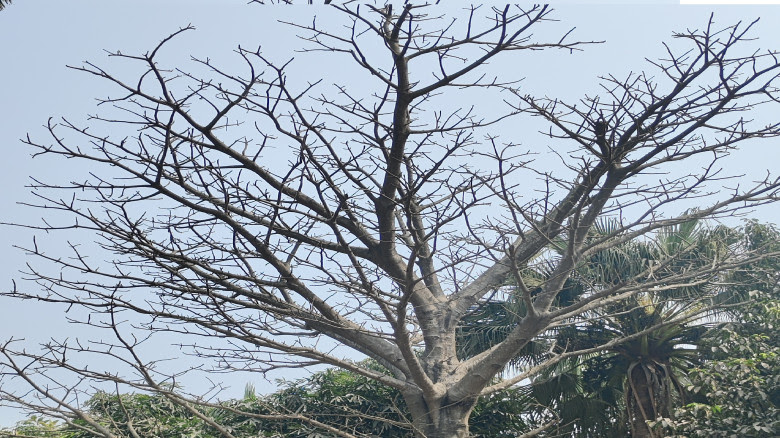
DINAJPUR, June 03, 2026 (BSS)- A rare baobab tree, known for its extraordinary ability to store vast quantities of water and survive for centuries, is thriving at the Botanical Garden of Hajee Danesh Science and Technology University (HSTU) here, adding both aesthetic and ecological value to the campus.
According to Professor Dr. Hasanur Rahman, head of the Department of the Horticulture at HSTU, the baobab tree is one of nature’s most remarkable creations.
While many people know that camels cannot actually store water in their bodies, few realize that some trees can. The baobab, with its massive trunk, can retain huge amounts of water, making it a natural reservoir in arid environments.
The tree at HSTU belongs to the species ‘Adansonia digitata’, a member of the Malvaceae family. Native primarily to Africa, the baobab is renowned for its immense size, longevity and resilience.
Some baobab trees found in Africa are estimated to be more than a thousand years old, while the species is believed capable of surviving for several millennia under favorable conditions.
One of the baobab’s most distinctive characteristics is its gigantic trunk, which can reach extraordinary diameters and store substantial quantities of water.
In drought-prone regions, a matured tree can hold tens of thousands of liters of water, earning it the title of a “water reservoir tree.” This adaptation enables the species to survive harsh desert conditions and contributes significantly to environmental stability in dry landscape.
The baobab is often referred to as the “upside-down tree” because its bare branches resemble roots extending into the sky.
It remains leafless for part of the year, while its large flowers bloom during the rainy season, typically opening at dusk and lasting for only about 24 hours. Their strong fragrance attracts bats and moths, which play a crucial role in pollination.
The tree also produces large, nutrient-rich fruits known as “super fruits.” Rich in vitamin C, calcium, potassium and dietary fiber, baobab fruit is widely valued for its nutritional benefits. The fruit pulp is used in beverages, dairy products and traditional medicine.
Because monkeys are particularly fond of the fruit, it is also known as “monkey bread.”
Beyond its fruit, nearly every part of the baobab has practical value.
The leaves are edible and contain significant amounts of protein, minerals and vitamins A and C.
The bark yields strong fibers used to make ropes, fabrics, musical instrument strings, waterproof bags and other products. Traditional medicinal practices also utilize various parts of the tree to address ailments such as fever, diarrhea, inflammation and skin disorders.
Professor Dr. Mohammad Shoaibur Rahman, Chairman of the Department of Agro-forestry at HSTU’s Faculty of Agriculture, noted that the university campus is home to numerous rare and valuable plant species.
He credited the late Professor Dr. T M T Iqbal, a pioneering academic of the institution, for introducing many uncommon trees to the campus, including the baobab.
“HSTU is often considered a biological hotspot because of its rich diversity of plant species,” he said.
“The baobab is one of the most remarkable among them. It contributes to environmental conservation, provides habitat for birds and bats and helps maintain ecological balance.”
He added that although the baobab trees are extremely rare in Bangladesh, a few historic specimens still survive, including one near the Puthia Rajbari area in Rajshahi. The tree at HSTU stands as an important example of conservation and botanical heritage.
The Botanical Garden itself serves as a popular retreat for students seeking relief from the pressures of academic life.
After classes, laboratory work and examinations, many students gather there to enjoy the peaceful surroundings.
The garden becomes particularly vibrant in the evenings, when students engage in discussions, cultural activities and informal gatherings beneath its diverse collection of trees.
Students Ashik Shahariar and Julhas Ferdous of the Faculty of Agriculture said, the garden offers a refreshing escape from academic stress.
“Spending time in nature helps us regain energy and focus,” they said. “Having the opportunity to see such a rare species on our campus is truly special.”
With its remarkable lifespan, immense water-storage capacity, nutritional benefits and ecological importance, the baobab remains one of the world’s most extraordinary trees.
At HSTU, this rare specimen continues to inspire students, researchers and visitors alike while preserving a unique piece of natural heritage.