Tuesday
01 September, 2026
News Flash
News Flash
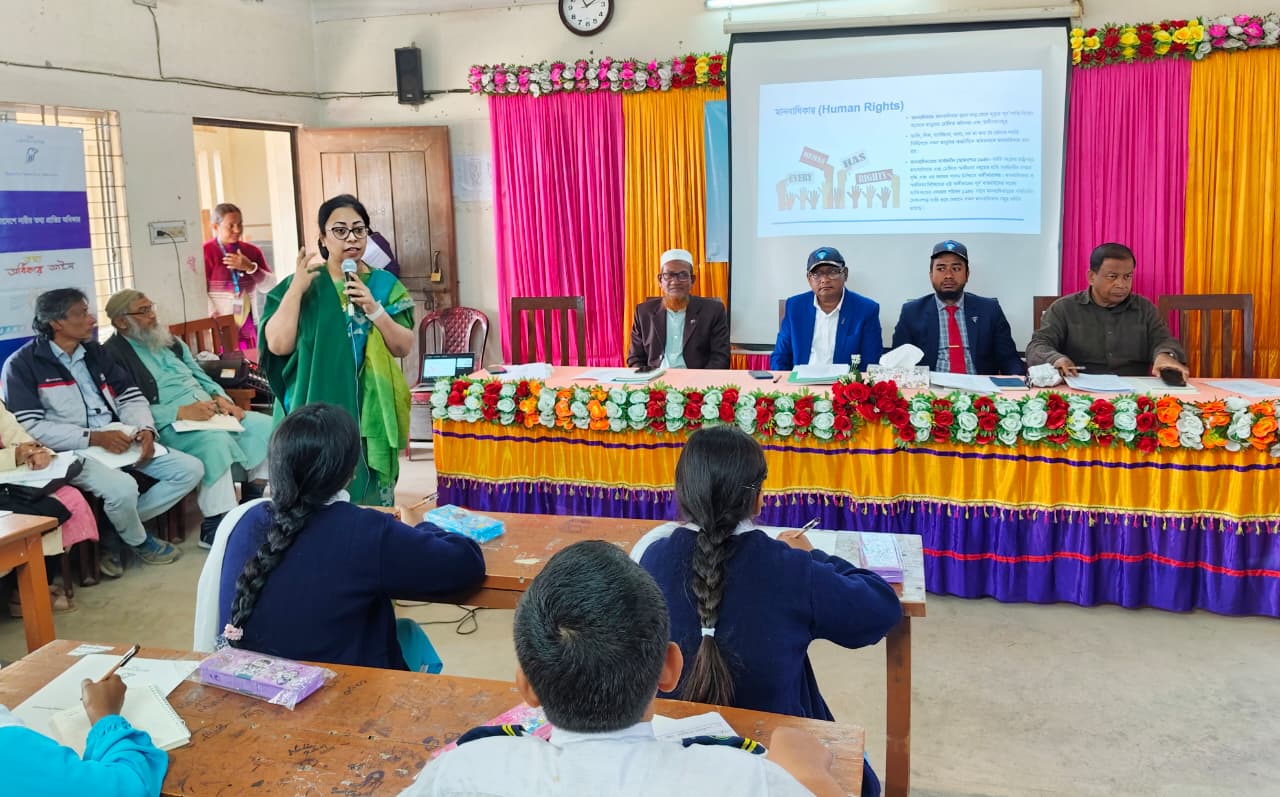
RAJSHAHI, Jan 27, 2026 (BSS)- An orientation session on the Right to
Information (RTI) was held for students at Nowhata Government High School
under Paba upazila of the district.
"Access to information is your right"-- a response from the stage came
instantly against a raising question "Is it really possible to get
information if we ask for it?" from a student at the session.
The auditorium turned into silence while such a question was raised but the entire hall erupted in applause after hearing the answer.
The orientation session included such a lively and dramatic atmosphere-filled
with quizzes, question-and-answer sessions, and real-life stories.
At the meeting, held this (Tuesday) morning on the school premises, speakers
said that it is not possible to build an accountable and transparent system
of governance without ensuring the right to access information. The human
desire to know is eternal, they added.
As citizens, the right to seek and receive information is known as the Right
to Information. Information means power, which plays an effective role in
establishing good governance and combating corruption.
The United Nations and the Constitution of Bangladesh recognize the right to
information as a fundamental right. Article 39(1) of the Constitution of
Bangladesh also mentions this right.
The meeting was organised by the Bangladesh Country Office of The Carter
Center with the aim of raising awareness among citizens about their right to
information and ensuring the effective implementation of the RTI Act to
prevent corruption. The event was held under the initiative of the combined
office of the Anti-Corruption Commission (ACC).
Several real-life examples of the successful application of the RTI Act were
shared at the meeting.
In some cases, irregularities were prevented by obtaining information about
development project expenditures; in others, experiences were shared on
ensuring that genuine beneficiaries receive support under social safety net
programmes.
These real stories sparked students' curiosity and clearly demonstrated that
the right to information is not merely a theoretical concept, but one deeply
connected to everyday life.
During the orientation, it was explained that the RTI is a fundamental
democratic right of citizens, through which information held by the
government and certain private institutions can be accessed.
Discussions highlighted the background, objectives, and significance of the
RTI Act 2009. Students were also given a clear understanding of the
definition of information, the appointment and responsibilities of designated
officers, institutional obligations to provide information, procedures for
submitting applications, the process of responding within stipulated time
frames, and application fees.
The quiz competition organised under the theme "Know the Law, Know Your
Rights" made the session even more engaging, with active participation from
students.
Applause for correct answers and laughter at wrong ones turned the auditorium
into an open learning space.
According to the organisers, such participatory events play an effective role
in generating interest among young people in law and civic rights.
Students also shared their reflections at the meeting.
Rimti, a sixth-grade student of Nowhata Government High School, said, "Before
today's event, the right to information was limited to textbook pages for us.
Through real examples and quizzes, we have understood how seeking information
can help stand against injustice and corruption. Now it feels like we can ask
questions too."
Eighth-grade student Ifat said, "I didn't have much idea about the Right to
Information Act before. Today I learned that even as ordinary citizens, we
can request information from government offices. This knowledge has boosted
our confidence and inspired us to become more conscious citizens in the
future."
Fazlul Bari, deputy director of the ACC, addressed the event as the chief
guest saying effective implementation of the Right to Information Act 2009
increases transparency in both public and private institutions and reduces
opportunities for corruption.
"The right to information is not just a law; it is a powerful tool for
citizen empowerment. If awareness of this right is created among students and
young people, building an accountable and corruption-free society in the
future will be much easier," he added.
In her welcome address, Shammi Laila Islam, country representative of The
Carter Center, said that accurate information is power.
She noted that the law plays a vital role in ensuring the free flow of
information, including women's right to access information. She also remarked
that rights can only be properly exercised when people are aware of them.
ACC Assistant Director Tanvir Ahmed, Headmaster of the school Omar Ali,
President of the Corruption Prevention Committee Akhtar Faruk also spoke.
The awareness and confidence visible on the students' faces at the end of the
meeting offered a hopeful sign for building a responsible citizenry in the
future.