News Flash
DHAKA, Jan 26, 2026 (BSS) - Chief Adviser Professor Muhammad Yunus has said that the proposed Nilphamari 1,000-bed Bangladesh-China Friendship Hospital will emerge as a major medical hub, noting that this hospital is a strategic investment in improving the country's healthcare standards.
"This hospital is not just an infrastructure, it is a strategic investment in improving the country's healthcare standards. Through this, people of the northern region will be able to receive advanced medical services within their own area," he said.
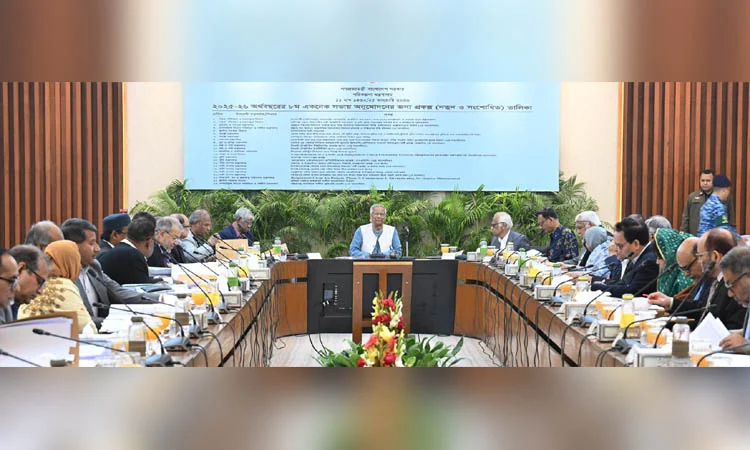
The Chief Adviser made the remarks over the approval of a major healthcare infrastructure project worth Taka 2,459.35 crore to establish the 1,000-bed Bangladesh-China Friendship General Hospital in Nilphamari, said the Chief Adviser's Press Wing here today.
The Executive Committee of the National Executive Committee (ECNEC) approved the project on Sunday with Chief Adviser Professor Muhammad Yunus in the chair.
Prof Yunus said that decentralization of healthcare services is essential to reduce excessive pressure on hospitals centered in Rangpur and Dhaka, adding, "This hospital in Nilphamari will play a major role in achieving that goal".
Once implemented, he said, this initiative will not only serve patients from Bangladesh but will also be capable of making a significant contribution to healthcare in South Asia.
Patients from neighboring countries such as Nepal and Bhutan will also have the opportunity to receive advanced treatment here, Prof Yunus said, adding, "As a result, Bangladesh's health sector will emerge as an important regional hub".
Initiated by the Health Services Division of the Ministry of Health and Family Welfare and to be implemented by the Directorate General of Health Services, the project will be implemented from January 2026 to December 2029.
The total estimated cost of the project is Taka 2,459.35 crore, of which Taka 179.27 crore will be financed by the government of Bangladesh, while the remaining amount will come from Chinese grant assistance.
During his visit to China in March last year, the Chief Adviser requested Chinese President Xi Jinping to establish an advanced hospital in Bangladesh. In response, China promptly took the initiative to support this project.
The main components of the project include a 10-storey main hospital building with a semi-basement covering approximately 993,691 square feet; a 10-storey professors' and senior doctors' quarters with semi-basement (96,800 square feet); a 10-storey doctors' dormitory with studio apartments (65,000 square feet); a two-storey duplex building for directors; two six-storey nurses' dormitory buildings; two 10-storey residential buildings for second-and third-class employees; a two-storey mosque; a one-storey hospital kitchen; a waste management plant; a five-storey service building; a hospital gas manifold and Vacuum Insulated Evaporator (VIE) tank facility; a helipad and automated ambulance system; and a two-storey generator and substation building.
The hospital will be equipped with modern medical equipment.
Alongside general medical services, the hospital will provide specialised treatment in departments such as nephrology, cardiology, oncology, and neurology. With modern emergency services, ICU, CCU, and HDU facilities, advanced diagnostic services, and operation theatres, the hospital will ensure treatment for complex and long-term illnesses.
Upon implementation of the project, a large number of employment opportunities will be created for hospital operations. According to the plan, approximately 893 doctors, 1,197 nurses, and 1,410 other staff will be recruited under the revenue sector, which will contribute to strengthening the local economy and healthcare capacity.
Through this project, the medical expenses and long-distance travel-related sufferings of millions of people in the northern region will be reduced, timely life-saving services will be ensured, and a sustainable and long-term positive transformation will take place in the country's overall healthcare system.
Explaining the background of the project, officials said Nilphamari district has a population of around 21 lakh, most of whom live in rural and semi-urban areas.
According to World Health Organization (WHO) standards, an estimated 4,500 to 6,000 beds are required for this population, but currently the number of functional beds at the district level is extremely inadequate compared to the population.
Due to insufficient beds, specialized departments, and modern medical facilities in existing healthcare institutions, critically ill patients are forced to travel to Rangpur or Dhaka, increasing time, cost, and risk.
Simultaneously, the burden of heart disease, stroke, cancer, diabetes, kidney disease, maternal and neonatal complications, and infectious diseases is rapidly increasing in the northern region, all of which require advanced diagnostics, specialist physicians, surgery, and intensive care.
As a result, a large segment of the district's population is being deprived of timely access to specialized and emergency healthcare services.
Currently, healthcare services in the district mainly depend on the 250-bed Nilphamari General Hospital and primary healthcare centres at the upazila level.
These institutions have limited capacity for ICU, HDU, dialysis, comprehensive cancer units, neuro-emergency care, cardiac care, burn and plastic surgery, and specialized maternal and neonatal services.
Consequently, patients suffering from serious and complex illnesses have to be referred to Rangpur Medical College Hospital (RMCH) or Dhaka Medical College Hospital (DMCH).
Officials believe the hospital will emerge as a sustainable tertiary-level healthcare institution, significantly reducing regional disparities in healthcare access and ensuring timely, quality and life-saving medical services for millions of people in northern Bangladesh.