News Flash
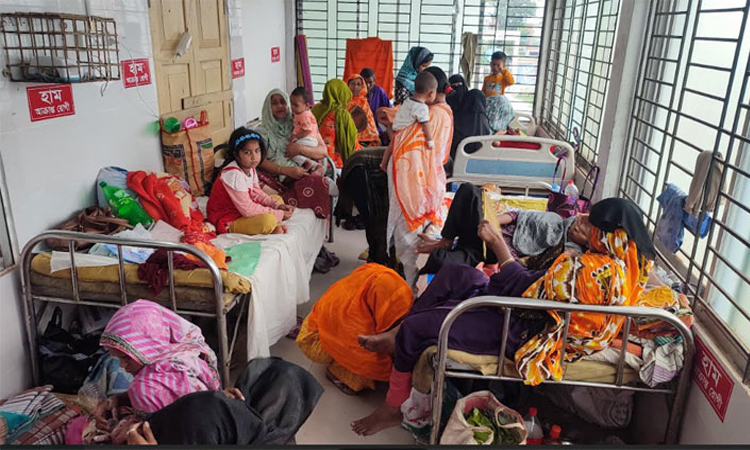
DHAKA, April 28, 2026 (BSS)- A resurgence of measles across Bangladesh has exposed persistent gaps in childhood immunization during previous Awami League and interim government tenures, prompting current authorities to launch an emergency vaccination campaign targeting millions of children nationwide.
Health officials said the spike in infections- now reported in 58 districts- is largely linked to disruptions in routine vaccination during the COVID-19 pandemic, when lockdowns, supply constraints and vaccine hesitancy caused many families to miss scheduled doses.
“We are now seeing the consequences of that gap,” said Pediatric Medicine and Neonatology Professor Dr Begum Sharifun Naher, noting that infections are increasing even among infants younger than the recommended vaccination age.
In response, the government, in collaboration with UNICEF and the World Health Organization (WHO), launched a nationwide measles-rubella (MR) vaccination drive on April 20, prioritising high-risk areas.
Initially targeting around 1.2 million children, the broader campaign aims to cover children aged six to 59 months across the country.
Measles, one of the most contagious viral diseases, spreads through coughing and sneezing and can remain airborne for up to two hours.
Health experts warn that single infected one can transmit the virus to as many as 18 others, underscoring the urgency of containment efforts. Doctors say common symptoms include high fever, cough, runny nose and inflamed eyes, followed by a red rash that typically begins behind the ears and spreads across the body.
While many cases resolve without complications, severe infections can lead to pneumonia, encephalitis, blindness and ear infections.
“Breathing difficulties are a critical warning sign,” Dr Naher said, urging parents to seek immediate medical care if symptoms worsen.
Malnourished children are at high risk of severe illness and death, raising concerns among public health officials as nutritional deficiencies and delayed immunisation compound the threat.
Bangladesh’s routine immunisation schedule provides measles vaccines at nine and 15 months. However, during the current outbreak, officials are encouraging additional doses, maintaining at least a one-month interval between shots.
Alongside vaccination, authorities are stressing preventive measures such as isolating infected children, wearing masks and maintaining hygiene to reduce household transmission.
Treatment remains largely supportive, including Vitamin A supplementation, adequate nutrition and hydration, and oral rehydration salts for children with diarrhoea. Severe complications require urgent hospital care.
Hospitals across the country have also intensified preparedness as part of the response.
Pediatric specialist Dr. Samira Islam Nisha said parental negligence and misinformation are contributing factors to the resurgence.
“Some parents are not vaccinating their children on time, while others are being influenced by unnecessary fears or rumors,” said Dr. Samira, also the indoor medical officer of Dhaka Medical College.
She warned that measles can cause serious complications in children and stressed that timely vaccination remains the most effective prevention. “Vaccines are completely safe and have been tested over many years,” she said.
Urging parents to follow the national immunisation schedule, she said, immunization not only protects child but also safeguards the entire community.
She also emphasised the need for greater public awareness, calling on healthcare workers, media and communities to work together to counter misinformation and promote vaccination.
Meanwhile, Health and Family Welfare Minister Sardar Md. Sakhawat Husain, speaking at the inauguration of a measles-rubella campaign in Rupganj, Narayanganj on April 20, said irregular vaccination in the past has led to increased infections.
“Gaps in routine immunization in the past have increased the risk of measles infection. Failures of previous governments have created an alarming situation regarding measles across the country,” he said.
However, the minister noted that the situation has not yet reached epidemic proportions and does not require a state of emergency. He added that with support from UNICEF and other international partners, the vaccination campaign is progressing successfully.
He also highlighted concerns over irregular breastfeeding practices, saying many children are becoming more vulnerable to diseases, including measles, due to nutritional deficiencies. Vitamin A supplementation is being provided to address these gaps.
“Medicines alone cannot ensure children’s health,” he said, urging mothers to be more attentive to proper nutrition and care.
Officials say raising public awareness is the key to contain the outbreak, urging parents to ensure timely vaccination and seek prompt medical attention when symptoms escalate.
Since March 15, at least 220 people have died due to measles and measles-like symptoms across the country till April 27, according to DGHS.