News Flash
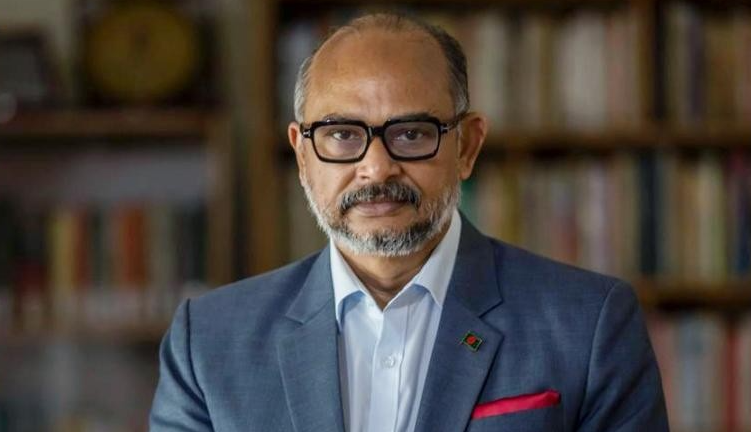
DHAKA, June 4, 2026 (BSS) - Prime Minister’s Adviser on the Ministries of Finance and Planning Dr. Rashed Al Mahmud Titumir said that the government is committed to establishing a comprehensive national health system as the country’s exiting healthcare structure has deteriorated significantly over the years.
He made the remarks while speaking as the chief guest at a panel discussion titled “Bangladesh Health Budget Dialogue: Priorities, Gaps and Way Forward", held today at the BoT Conference Room, University of Asia Pacific in the capital.
The Department of Business Administration, University of Asia Pacific (UAP), organised the dialogue.
Titumir said the government aims to gradually increase health sector allocation to 5 percent of GDP. He added that the upcoming budget would include various proposals aimed at bringing fundamental changes to the country’s healthcare system.
He stressed the need to ensure availability of doctors at the grassroots level and announced plans to strengthen healthcare services at the upazila level. He said hospital capacity would be increased alongside improvements in service delivery, including specialized care for children, women, and physiotherapy services.
At the district level, he said hospitals will be restructured in line with changing disease patterns. As Bangladesh is now facing a rise in lifestyle-related diseases instead of infectious diseases, facilities such as coronary care units and kidney dialysis units will be introduced in district hospitals, he added.
Titumir further said that the new government led by Prime Minister Tarique Rahman aims to build a democratic and welfare-oriented state. He emphasized transforming the weakened healthcare system into a people-centered universal healthcare system.
He also noted that healthcare workforce expansion—including recruitment of doctors, nurses, and other health professionals—will be prioritized to ensure services reach the grassroots level.
The Adviser said upazila health complexes and district-level healthcare services will be further strengthened. He added that the most significant reform would be the establishment of a national health system through comprehensive transformation of the sector.
He criticized past shortcomings in the health sector, pointing to rising out-of-pocket expenditures, insufficient hospital beds, inadequate treatment facilities, and shortages in medicine availability, which has forced many patients to seek costly treatment abroad.
The seminar was moderated by Professor Dr. Nazma Begum of the Business Administration Department, with Professor Dr. M. A. Baki Khalily, Dean of the School of Business, in the chair. The keynote paper was presented by Dr. Rumana Haque, Professor of Economics at University of Dhaka.
Special guests included Chairman of the Board of Trustees of UAP K. M. Mujibul Haque and Professor Dr. Mahbub Uddin Ahmed Bhuiyan.