News Flash
By Nusrat Supti
NARAYANGANJ, Dec 15, 2025 (BSS) - The centuries-old Kaikartek Hat in
Narayanganj continues to stand as a living symbol of rural Bengal's heritage,
drawing buyers, sellers and visitors every week with its unique blend of
tradition, trade and history.
The hustle and bustle of the hat begins at dawn, as traders arrive with
livestock, birds, fishing nets, household items and farming tools carried in
vans and rickshaws. Soon, the market fills with people from different parts
of Narayanganj, reviving a tradition that has survived for more than two
centuries.
Located on the banks of the Brahmaputra River in Mograpara union under
Sonargaon upazila, Kaikartek Hat is held every Sunday. The locality itself
derives its name from the market, which has long been an integral part of the
area's identity.
Ancient banyan trees and remnants of old brick walls stand as silent
witnesses to the hat's long history. The atmosphere and heritage of the
market have also attracted tourists alongside regular buyers and sellers.
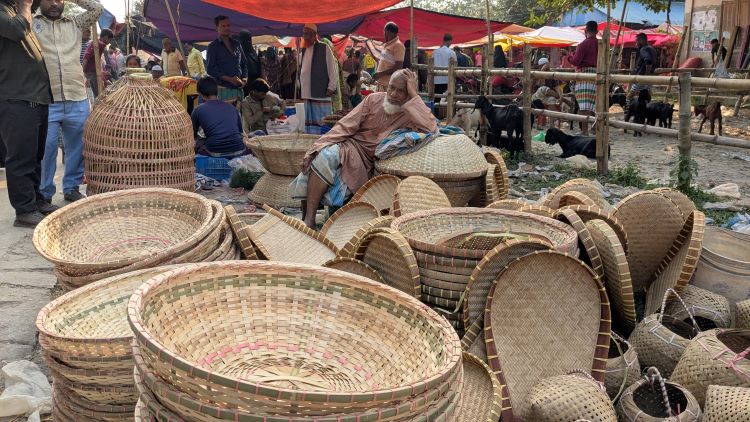
A wide range of traditional items, many of which are now rarely seen
elsewhere, are sold at the hat. These include livestock, clay utensils, axes,
spades, hoes, chains, fishing nets, spears, bamboo sieves, dula, kula, sajhi,
seasonal vegetables, sweets, tree saplings, canes, wood, bamboo, boats and
other rural necessities. For many visitors, the market evokes memories of a
bygone era.
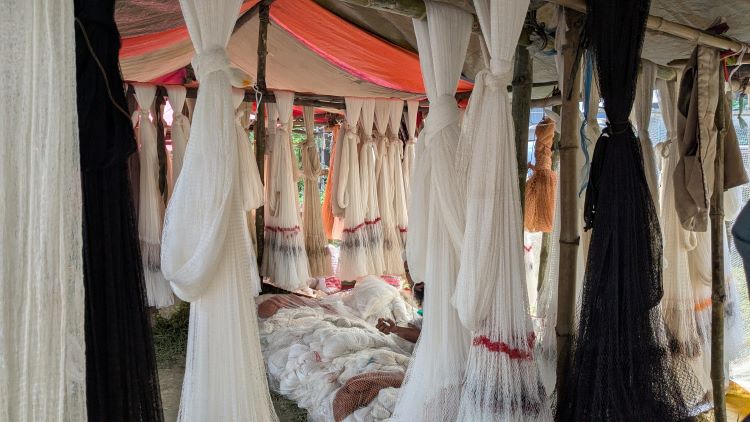
Harun, a resident of Bandar Police Station area who sells fishing nets at the
hat, said demand for nets increases during the rainy season. "The prices here
are comparatively low, so buyers come from far away. I sell different types
of nets, including curry nets and jai nets, priced between Taka 1,000 and
Taka 4,000," he added.
Hasan Mia, who has been selling iron-made fishing gear and other items at the
market for nearly four decades, said that the market is not as crowded as it
once was. "Earlier, people waited all week for the hat day to buy their
necessities. Now most things are available near homes, so the crowd has
reduced and profits are lower," he added.
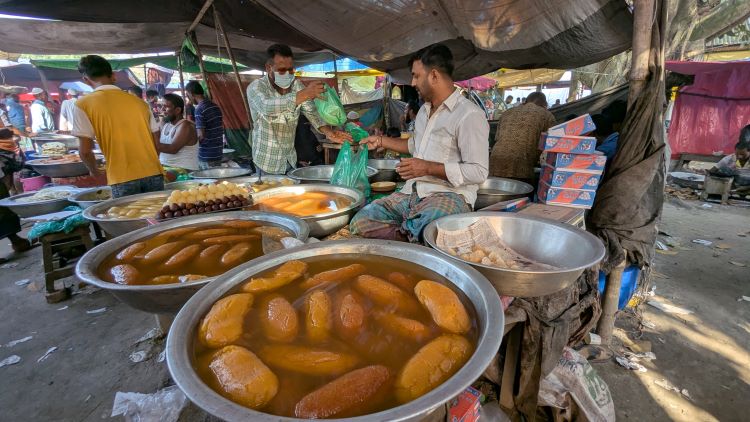
One of the main attractions of Kaikartek Hat is its traditional sweet known
as 'Putamisti'. Resembling the Shilputa fish in shape, the sweet is popular
across the region and draws sweet lovers from distant areas. Each Putamisti
weighs between half a kilogram and two kilograms. Alongside it, various
traditional sweets and foods such as palm juice, black jam, rasgolla, jilapi,
mohanbhog, lalbhog, balusha and other folk delicacies are also sold.
Sanjay Ghosh, a sweet seller at the hat, said his family has been making
Putamisti for generations. "We have a permanent shop in Anand Bazar in
Sonargaon where we sell sweets year-round. At the hat, we also sell yogurt,
parathas and bhaji," he added.
Apart from food items, the hat is also known for the sale of boats during the
monsoon season. At different times, horse traders, along with sellers of
domestic animals and birds, also visit the market, according to the market
management committee.
Shamsul Islam, the leaseholder of Kaikartek Hat, said the exact origin of the
hat is unknown, but it is believed to be over a hundred years old. "I am over
seventy now. When I was young, the hat was far more vibrant. Everything from
daily necessities to horses and even elephants was once sold here. Although
that grandeur has faded, the sweets of this hat are famous across the
country, and people still come from far away to see it," he said.
Despite changes over time, Kaikartek Hat continues to preserve and reflect
the history and traditions of the region, remaining a cherished part of
Narayanganj's cultural landscape.