News Flash
BAGERHAT, June 15, 2026 (BSS) - A severe shortage of shrimp fry has emerged in Fakirhat upazila of the district, one of the country's major shrimp-producing hubs, raising concerns among farmers and stakeholders over the future of shrimp cultivation in the region.
Although the shrimp fry collection season is nearing its end, farmers have managed to secure only 10 to 15 percent of the fry needed for cultivation. As a result, thousands of prepared shrimp enclosures remain empty, leaving farmers uncertain about whether they can begin production this season.
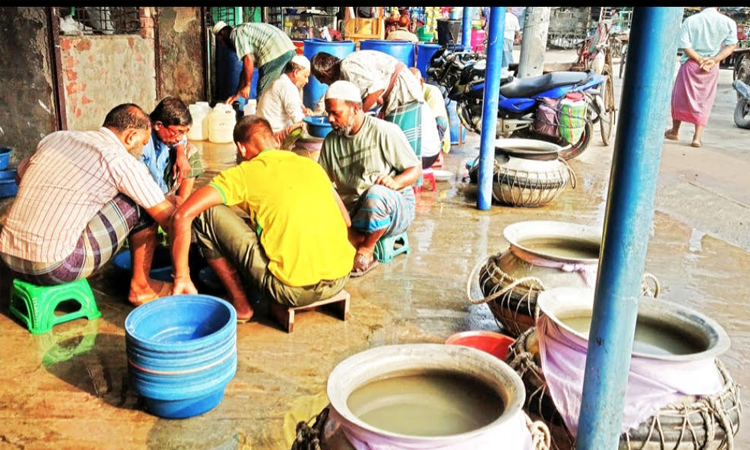
The once-bustling shrimp fry markets in Faltita and surrounding areas of Fakirhat now present a different picture. With fry supplies dwindling, trading activity has slowed significantly, while prices have nearly doubled compared to last year.
According to the Upazila Fisheries Department, Fakirhat currently has 804 commercial shrimp enclosures and 2,608 ponds. These water bodies require approximately 42.6 million bagda (black tiger) shrimp fry and 74.6 million galda (freshwater prawn) fry annually. However, farmers and traders claim actual demand is far higher, estimating this season's requirement at 400 to 450 million fry.
A visit to the Naldha, Thikaripara, and Mulghar areas revealed that many farmers completed preparation of their enclosures months ago but remain unable to stock them due to the shortage.
Shrimp farmer Daud Haider Babu Fakir of Thikaripara said he spent around Taka 160,000 preparing a one-acre enclosure. While he normally releases about 120,000 fry each season, he has managed to collect only 18,000 this year.
"I prepared the enclosure with borrowed money, but I still cannot stock it properly due to the fry shortage," he said.
Trader Sheikh Moni reported a sharp increase in prices, saying that fry which sold for Taka 1,300 to Taka 1,700 per thousand last year are now selling for around Taka 3,000 per thousand.
He added that advance payments totaling about Taka 78 lakh made to suppliers in Cumilla and Noakhali have yet to be refunded or adjusted because of supply failures.
Nurul Islam Khokon, president of the Fakirhat Natural Shrimp Fry Traders Association, said insufficient local hatchery production has forced farmers to rely heavily on fry collected from coastal districts including Chattogram, Noakhali, Cumilla, Bhola, Patuakhali, and Barguna, as well as from border areas.
According to the Upazila Fish Traders Association, more than 500 fish trading outlets operate in the Faltita market. Daily fish transactions there range between Taka 2 crore and Taka 3 crore, while an estimated 20,000 to 25,000 traders, labourers, and transport workers are directly involved in the sector.
The livelihoods of hundreds of thousands of people are linked, directly and indirectly, to the approximately 20,000 commercial enclosures and ponds in the upazila.
The Fisheries Department reported that Fakirhat produced 2,315 tonnes of shrimp during the previous fiscal year. For the 2025-26 fiscal year, the production target has been set at 2,430 tonnes. However, industry stakeholders fear the target may be unattainable if the fry shortage continues.
HM Rakibul Islam, Senior Scientific Officer at the Bagerhat Shrimp Research Centre, said the number of hatcheries in the southern region has declined from 78 in 2011-12 to just 37 today due to quality-control and other operational challenges, significantly reducing fry production.
Senior Upazila Fisheries Officer Sheikh Asadullah said authorities are regularly conducting drives to enforce the ban on harvesting and selling shrimp fry from natural water bodies. At the same time, efforts are underway to encourage hatchery-based fry production and cultivation.
"Currently, available fry supplies meet only about eight percent of total demand. Overcoming the crisis will take time," he said.
Farmers and industry representatives being worried said unless fry supplies improve quickly, shrimp production could suffer significantly, posing a serious threat to one of the southern region's key export-oriented industries.