News Flash
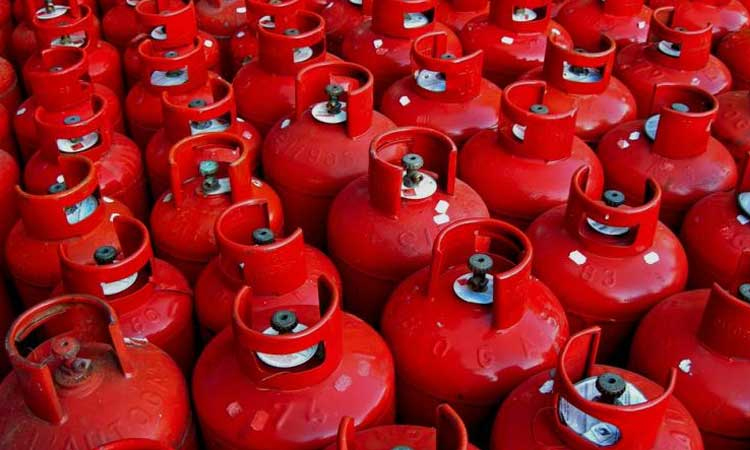
DHAKA, Feb 17, 2026 (BSS) - The government has reduced the overall VAT on Liquefied Petroleum Gas (LPG) in a move aimed at stabilising the market and keeping the essential commodity within consumers' purchasing capacity.
In a press release, the National Board of Revenue (NBR) said that under the existing system, 7.5 percent Value Added Tax (VAT) was applicable at the local production and trading stages of LPG, while a 2-percent Advance Tax (AT) was payable at the import stage.
Considering LPG as an essential commodity for both industrial use and household consumption, the government has decided, in the public interest, to rationalise the tax structure to ease the burden on consumers and ensure market stability, said an the release.
According to the release, following an application from the LPG Operators Association of Bangladesh (LOAB) and recommendations from the Ministry of Power, Energy and Mineral Resources, the government issued two separate statutory regulatory orders (SROs) on February 16.
Under the new measures, effective until June 30, 2026, the 7.5 percent VAT at the local production and trading stages and the 2-percent Advance Tax at the import stage have been withdrawn. Instead, a 7.5 percent VAT has been imposed at the import stage of LPG.
As a result of this restructuring, no VAT will be applicable on the value addition at the local production and distribution stages after import.
This means that the tax will be collected only once at the import stage, eliminating multiple layers of VAT previously applied throughout the supply chain.
The NBR said that from the effective date of the SROs, the overall VAT burden on consumers is expected to decrease by around 20 percent compared to the previous structure.
Officials concerned believe that the decision will help maintain price stability in the LPG market, ensure uninterrupted supply, and provide relief to consumers, particularly middle- and lower-income households who rely heavily on LPG for cooking and other daily needs.
The move is also expected to support industrial users by reducing cost pressures and enhancing overall market efficiency.
The NBR reiterated that the decision has been taken in the greater public interest and will remain in force until June 30, 2026, unless further extended or revised.