News Flash
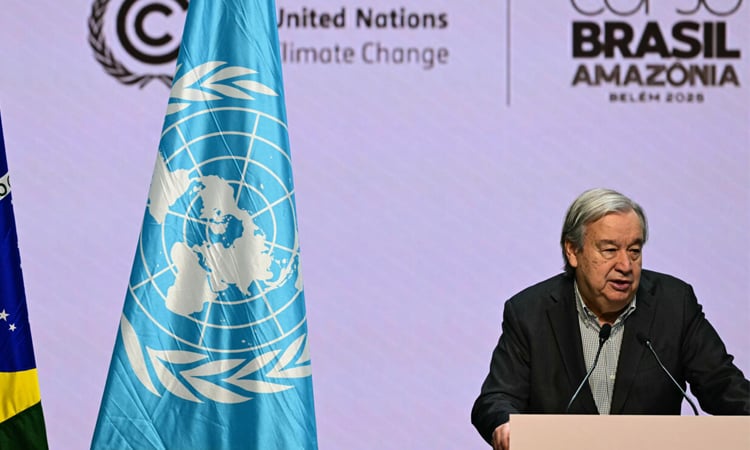
BELEM, Brazil, Nov 20, 2025 (BSS/AFP) - With UN climate talks nearing a close in Belem, the world body's chief on Thursday urged nations to reach an "ambitious compromise" that keeps alive the goal of limiting long-term planetary warming to the critical 1.5C threshold.
Nearly 200 countries have spent the past two weeks hashing out issues at COP30 -- from a "roadmap" to transition away from fossil fuels proposed by host Brazil, to concerns over weak emissions-reduction plans, finance for developing countries, and trade barriers.
Antonio Guterres -- the former Portuguese prime minister who has made climate his signature issue -- delivered an urgent message.
"The world is watching Belem," he told reporters during a morning news conference, as nations await a new draft negotiating text before the summit officially closes on Friday evening.
"Communities on the frontlines are watching too -- counting flooded homes, failed harvests, lost livelihoods, and asking how much more must we suffer?"
"Please engage in good faith," he urged, to reach an "ambitious compromise," adding that "1.5 degrees must be your only red line."
COP30 comes 10 years after nations agreed in Paris to limit human-caused warming to 1.5C -- and at least well below 2C -- to avert the worst impacts of climate destabilization.
Evidence now indicates the world will almost certainly overshoot the 1.5C goal, though humanity can still influence how long that overshoot lasts.
- 'Our islands could disappear' -
Guterres' plea came after Brazilian President Luiz Inacio Lula da Silva flew into the northern city, which sits on the edge of the Amazon, on Wednesday, in a bold bid to seal an early deal on the summit's thorniest issues.
While that effort failed, Lula, who has invested political capital into what he has called his "COP of truth," once more put his "roadmap" to move away from fossil fuels back at the top of the agenda.
The proposal is supported by a coalition of more than 80 countries but opposed by the oil-producing bloc.
Negotiators are also at odds over pressure from the developing world for developed countries to provide more financing to help vulnerable nations adapt to climate change and deploy renewable energy.
The COP29 summit in Baku last year concluded with developed nations agreeing to provide $300 billion a year in climate finance, a figure criticized by developing countries as woefully insufficient.
The EU, where many countries are facing economic headwinds and soaring debt, has led the opposition to demands for more money.
Vulnerable nations warn that failure to deliver meaningful finance that enables decisive action will have existential consequences.
"The discussions and the negotiations that we're engaging in could mean that the future of my grandchildren can be secured, or that our islands could disappear," Steven Victor, Palau's minister for agriculture, fisheries and the environment, said Thursday.