News Flash
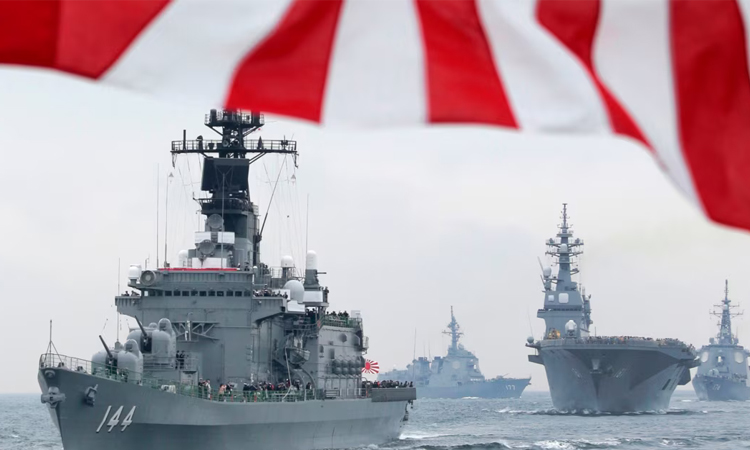
TOKYO, March 15, 2026 (BSS/AFP) - A senior Japanese policy adviser said Sunday the threshold is "extremely high" for Tokyo to send its warships to help protect a shipping lane for oil in the Middle East, hours after US President Donald Trump's call for other countries to do so.
Two weeks after the United States and Israel attacked Iran, the Gulf region remained in the grip of the conflict, sending oil prices soaring as Iran has choked off the vital Strait of Hormuz and attacked Gulf energy facilities.
After earlier vowing that the US Navy would "very soon" begin escorting tankers through the Strait of Hormuz, US President Donald Trump called for reinforcements on Saturday from countries including Japan.
The world's number-four economy is the fifth-biggest importer of oil -- 95 percent of it from the Middle East and 70 percent passing through the Strait of Hormuz, which is now effectively closed.
"I regard the threshold as extremely high" for sending Japanese navy ships to the region under existing Japanese laws, Takayuki Kobayashi, the policy chief of Prime Minister Sanae Takaichi's ruling Liberal Democratic Party (LDP), said Sunday on the public broadcaster NHK's political debate programme.
"Legally speaking, we do not rule out the possibility, but given the current situation in which this conflict is ongoing, I believe this is something that must be considered with great caution," he said.
Sending its Self-Defense Forces abroad is politically sensitive in the officially pacifist Japan, as many voters support the US-imposed, war-renouncing 1947 constitution.
Last week, Takaichi said at a parliament session "nothing has been decided" over whether to send Japanese warships to the Middle East to escort tankers.
Takaichi is expected to visit Washington this week to hold talks with Trump, in which a range of issues including security in the Asia-Pacific region, as well as the Iran war, will likely be discussed.
Kobayashi said he would like to see Takaichi "ascertain what President Trump's true intentions are" over his call for reinforcements.
He said he expected the leaders to discuss how Tokyo and Washington "can work closely together to ensure that there would be no vacuum in the security framework of East Asia" as US troops are reportedly being sent to the Gulf from their bases in Japan and South Korea.