News Flash
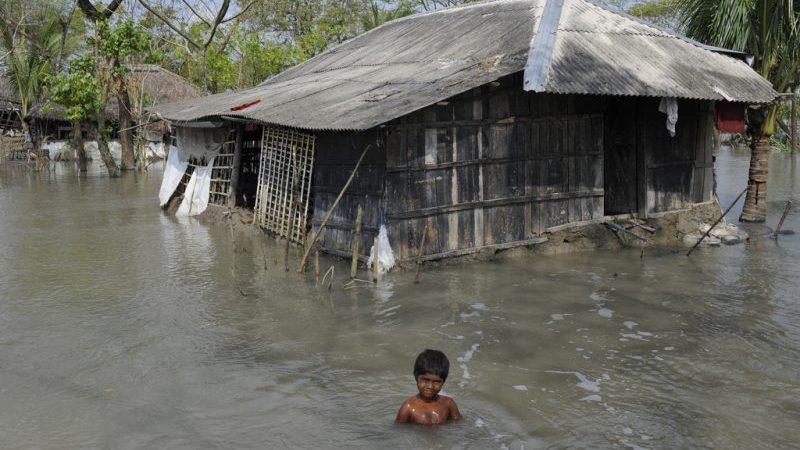
DHAKA, Dec 13, 2025 (BSS)– The 3rd Climate Justice Assembly 2025 began today in the capital with strong calls to ensure accountability and justice from wealthy countries responsible for climate change.
Social Welfare and Women and Children Affairs Adviser Sharmeen S. Murshid inaugurated the 2-day event at Sher-e-Bangla Agricultural University in the capital, said a press release.
Fisheries and Livestock Adviser Farida Akhter attended it as the chief guest.
Environmental platform Dhoritry Rokkhay Amra (DHORA) organized the Climate Justice Assembly which brought together around 2,000 participants, including government representatives, international climate movement activists, researchers, and representatives of climate-affected communities.
In her address, Sharmeen S. Murshid said despite having one of the lowest contributions to global carbon emissions, Bangladesh is among the countries most severely affected by climate change.
“Bangladesh is one of the frontline countries of climate change. Yet due to delays in action by countries of the Global North, poorer nations are suffering the greatest losses,” she said.
Referring to the responsibility of industrialized nations, she added, “We are not indebted to them—rather, they are indebted to us. Climate justice is now a matter of accountability and effective action.”
Speaking on the occasion, Farida Akhter said climate justice means justice, survival, and accountability.
Criticizing continued dependence on fossil fuels, she noted that there remains a significant gap in implementing the commitments made under global agreements, including the Paris Climate Agreement.
“The Global North often offers loans instead of justice,” she said.
Dr. Mujibur Rahman Howlader, Convener of the organizing committee, chaired the inaugural session which was moderated by Sharif Jamil, Member Secretary.
Sanjeeb Drong, General Secretary of Bangladesh Adibasi Forum, delivered the welcome address.
Sharif Jamil said for a country like Bangladesh, struggling to survive the impacts of climate change, climate justice is not merely a demand—it is a matter of national survival.
“If we cannot begin justice within our own homes, we will not be able to establish our demand for justice at the global level,” he said.
International representatives at the event also criticized the actions of wealthy countries regarding climate finance.
Lidy Nacpil of the Philippines, Coordinator of the Asian Peoples’ Movement on Debt and Development (APMDD), called for a rapid transition away from fossil fuels and stronger global support for climate-vulnerable countries.
Asad Rehman, Chief Executive of Friends of the Earth; Cynan Houghton, Deputy Regional Program Director of Tara Climate Foundation; and Ashish Damle, Country Director of Oxfam in Bangladesh also spoke on the occasion.
Ahead of the conference, more than a thousand local and international climate activists participated in a procession which was brought out from Sher-e-Bangla Agricultural University campus, passed through Agargaon, and ended at the conference venue.