News Flash
By SM Zahid Hossain
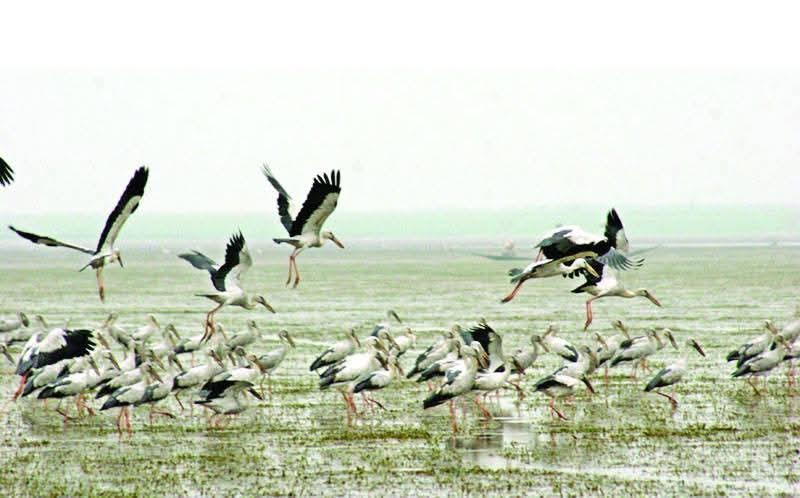
KHULNA, Jan 9, 2026 (BSS) – As a cold wave grips the Khulna coastal belt, large numbers of migratory birds have arrived in flocks in paddy fields, wetlands, riverbanks and along the seashore of the Bay of Bengal.
Every winter, thousands of migratory birds travel thousands of miles from cold regions such as Siberia and the Himalayan belt, crossing icy seas to reach Bangladesh in search of comparatively warmer weather, food and safe shelter.
As survival becomes difficult in their native lands due to severe cold and food scarcity, Bangladesh’s mild winter climate, wetlands, rivers and floodplains become a favoured destination.
From early November, wetlands and water bodies across the country turn vibrant with the arrival of these birds, filling the surroundings with chirping sounds and enhancing natural beauty. As winter wanes, most of them return to their original habitats, while some species remain.
Among the migratory species spotted are dahuk, tirsul, nalkak, bhardi, rangabani, gangchil, ratchara, hutititi, hargila, balihans, jolpipi, comb duck, sharali kaste, chara, patari hans, kadakhocha, hurhur, khaira and sona rijia, many of which are now facing the threat of extinction.
Dr Hosne Ara, Professor of the Department of Zoology at Government Brozolal College in Khulna, told the news agency, “Every year during winter, migratory birds come to the seashore areas of the Bay of Bengal, riverbanks and paddy fields in Khulna from Siberia, China and the Himalayan region, where severe cold waves prevail.”
“Bangladesh’s winter climate is suitable for migratory birds. These birds increase the natural beauty of rivers, wetlands and lakes in the country,” she added.
Abul Hashem, Professor of the Department of Zoology at Government Women’s College, said migratory birds coming from the coldest parts of Central Asia stay in marshlands, forests and plains near rivers in Bangladesh.
During a visit to Dumuria upazila on Thursday, it was found that large numbers of migratory birds were roaming in paddy fields and wetlands. Bird lovers from Khulna city gather there every day to see the beauty of these guest birds.
Meanwhile, indiscriminate hunting of migratory birds has reportedly intensified in Dumuria upazila and several adjoining areas of Khulna, raising serious concern among environmentalists.
According to local sources, a group of unscrupulous poachers has been setting traps under the cover of darkness to hunt migratory birds across Dumuria, Paikgachha and surrounding localities, including Golbunia, Dighi, Dakshin Kainmukhi, Natun Chak and Kharia. The hunting spree reportedly extends to neighbouring upazilas such as Dacope, Koyra, Dighalia and Terokhada. The illegal activity usually begins after dusk and continues deep into the night.
Environmental organisations have demanded increased public awareness and stronger administrative action to protect migratory birds from poachers, stressing that community-level awareness is crucial to stopping the illegal practice.
Under the Wildlife Preservation Act of 1974 and the Wildlife Conservation and Security Act of 2012, killing birds carries a maximum punishment of one year’s imprisonment or a fine of Tk 100,000, or both. In case of repeat offences, the punishment increases to two years’ imprisonment or a fine of Tk 200,000, or both. However, despite the existence of these laws, their enforcement remains largely absent, locals alleged.
Talking to BSS, Sheikh Mahtab Hossain, vice-president of the Bangladesh Bird Slaughter Prevention Committee, said killing birds for a mere 100–200 grams of meat causes immense harm to nature.
“People are destroying entire species for trivial gains without considering the ecological damage,” he said, urging stronger awareness campaigns and more proactive administrative measures.
Dumuria Upazila Livestock Officer Md Ashraful Kabir said the local administration and social welfare organisations are conducting awareness programmes to discourage bird hunting.
Dumuria Upazila Nirbahi Officer Sabita Sarkar said migratory birds are friends of the environment and protecting them is a collective responsibility.
“Unless legal action and punishment are ensured against hunters, they will not refrain from bird hunting through persuasion alone,” she added.