News Flash
By Tanzim Anwar
DHAKA, April 1, 2026 (BSS) – Bangladesh is poised to unlock the long-delayed third terminal of Hazrat Shahjalal International Airport (HSIA) as fresh negotiations with a Japanese consortium enter a decisive phase following submission of a revised, lower-cost proposal.
A high-level senior official of the Civil Aviation Authority of Bangladesh (CAAB) told BSS today that the consortium has addressed Dhaka’s concerns by recalibrating its financial offer, particularly on service charges, operational control and revenue-sharing issues that had stalled earlier discussions.
The latest progress follows series of segment-wise technical meetings held at CAAB headquarters on Monday and Tuesday, where both sides reviewed pricing and operational components in detail, signalling a shift from policy-level dialogue to final-stage negotiations.
CAAB Chairman Air Vice Marshal Md Mostafa Mahmood Siddiq today briefed the outcomes of the technical meetings to Civil Aviation and Tourism Minister Afroza Khanom Rita and state minister M Rashiduzzaman Millat at the secretariat today.
The CAAB official said that the second high-level meeting is scheduled for April 3 at the Ministry of Foreign Affairs, expected to determine the fate of the deal.
The Bangladesh side will likely be represented by Foreign Minister Dr Khalilur Rahman, Civil Aviation and Tourism Minister Afroza Khanam, Prime Minister’s Foreign Affairs Adviser Humayun Kabir, State Minister M Rashiduzzaman Millat and State Minister for Foreign Affairs Shama Obaed Islam, among others, official sources said.
The CAAB official indicated that the meeting could be decisive, with expectations that a final agreement may be reached shortly after. “A final agreement is expected to be reached next week following the April 3rd meeting,” he added.
From prolonged delay to renewed momentum
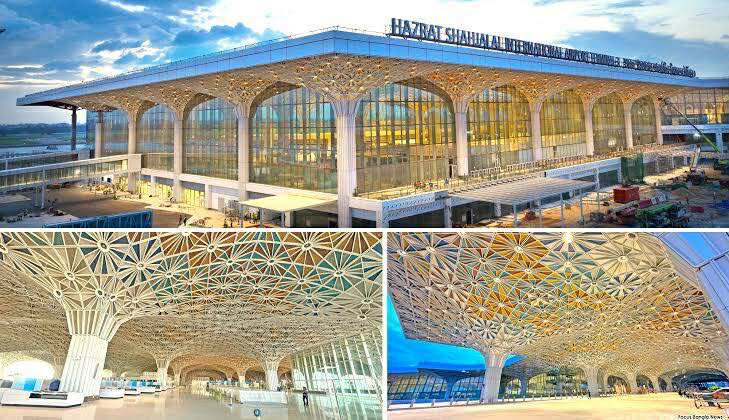
The third terminal over 99 percent complete has remained non-operational for years due to unresolved management and operational arrangements.
Industry insiders have widely criticised the delay, attributing it to policy indecision and rigid positions under the previous interim administration, which left a major national asset idle.
Momentum shifted after Prime Minister Tarique Rahman directed authorities to resume negotiations immediately after the new government assumed office, prioritising a practical, outcome-driven solution.
That directive led to the March 13 breakthrough meeting chaired by foreign minister with attendance of Civil Aviation and Tourism minister and state minister, where Bangladesh formally requested a revised proposal from the Japanese side.
Revised proposal narrows gaps
The Japanese consortium comprising - Japan Airport Terminal Company, Sumitomo Corporation, Sojitz Corporation and Narita International Airport Corporation - has since submitted a revised offer with reduced pricing, significantly narrowing differences.
Officials said the new proposal reflected greater flexibility and created a pathway towards a “win–win” agreement.
The terminal project itself was largely financed by the Japan International Cooperation Agency (JICA) and constructed at an estimated cost of Taka 21,398 crore.
Spanning around 542,000 square metres, it is designed to handle an additional 12 to 16 million passengers annually along with nearly 900,000 tonnes of cargo.
Strategic urgency for aviation growth
The delay in operationalising the terminal has had tangible consequences. Airlines continue to face congestion, slot constraints and operational inefficiencies at existing facilities, while passengers endure overcrowded terminals and reduced service quality.
With revised pricing now on the table and high-level political engagement intensifying, officials said the process has entered its final stretch.
Former CAAB chairman Air Vice Marshal M Mafidur Rahman said activating the third terminal is critical not only for easing pressure at Dhaka airport but also for positioning Bangladesh as a regional aviation and logistics hub in South and Southeast Asia.
If the April 3 meeting delivers consensus, Bangladesh could finally bring one of its most significant aviation infrastructure projects into operation marking the end of years of delay and the beginning of a new phase in the country’s aviation expansion, he added.