News Flash
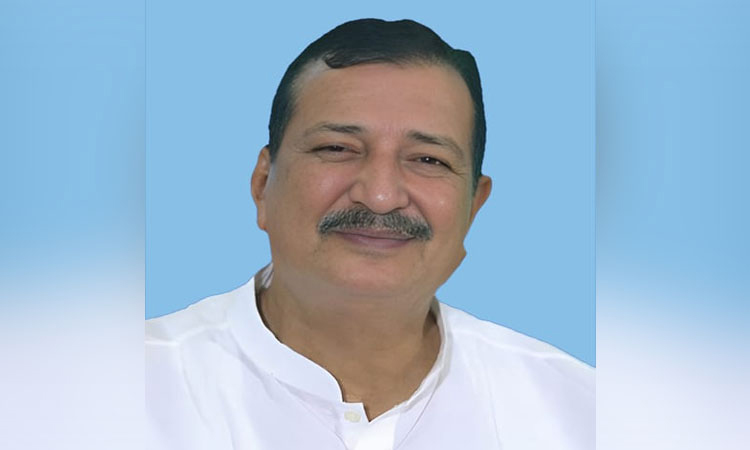
DHAKA, June 25, 2026 (BSS) - Land Minister Md. Mizanur Rahman Minu, MP, today stressed the need for strengthening preparedness to ensure food security, livelihood protection and disaster response for people living in the haor and the Chattogram Hill Tracts (CHT).
With climate change increasing the frequency and intensity of disasters, emphasis should be placed on preparedness, forecast-based actions and livelihood diversification, in addition to post-disaster response, he said.
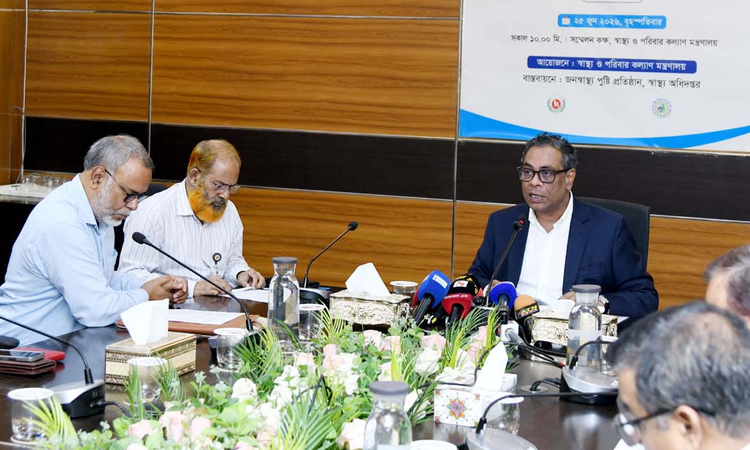
The minister made the remarks as the chief guest while addressing a publication ceremony of the "Household Economy Analysis (HEA) Report for the Haor Basin and Chattogram Hill Tracts" at Hotel Sonargaon in the capital.
Bangladesh Red Crescent Society Chairman Barrister Md Abdus Salam and World Food Programme (WFP) Bangladesh Country Director Coco Ushiyama attended the
programme as special guests.
Representatives from the Food Planning and Monitoring Unit (FPMU) under the Ministry of Food, FAO, various United Nations agencies, development partners,humanitarian organisations, researchers, civil society and media outlets also took part in the event.
The Minister said the report is not merely a research document, but an important evidence-based repository of information that will help understand risks and vulnerabilities, take anticipatory actions and make effective decisions to protect the livelihoods of the most vulnerable communities.
He said Bangladesh has achieved significant progress in disaster management, social protection and ensuring food security over the past decades. However, climate change is creating new challenges.
Minu said people in the haor region face flash floods every year, threatening agricultural production and food security.
On the other hand, communities in the CHT are exposed to multiple risks, including landslides, excessive rainfall, flash floods and communication disruptions.
Referring to findings of the report, he said around 58 percent of people in the haor region and nearly 50 percent in the CHT depend directly on agriculture for their livelihoods.
The minister said daily wage labour is the primary source of income for poor and extremely poor people, while a large portion of their food is purchased from markets. As a result, they suffer the most during disasters.
Highlighting women's economic contribution, he said about 8.6 percent to 9.2 percent of the total income of extremely poor households in both the haor and hill regions comes from various economic activities undertaken by women.
However, these sources of income become the most vulnerable during disasters. Therefore, enhancing women's economic capacity is crucial for strengthening food security and disaster resilience, he added.
The Minister said flash floods in the haor region often strike during the Boro harvesting season, causing severe damage to farmers' most important annual crop within a very short time.
Similarly, landslides and excessive rainfall in the hill tracts not only disrupt agricultural production but also limit people's access to markets and services.
The minister said the government has prepared the draft "Government Water Bodies Act, 2026" to establish discipline in the management of government water bodies, prevent encroachment and pollution, conserve biodiversity and ensure the rights of genuine fishermen.
The draft law includes provisions for stringent punishment, including imprisonment and fines, against encroachment, filling, pollution, obstruction of natural water flow and destruction of aquatic resources.
He said the country's rivers, canals, beels, haors, baors and other government water bodies are not only natural resources but are also closely linked to the environment, biodiversity and the livelihoods of millions of people.
The government has taken initiatives to enact a modern law to protect these resources. At the same time, the rights of genuine fishermen will be ensured through implementation of the principle, "Jaal Jar, Jola Tar" (the water body belongs to the owner of the net).
Referring to the expansion of digital services in the land sector, Minu said various services, from land surveys to other land-related activities, are being brought online.
An online payment system will be introduced to ensure compensation for land acquisition reaches the actual owners directly. Besides, initiatives have been taken to distribute khas land among genuine landless people, he said.
Highlighting various government initiatives for disaster management, he said vulnerable communities are being supported through early warning systems, social safety net programmes, family cards, farmer cards, canal excavation and tree plantation programmes.
However, he said stronger partnerships among government agencies, development organisations, research institutions, local government bodies and communities are needed to build resilience.
At the concluding stage of the programme, the Land Minister formally unveiled the Household Economy Analysis (HEA) Report for the Haor Basin and Chattogram
Hill Tracts.
He expressed hope that the findings of the study would play an important role in future policymaking, disaster risk reduction and ensuring food security.