Wednesday
26 August, 2026
News Flash
News Flash
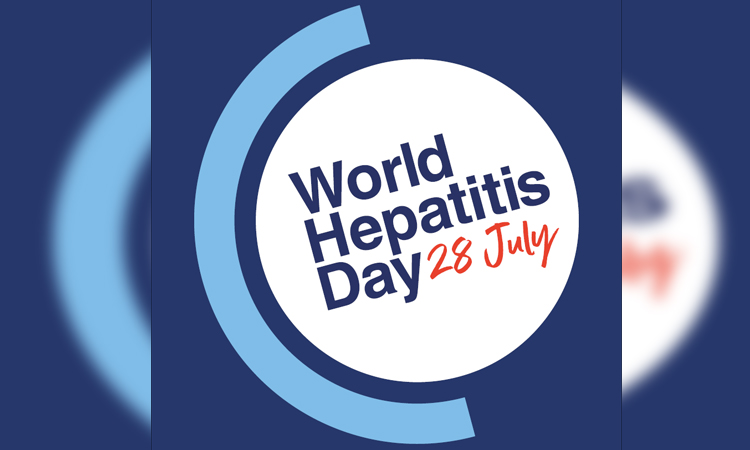
DHAKA, July 28, 2026 (BSS) - The World Hepatitis Day is being observed today
across the world aims to raise global awareness for the elimination of viral
hepatitis.
The World Hepatitis Alliance (WHA), an international non-governmental
organisation, has taken initiative to observe the day from July 28, 2008.
The World Health Organization (WHO) acknowledged World Hepatitis Day in 2011,
and the day is being observed every year on July 28.
The day is being observed across the country amid befitting programmes and
pledges like other countries in the world.
To mark the day, Prime Minister Tarique Rahman has given a message calling
for a coordinated approach to build hepatitis free Bangladesh through
enhancing massive awareness, prevention, diagnosis of disease in primary
stage and ensuring affordable and accessible healthcare.
The present government is continuously implementing various initiatives to
ensure extension of specialized healthcare, dissemination of technology-based
healthcare facilities and healthcare safety for under-privileged people, the
PM said in his message.
The official theme of the World Hepatitis Day 2026 is "Hepatitis: Let's break
it down," focusing on removing barriers to care, stopping stigma, and ending
misinformation.
At the same time, the day also highlighted the importance of prevention,
diagnosis and treatment facilities for all by eliminating panic and social
barriers on the diseases.
Nobelist Baruch S. Blumberg, a U.S research physician who discovered an
antigen that provokes an antibody response against hepatitis B, developed a
diagnosis system of the diseases and introduced vaccination.
To acknowledge his contribution in medical science, the World Hepatitis Day
is being observed on his birthday on July 28.
According to the WHO, nearly one crore people in Bangladesh are suffering
from hepatitis B and C while 20,000 people unofficially die every year of
hepatitis in the country.
The most concerning reason for hepatitis is that nine out of 10 people are
totally unaware that they are carrying hepatitis B and C virus.
Hepatitis affects hundreds of millions of people worldwide, causing acute and
chronic disease with approximately 1.34 million lives lost every year.
Hepatitis can cause inflammation of the liver both acutely and chronically,
and can be fatal. In some countries, hepatitis B is the most common cause of
cirrhosis and may also cause liver cancer.