Wednesday
19 August, 2026
DHAKA, Dec 8, 2025 (BSS) - Senior policymakers, economists and government officials today expressed strong optimism that Bangladesh is entering a new phase of economic stabilisation and reform-driven growth, emphasising that ongoing fiscal, administrative and governance reforms will lay the foundation for a more resilient, inclusive and investment-friendly economy.
Speaking at an event in the capital today, they highlighted improvements in revenue mobilisation, inflation management, political stability and institutional reforms, while underscoring the need to sustain momentum ahead of the country’s LDC graduation.
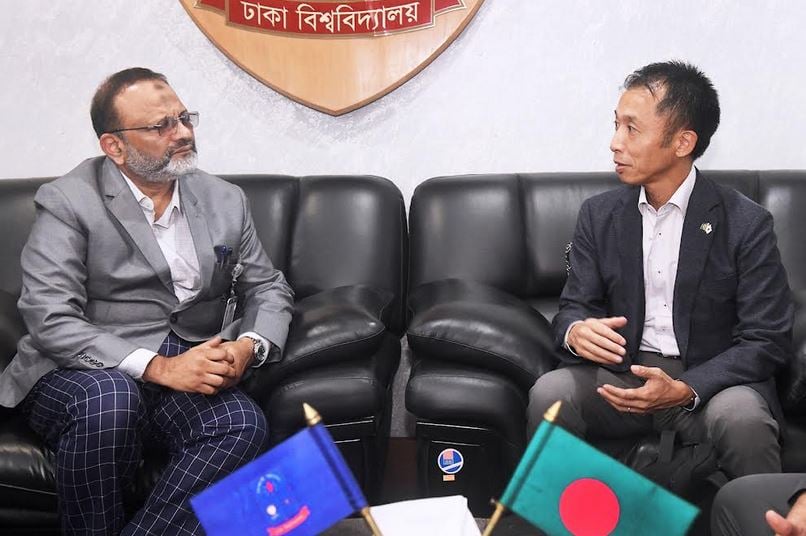
The General Economics Division (GED) of the Planning Commission in collaboration with UNICEF Bangladesh, organized the Dissemination Seminar on publications titled, 'Bangladesh State of The Economy 2025' and 'Sustainable Development Goals Bangladesh Progress Report 2025' held today at the NEC Conference Room in the Capital.
Dr. Anisuzzaman Chowdhury, Special Assistant to the Chief Adviser spoke as the Chief Guest. Dr. Ahsan H. Mansur, Governor, Bangladesh Bank, Shafiqul Alam, Press Secretary to the Chief Adviser, Chief Adviser's Office, Lamiya Morshed, Principal Coordinator (SDG), SDG Affairs, Chief Adviser's Office, Dr. Md. Khairuzzaman Mozumder, Secretary, Finance Division, Ministry of Finance, Md. Abdur Rahman Khan, Chairman, National Board of Revenue (NBR) and SM Shakil Akhter, Secretary, Planning Division, Ministry of Planning spoke as Special Guests. Dr. Monzur Hossain, Member (Secretary), GED chaired the event.
NBR Chairman Md Abdur Rahman Khan said Bangladesh must undertake bold fiscal reforms, especially in VAT and income-tax administration, to safeguard macroeconomic stability and meet future development challenges.
Despite a remarkable rise in revenue collection — from Tk 168 crore in 1972 to Tk 3.78 lakh crore in last fiscal year — he noted that the tax-to-GDP ratio has slipped to around 7 percent, requiring urgent structural correction.
He stressed that misconceptions and sector-specific pressures have weakened the VAT system’s uniformity, but reforms are already underway.
Rahman said the NBR has introduced a policy and amended laws ensuring that exemptions are now granted only by Parliament. Revenue grew by more than 20 percent in the first quarter of FY26, driven by stronger income-tax receipts and mandatory e-filing.
Highlighting the government’s automation initiatives — including VAT refund processing and automated audit selection — he said digitisation across government systems will reduce leakages, strengthen transparency and improve compliance.
He reiterated that reducing cash dependency and separating tax policy from administration would ensure fairness and reduce discrimination, adding that the ongoing reforms will significantly modernise the country’s revenue system.
Finance Secretary Md Khairuzzaman Mozumder said the government’s contractionary fiscal stance has successfully curbed inflation and stabilised macroeconomic conditions.
He said inflation, which soared above 13 percent at one point in the last fiscal year, has now fallen markedly due to import compression, fiscal discipline and raising the policy interest rate to 10 percent.
Food inflation has declined below 7 percent, though non-food inflation remains under pressure, he added.
The Finance Secretary said the budget deficit has been contained at 3.6 percent—well below the conventional 5 percent threshold—reflecting strong fiscal consolidation.
While this temporarily moderated growth and investment, he expressed confidence that a gradual shift toward expansionary policies, once stability is secured, will help regain growth momentum.
He pointed to improved fiscal efficiency through performance-based budgeting, reduced tax exemptions, and increased reliance on domestic revenue, adding that export indicators, though modest, remain stable as the country prepares for LDC graduation.
Chief Adviser’s Press Secretary Shafiqul Alam said that efforts to modernise Chattogram Port, reform in economic institutions and accelerate administrative efficiency will significantly boost competitiveness.
Alam also called for stronger alignment between business associations and national reform priorities, observing that improved port efficiency will directly benefit key sectors such as readymade garments.
He highlighted that macroeconomic stability has improved, and the economic turnaround achieved in a short time has been “historic.”
Professor Mahbubullah, former Chairman of the Development Studies Department at Dhaka University, underscored the need to strengthen governance, rebalance societal power structures and transition from an extraction-based to a production-based economy.
He emphasised long-term reforms to stimulate investment, expand productive capacity and ensure sustainable growth. While expressing concerns over inflationary pressures and supply constraints, he said the country must focus on building incentives for new investment across sectors including pharmaceuticals, ceramics and light engineering.
Meanwhile, Dr Zahid Hussain, former Lead Economist of the World Bank, noted improvements in remittance inflows, revenue mobilisation, electricity supply and resilience to natural shocks.
He said political stability and sustained reform momentum are now crucial, and emphasised that reforms require not just political will but political stamina to translate decisions into visible outcomes.
Professor Mustafizur Rahman, Distinguished Fellow of the CPD, stressed the urgency of strengthening revenue mobilisation and governance to avoid future debt vulnerabilities.
He highlighted recent improvements in macroeconomic stability, the need to reduce corruption and leakages, and the importance of transitioning toward a skill-based competitiveness model ahead of LDC graduation. Rising LC openings for capital machinery, he noted, indicate renewed investor confidence.
Speakers unanimously agreed that Bangladesh has entered a critical yet promising phase of reform, stability and institutional strengthening, and that sustained commitment will enable the country to accelerate growth, ensure inclusion and meet its long-term development aspirations.