News Flash
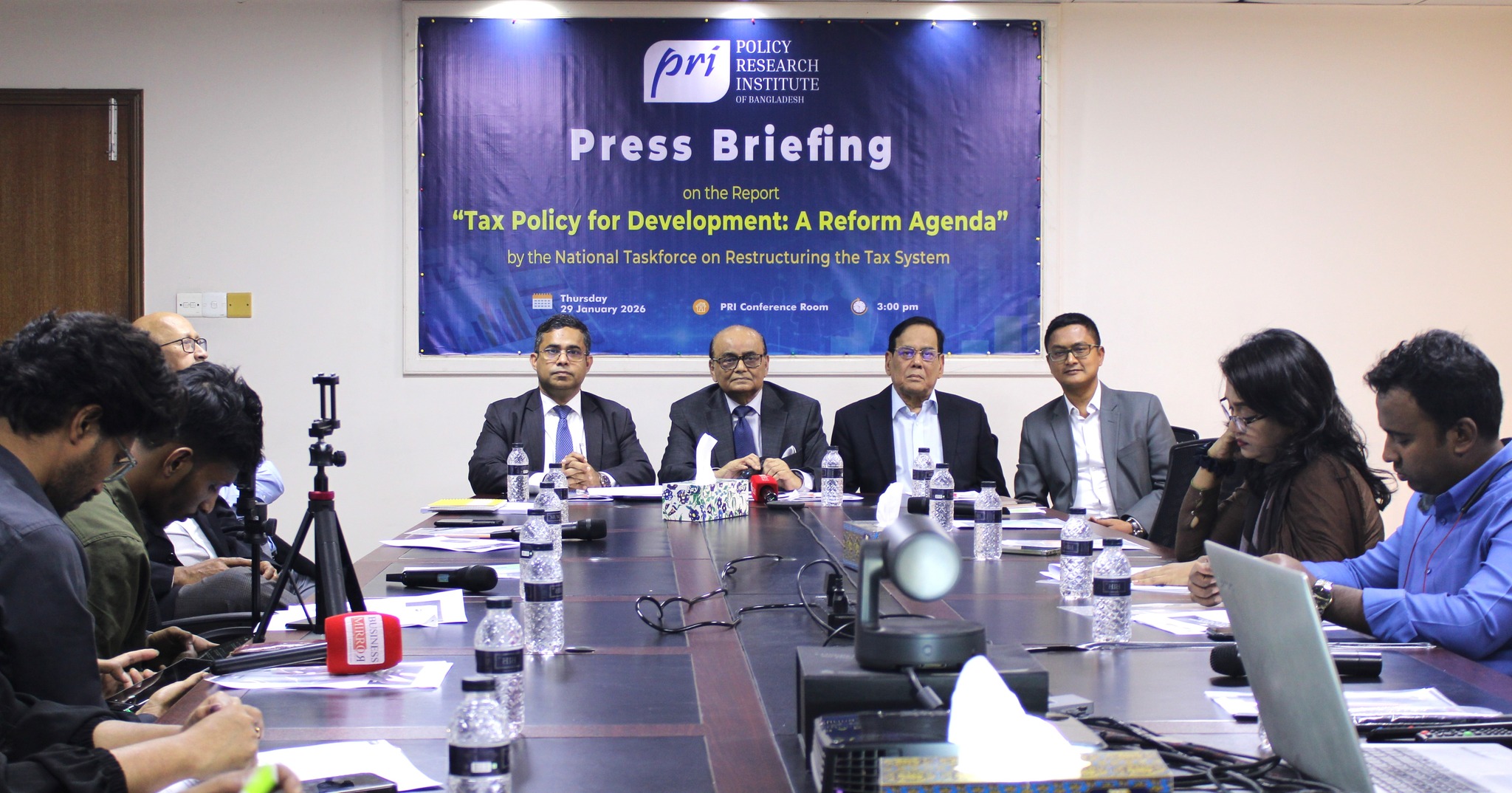
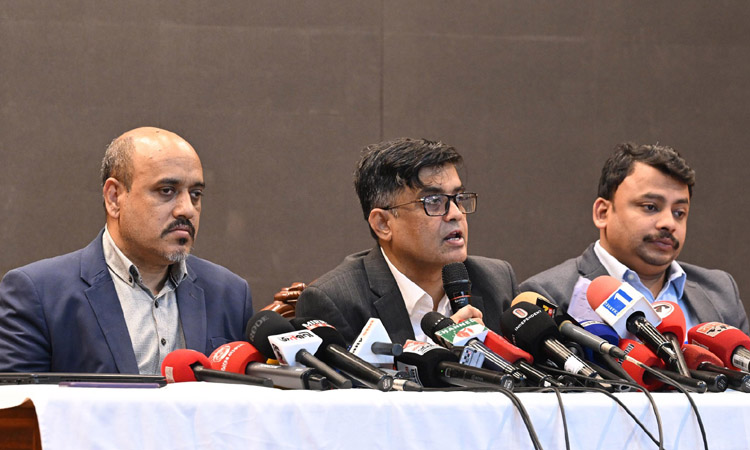
DHAKA, Jan 29, 2026 (BSS) – Dr. Zaidi Sattar, Chairperson of the National Taskforce on Restructuring the Tax System and Chairman of the Policy Research Institute (PRI), today emphasized that Bangladesh needs comprehensive structural reforms rather than incremental administrative measures to secure its long-term economic prosperity.
Speaking at a press briefing organized by PRI to launch the report "Tax Policy for Development: A Reform Agenda for Restructuring the Tax System," Dr. Sattar and Taskforce members presented a blueprint for raising the country's tax-to-GDP ratio to 10-12 percent by 2030 and 15-20 percent by 2035.
Presenting the report prepared for the Ministry of Finance's Revenue Policy Division, Dr. Sattar observed that the current tax system is unnecessarily complex, inefficient, and reliant on manual administration.
Dr. Sattar cautioned that "tinkering at the margins will not suffice".
He argued that when tax policy is incoherent—marked by narrow bases and distorted rates—even strong enforcement delivers limited revenue.
He noted that weak policy design forces tax administrators to rely on discretionary, ad hoc practices such as aggressive audits and arbitrary valuations, which ultimately erode taxpayer trust.
He proposed reducing the indirect-to-direct tax ratio from the current 70:30 to 50:50 over time.
Under this reform agenda, he said, direct taxes are projected to rise from the current 2.5 percent of GDP to 9-10 percent by 2035.
Conversely, the share of trade taxes in total revenue is expected to decline from 28 percent to around 7.5 percent by 2035, he added.
Addressing trade policy, Dr. Zaidi Sattar stressed reducing reliance on tariffs and para-tariffs, pointing out that the current structure creates a strong anti-export bias and discourages diversification.
He recommended eliminating the use of supplementary duty and VAT for protection purposes.
Furthermore, he highlighted that despite investments in the ASYCUDA World automation system, it remains "grossly under-utilized."
He called for enforcing valuation through built-in intelligence and post-clearance audits rather than discretionary practices at ports.
Concluding his speech, Zaidi Sattar asserted that only a coherent, policy-led, and technology-enabled system can deliver the revenue mobilization required for Bangladesh’s transition to an upper-middle-income economy.
Chairman of the Bangladesh Krishi Bank Dr. Mohammad Zahid Hossain, highlighted the inefficiencies in the Value-Added Tax (VAT) system.
He noted that while VAT revenue stood at 2.8 percent of GDP in FY2023-24, exemptions cost the state an estimated 3.6 percent of GDP.
He advocated for a single standard VAT rate and the minimization of exemptions.
Additionally, he said that the report introduced a proposal for a tax on property transfers through gifts or bequests, bringing an inheritance-related tax element to Bangladesh for the first time in over five decades.
To streamline direct taxation, Vice President of the Institute of Chartered Accountants of Bangladesh (ICAB) Muhammad Mehedi Hassan proposed broadening the personal income tax base while reducing the top marginal rate to 25 percent to encourage compliance.
Regarding corporate tax, he recommended a uniform 15 percent rate for firms with equity exceeding 35 percent of total capital to reduce dependence on bank financing.
He also called for repealing the minimum tax on gross receipts, describing it as regressive, and limiting withholding taxes strictly to salaries, interest, dividends, and capital gains.
Among others, Member of the FBCCI Budget Expert Committee Snehasish Barua also spoke on the occasion.