News Flash
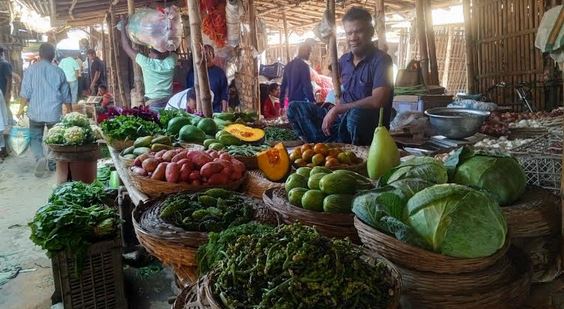
CHUADANGA, March 4, 2026 (BSS) - Prices of all types of vegetables have declined significantly in Chuadanga district markets, offering much-needed relief to consumers during the holy month of Ramadan.
At the beginning of Ramadan, vegetable prices surged sharply, putting pressure on household budgets. However, within a few days of the month's start, prices began to ease as supply improved.
A visit to the town's big market, lower market and rail market on Wednesday revealed that prices of nearly all winter and seasonal vegetables have dropped compared to last week.
Items that saw steep hikes at the start of Ramadan are now selling at nearly half their earlier prices. Paper lemons, which were selling at Taka 60 per four pieces, are now available at Taka 40 per kg. cucumbers, previously priced at Taka 120 per kg are now being sold at Taka 40 per kg.
According to wholesale traders, current prices per kilogram are as follows: onion- Taka 30-35, garlic- Taka 50-60, green chilli Taka 70-75, ginger Taka 130-140, sweet pumpkin Taka 40-45, sajane data (drumstick) Taka 350-400, brinjal Taka 30-40, beans Taka 20, red spinach Taka 10, raw banana Taka 20, tomato Taka 10-20, cauliflower Taka 20, carrot Taka 30, radish Taka 30, red round potato Taka 25, spinach Taka 5, bitter gourd Taka 100 and potato Taka 12-13.
Traders said some of these vegetables were selling at more than double the current rates at the beginning of Ramadan.
While the vegetable market has stabilized, fruit prices have increased due to higher demand during Ramadan.
In the city's fruit shops, apples are being sold at Taka 350 per kg, grapes at Taka 400 per kg, and oranges at Taka 330 per kg. Pineapples are priced at Taka 50-60 per piece, while 5-6 kg watermelons are selling for Taka 400-450 each. Ripe bananas are available at Taka 20-30 per bunch, and guavas at Taka 90-100 per kg.
Depending on the variety, fruit prices have increased by Taka 20 to 50 per kg compared to the beginning of Ramadan.
Raw material trader Duke said prices were initially higher due to a supply shortage. "Now large quantities of vegetables are arriving in the markets, bringing prices down to almost half. Buyers are able to shop according to their needs," he said.
Vegetable trader Siddiqur Rahman said that prices may decrease further in the coming days. He added that many consumers purchased a month's supply at the start of Ramadan, which temporarily increased demand and drove up prices.
Shipon, a customer at the market, said vegetable prices had dropped by more than half within weeks. "When I shopped at the beginning of Ramadan, every vegetable was expensive. Now prices are much lower, although lemons remain costly," he said.
Despite the relief in the vegetable market, consumers-particularly those observing Ramadan-continue to struggle with high fruit prices. Fruit seller Riaz said imported fruits such as apples, grapes and oranges have become more expensive, contributing to the overall price increase.
Market observers believe that if vegetable supply remains steady, prices may stabilize further in the coming weeks, providing continued relief to consumers.