News Flash
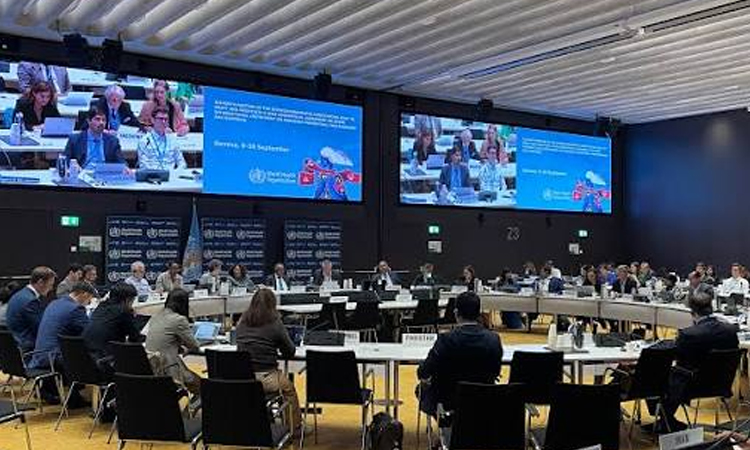
GENEVA, July 20, 2026 (BSS/AFP) - Countries failed to find a breakthrough after a seventh round of talks aimed at finalising the missing piece of a pandemic treaty, the World Health Organization said on Monday.
Wealthy countries and developing nations are at loggerheads over how the agreement, adopted last year as a framework to handle future Covid-like pandemics, will work in practice.
Though the treaty was agreed in May 2025, how its key mechanism would operate was left out to get the deal over the line.
The agreement's Pathogen Access and Benefit-Sharing (PABS) system covers how to share access to pathogens with pandemic potential, then sharing benefits derived from them such as vaccines, tests and treatments.
It was meant to be finalised by May 2026, but progress has been agonisingly slow, and another two weeks of talks at the WHO headquarters in Geneva wrapped up on Friday having produced only some incremental progress.
The eighth round of talks will be held from September 14 to 18.
WHO member states "advanced negotiations" on the PABS annex, "while agreeing that continued discussions are needed to finalise a framework that supports a faster, more effective and equitable response to future pandemics", the UN health agency said in a statement.
The talks streamlined the draft text and focused on technical aspects like the contracts underpinning the framework, the laboratory networks responsible for handling and sharing pathogens and their sequences, and the definition of benefits arising from pathogen sharing, the WHO said.
- Next pandemic 'will not wait' -
"While differences remain, those differences can be bridged if we keep our shared goal in sight: a world where pathogens and scientific information are shared rapidly, and the benefits they generate are shared fairly and equitably," said WHO chief Tedros Adhanom Ghebreyesus.
"The task is vital, and urgent. The next pandemic will not wait. Neither should we."
Ambassador Tovar da Silva Nunes of Brazil, the talks' co-chair, said that "over the past two weeks, we have made meaningful progress on some of the most technically and politically complex elements of the PABS annex."
"The remaining issues are challenging, but we have a clear path to completing this important work."
The pandemic agreement was struck after more than three years of negotiations sparked by the shock of Covid-19.
The accord aims to prevent a repeat of the disjointed international response that surrounded the coronavirus crisis, by improving global coordination, surveillance and access to vaccines.
Countries will only be able to start ratifying the treaty once the PABS annex is complete.