News Flash
By Md Tanzim Anwar
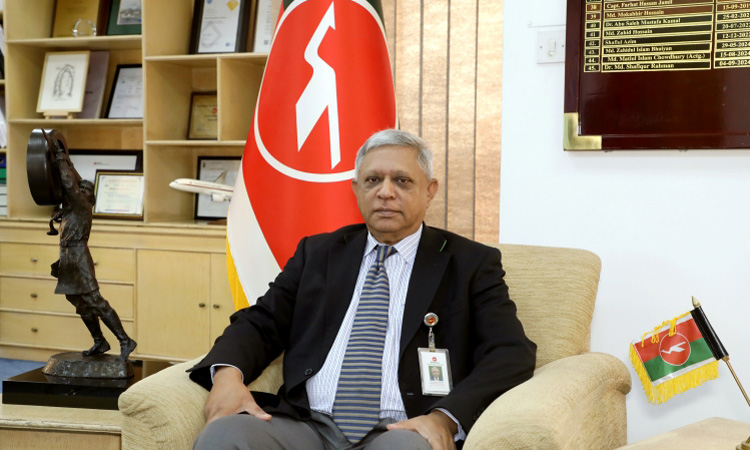
DHAKA, Jan 17, 2026 (BSS) – Biman Bangladesh Airlines Managing Director and CEO Dr Md Shafiqur Rahman has dismissed the allegations of political motivation behind the decision of procurement of 14 Boeing aircraft, saying it was taken on the demands based on operational and commercial grounds.
“The aircraft procurement decision followed detailed assessments of fleet compatibility, maintenance support, financing options, delivery schedules and long-term operational efficiency,” he told BSS in an exclusive interview today.
Rahman said the policy-level approval for the aircraft acquisition was granted by the Biman board at the airline’s Annual General Meeting held on December 30 last, chaired by the Civil Aviation and Tourism Adviser, who also serves as the board chairman.
According to the Biman chief, the approval covers the purchase of eight Boeing 787-10 aircraft, two Boeing 787-9s and four Boeing 737-8 MAX aircraft, subject to price negotiations and financing arrangements.
On future growth, he said, Biman’s expansion strategy focuses on measured network development aligned with market demand and operational capacity and emphasis particularly on strengthening international operations and expanding capacity on routes with strong diaspora and business demand.
Expansion of Biman fleet in the Middle East remains a key priority, considering remittance flows, transit passengers and cargo movement, he said, adding that new routes would be introduced in phases following commercial viability assessments and careful fleet planning.
Responding to a question regarding his achievement, Rahmn said that restoring financial discipline and operational stability during a challenging time of global aviation sector are among the most significant achievements of his tenure.
He said achieving sustained profitability, maintaining uninterrupted operations, improving aircraft utilisation and strengthening internal controls reflected collective efforts across the airline. He stressed that stability and reliability remain as critical as expansion for a national flag carrier.
Responding to the criticism over higher fares and low passenger loads in the past, Rahman said earlier challenges were partly driven by syndicate practices in ticket sales, which created artificial price hikes and reduced transparency.
He said Biman now has ensured transparent online ticketing, improved revenue management and adjusted flight frequencies.
Rahman said Biman’s recent record profits were the outcome of long-term measures, including strict cost control, improved fleet utilisation, route rationalisation and stronger revenue management, alongside support from the Board of Directors and the Ministry of Civil Aviation and Tourism.
He said the airline optimised fuel consumption, renegotiated service contracts, reduced avoidable operational losses and strengthened financial oversight. Demand recovery in key international markets and disciplined capacity planning also contributed to the turnaround, he added.
Addressing jet fuel liabilities, Rahman said the dues were a legacy issue accumulated over many years and that Biman is pursuing a structured repayment approach without affecting day-to-day operations. The airline is currently repaying Taka 25 crore per month while purchasing fuel on a cash basis, he noted.
Regarding the resumption of direct Dhaka–Karachi flight, Rahman said nonstop services would significantly save time and money of the passengers get them free from long transit at Dubai, Doha and Sharjah.
He noted that a nonstop Dhaka–Karachi flight would reduce journey time from up to 13 hours or more to around four to four-and-a-half hours.
Airline officials said the revived Dhaka–Karachi service will initially operate on a trial basis from January 29 to March 30 as a “strategic observation”, during which passenger demand, load factors and commercial performance will be assessed before a final decision on permanence or frequency increase.
Biman suspended the service on the route in 2012 due to sustained losses and low passengers with officials saying the cautious resumption reflects lessons learned from past experience.