News Flash
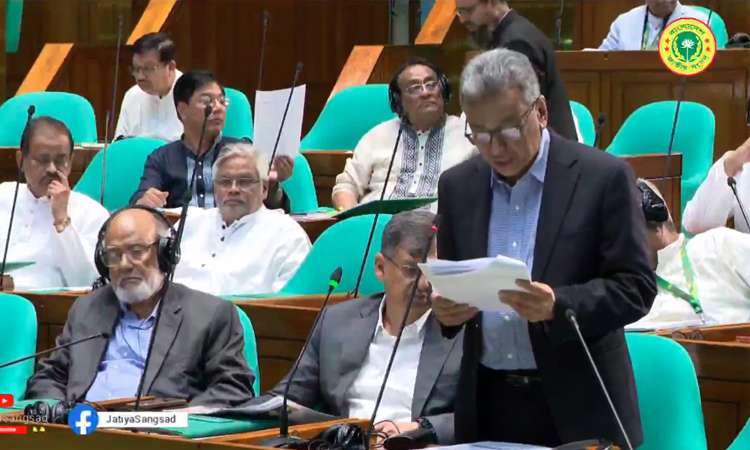
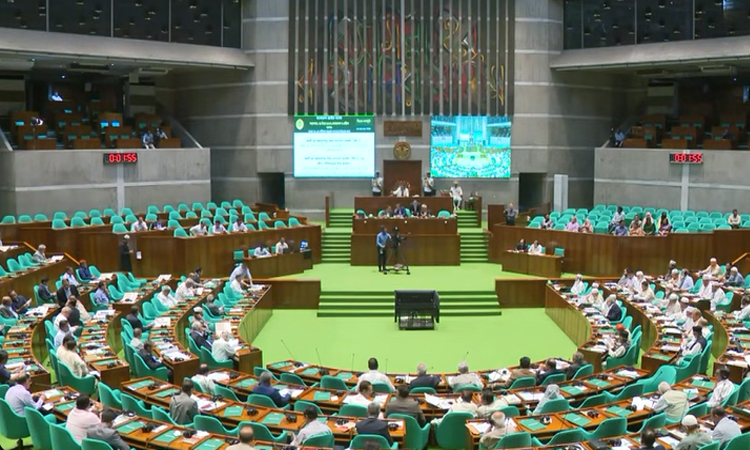
SANGSAD BHABAN, April 10, 2026 (BSS) - Finance Minister Amir Khosru Mahmud Chowdhury today said in Jatiya Sangsad that discipline, stability and good governance in the financial sector are core policy principles of the BNP, adding that financial discipline and stability were always maintained when the party was in power in the past and no major problems were witnessed in the sector.
Khosru made the remarks in parliament while explaining the necessity of the ‘Bank Resolution Bill, 2026,’ which was placed before the House today. Later, it was passed by voice vote.
During the passage of the bill, opposition member from Dhaka-12 constituency Saiful Alam Khan Milon of Bangladesh Jamaat-e-Islami proposed sending the bill for public opinion, opposing its passage. In response, the finance minister delivered a statement outlining the importance and necessity of the bill.
Later, Speaker Hafiz Uddin Ahmad, Bir Bikram, put the proposal to a voice vote, and the public opinion verification proposal was rejected. The bill was subsequently passed by voice vote.
The finance minister said the government would not deviate from its fundamental policy stance and ideological principles. However, some new provisions have been incorporated in the amended bill, which do not change the core policy but open a new window as an “alternative resolution option”.
Khosru explained that the earlier ordinance had no alternative mechanism for bank recovery and offered only limited options.
“Through the amendment, a new provision has been added allowing assets to be acquired and held by existing shareholders or suitable investors before initiating resolution measures, instead of relying solely on liquidation, transfer to a bridge bank or transfer to a third party,” he said.
The finance minister said the opportunity would be open to all, not only previous shareholders, with the main objective of reducing the government’s financial burden.
The minister noted that the government has already injected a huge amount of money into the banking sector and may need more, which is difficult for any government to bear in the current global economic context.
Under the new system, applicants will be required to recapitalise banks and repay previous support received, which will reduce pressure on the government and the deposit protection fund, he added.
He said restructuring bank assets and liabilities and ensuring quick operational recovery would increase the chances of depositors getting their money back, thereby restoring confidence in the banking sector.
The finance minister also said not all shareholders are responsible for bank failures, particularly small investors who are not involved in management.
“Allowing ownership restoration would help protect the financial interests of innocent shareholders and ensure fairness and investment protection,” he said.
Khosru expressed hope that the initiative would boost investor confidence in the capital market and encourage future investment in the banking sector.
Describing the move as a market-based solution, he said problems would be resolved through private sector initiatives and capital injection instead of excessive government intervention, creating a competitive and sustainable framework.
He added that while liquidation often reduces asset value, keeping banks operational and restructuring them would help preserve their real economic value.
The finance minister further said that keeping banks operational would protect employees’ jobs and maintain related economic activities, which is essential for social and economic stability.