News Flash
By Md Rahim Uddin
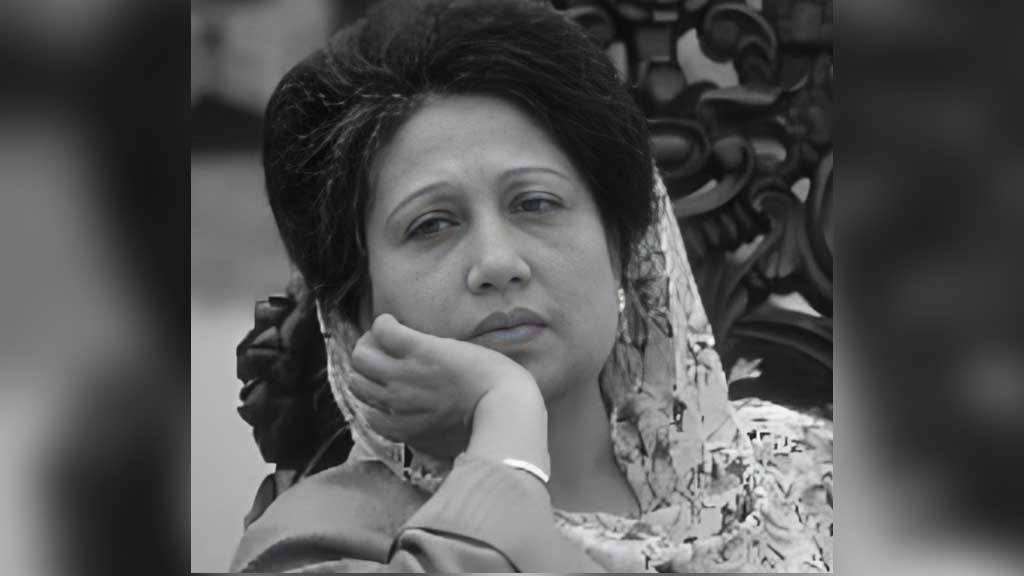
DHAKA, Dec 30, 2025 (BSS)- Begum Khaleda Zia never set out to be a political icon. History, however, had other plans. After the tragic assassination of President Ziaur Rahman in 1981, she was forced into public life from her role as a housewife. She entered the political arena with no formal training, relying only on an inherent quality to lead and an iron resolve that would later define an era.
In March 1983, Khaleda Zia became vice-chairperson of the BNP and in August 1984, the party elected her the chairperson. She was the uncompromising face of the anti-Ershad movement.
Countrymen along with her supporters called her 'Aposh-hin Netri' (uncompromising leader) -- the leader who would not bend. She earned the reputation as she consistently refused to participate in any elections held while Ershad was in power, most notably the 1986 Jatiya Sangsad (JS) elections, declaring them illegal and urging people to resist. To many others, she became 'Deshnetri'. For a younger generation that fought fascism between 2009 and 2024, she was a living symbol of resistance.
Her rise to power in 1991 marked a watershed moment -- the first female prime minister of Bangladesh and only the second in the Muslim world.
Despite barriers, Muslim women such Benazir Bhutto of Pakistan, Khaleda Zia of Bangladesh and Sukornoputri of Megawati of Indonesia reached the highest political position in their respective countries. These three Muslim women made significant impact in regards to gender issues even though they governed for a relatively role models for many women in the world.
During her three terms in office, 1991-1995, briefly after February 1996 election and 2001-2005, Begum Zia made a number of reforms that reshaped the country from making primary education free and compulsory, to offering free schooling for girls up to tenth grade, to pioneering the "Food for Education" programme that brought thousands of children into classrooms.
Economic reform was another hallmark of her leadership. Value Added Tax (VAT), the Privatization Board and the Securities and Exchange Commission -- institutions that helped Bangladesh step into global markets, all took shape under her watch.
After assuming office in 2001, she established the Ministry of Liberation War Affairs for betterment of freedom fighters, the "worthy sons" of the soil.
Her government traced freedom fighter Taraman Bibi and awarded her the state honour "Bir Protik" in recognition of her courage and contribution to the Liberation War.
Her short-lived government in 1996 would still deliver a singularly important democratic reform -- the constitutional amendment creating the non-partisan caretaker system for national elections.
In her tenure she established the Bangladesh Open University and the National University and approved private universities, a milestone in the nation's education.
On the world stage, she pushed for regional cooperation through SAARC (South Asian Association for Cooperation) and cultivated ties with major global actors, including the United States, China and India.
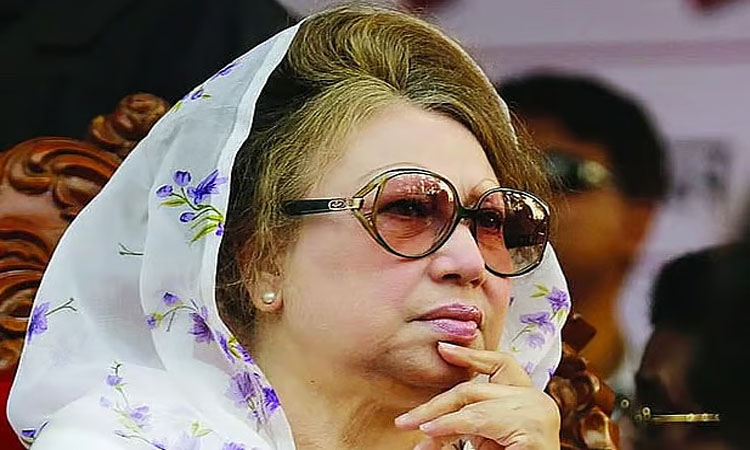
Even in opposition, a role she held twice, her presence loomed large over the country's political view for her unyielding commitment to democratic ideals and the personal costs she bore -- she has been hailed internationally as the "Mother of Democracy."
In 2011, the New Jersey State Senate honored her as a "Fighter for Democracy" for her commitment to the cause.
With her emergence as a leader, Bangladesh has become a unique example of women leadership in politics. One may not find such record in other counties of the world, since women were given political rights to vote and contests in elections just about 100 years ago. In 1991, when Begum Zia addressed the OIC Summit as the first woman head of government it was an unexpected experience for most of the leaders of the Islamic world.
During the Summit, she represented a country that had Muslim majority pollution and Islam was the state religion.
During her 35 years of party leadership, she has committed not only to democracy but also vocal against, amid vast risks, the hegemony that threaded the country's independence, sovereignty and dignity.
Sheikh Hasina's government meted out political persecution on Begum Khaleda Zia and members of the Zia family. In course of her long service to the nation, Khaleda Zia and the country can be said to have become synonymous.