News Flash
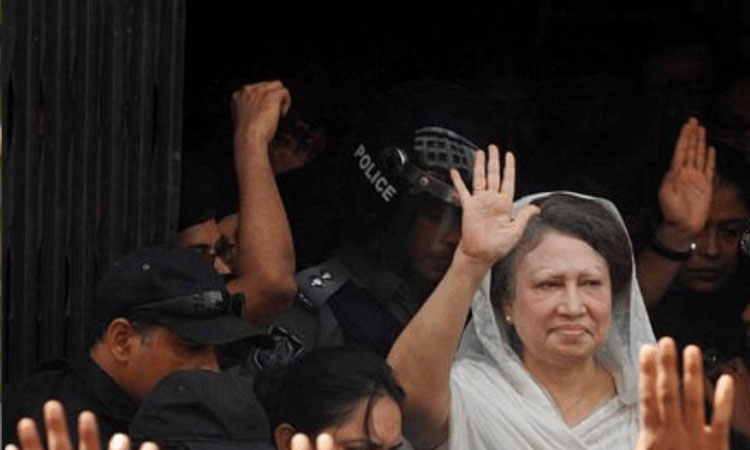
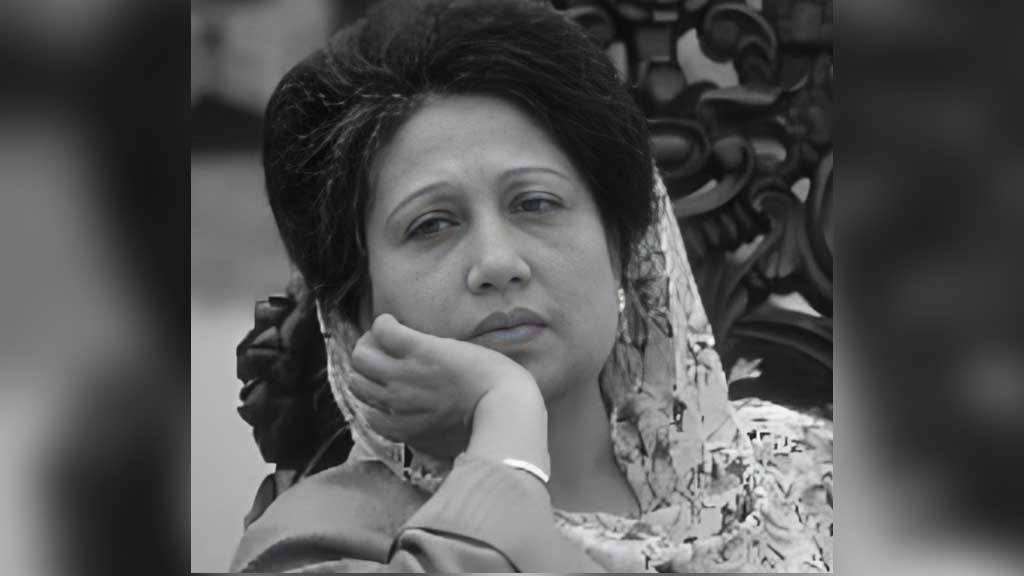
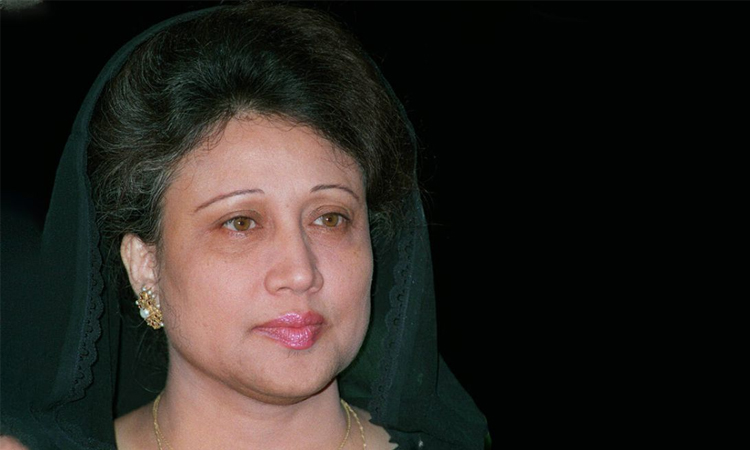
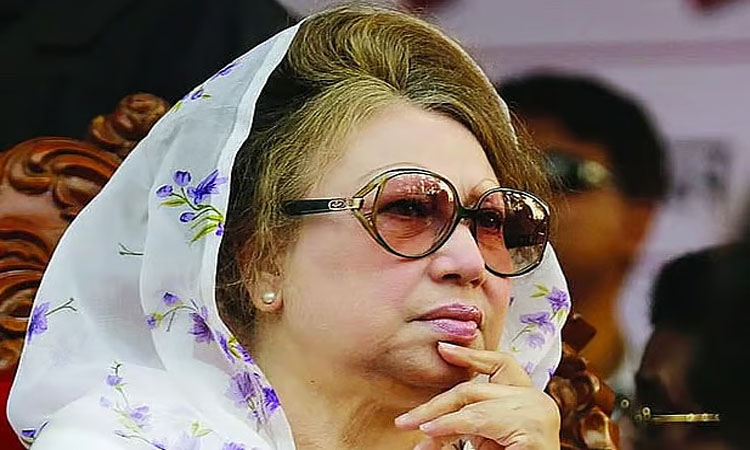
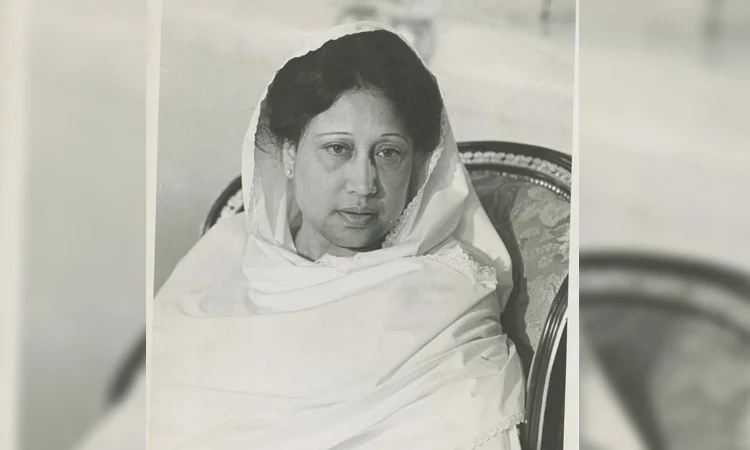
DHAKA, Dec 30, 2025 (BSS) - BNP Chairperson Khaleda Zia's personality is unique; those who have seen her from close have easily acknowledged it at various times. Also, those who have seen her from a far away say that she had a rare character in Bangladeshi politics. Not only for her uncompromising attitude, but also for her immense ability to make sacrifices and bear pain, no one else has such ability. Khaleda Zia inherited such a character from her parents and her husband, Shaheed President Ziaur Rahman.
Senior journalist Nurul Kabir recalled her saying, "Khaleda Zia was powerful due to her popularity."
Dr Sayeed Iftekhar Ahmed, a teacher of the United States public university system, said, "Bangladesh is a very conservative country. Begum Khaleda Zia became the first woman prime minister in the conservative state. She broke the barriers of some of the conventional notions surrounding women. I always feel that she had a big role in the women advancement in Bangladesh."
Late journalist Mahfuzullah, the biographer of Begum Khaleda Zia, said: "After becoming a widow, Khaleda Zia dedicated her entire life to the welfare of the country and its people. She became as a lighthouse to the people of Bangladesh. Begum Zia is a flute player of Bangladeshi politics."
Dhaka University (DU) professor and intellectual Dr Asif Nazrul, an adviser to the current interim government, said: "Khaleda Zia is synonymous with Bangladesh's self-respect".
Writer and researcher Mohiuddin Ahmed said: "The BNP that we have seen today; although its icon is Ziaur Rahman, Khaleda Zia has brought the party to this level."
Khaleda Zia was an honest, idealistic, liberal and modern one; her bold mentality was created from her family environment. Later, it was further developed and strengthened with proximity of Shaheed President Ziaur Rahmad.
Ancestral home of Begum Khaleda Zia was in Feni. Her father Iskandar Majumder was born in Parashuram of Feni. For his studies, Iskandar Majumder went to his sister's home in Jalpaiguri, India, and completed his secondary education there. Iskandar Majumder worked in a tea garden in Jalpaiguri. But, after a few days, he joined the tea business. He was also elected general secretary of the Tea Planters Association. There he met Begum Taiyaba Majumder, whose home was in North Bengal of Bangladesh. Iskandar and Taiyaba got married on March 19, 1937. They had three daughters and two sons. One of them was Begum Khaleda Zia. Khaleda Zia was the third among them. She was born on August 15 in 1945.
Later, Khaleda Zia's father and mother started living in Dinajpur. Iskandar Majumdar began his business there. Begum Khaleda Zia passed her matriculation examination in 1960 from Dinajpur Government School. Then she got admitted to Surendranath College. Khaleda Zia always remembered her school teachers. Whenever she went to Dinajpur, she looked for them. During her school life, the former prime minister of Bangladesh used to participate in various sports. She was good at sports.
Khaleda Zia's mother was a social worker, liberal and progressive one. Khaleda Zia used to go to cinema with her sister secretly without informing it to her father. She had long hair and it was very hard to control those. She used to learn dancing from her sister Nargis. She was so good at this art that she used to go to and dance in various places outside Dinajpur. However, she had to do all this without her father's knowledge. And her mother Taiyaba encouraged her in these activities. Khaleda Zia was close ties with her elder sister Beauty. Even when they did a lot of naughtiness, her father did not notice anything.
And she loved flowers. Her taste was found at various times even during her busy times of running the state affairs. Another thing she learned from her mother was to be economical. Khaleda Zia's mother Taiyaba Majumdar used to save the money that she received as pocket money from her husband. She did not spend unnecessarily. This was the nature of Khaleda Zia too. She also had an impact on dress-up and lifestyle of her two sons -Tarique Rahman and late Arafat Rahman. She did not allow her children's interest in expensive clothes and food. Tarique Rahman and Arafat Rahman Koko had the habit of wearing a few clothes for a long time.
This habit of Khaleda Zia was also found in the state governance. She had no example of unnecessarily taking mega projects or spending huge amounts of money to showcase any government achievement before the people. She always gave importance to solving the basic problems of the people, as she lived a simple life. After her mother, she got the inspiration from Ziaur Rahman to follow this path.
After admission to higher secondary school, Khaleda Zia's education did not last long due to marriage.
On August 5, 1960, she married Ziaur Rahman who was then working as an army officer in Dinajpur. He had liked Khaleda Zia for a long. Ziaur Rahman's mother and Khaleda Zia's mother were relatives. Ziaur Rahman was admired to Khaleda Zia at a family gathering during his childhood. Later, it was known that he used to inquire about Khaleda Zia through letters. After coming to Dinajpur for work, he expressed his desire to marry Khaleda Zia. Ziaur Rahman's father Mansur Rahman wanted to talk about Khaleda Zia's marriage after she completed her graduation, but Ziaur Rahman was strict to do so. Due to his eagerness, Mansur Rahman agreed to their marriage, however he could not be able to present on the wedding day. Begum Khaleda Zia also lost her mother-in-law Jahanara Khatun a year before her marriage.
Khaleda Zia got married wearing her mother's red Benarasi sari. Sister Selima Islam worked on that day as a beautician. Khaleda Zia did not use any cosmetics other than henna on her hands. A very simple wedding ceremony was held. After the wedding, the Zia-Khaleda couple stayed in Dinajpur for a few years. Later, they left for Pakistan for a few days. From there, they came to Chattogram. From there, Ziaur Rahman played the alarm for the Bangladesh Liberation War. Without saying goodbye to his family, he joined the war. He declared the independence. Khaleda Zia was fearless at that time too.
It is known that after Ziaur Rahman 'revolted', Pakistani soldiers came to take away the weapons of the 8th East Bengal Regiment. On the orders of Habildar Quader to bring the directives (from Ziaur Rahman), soldier Nurul Haque rushed to the house of the second in command, Major Zia. Zia was not there. Begum Zia wanted to know what had happened. Upon hearing the incident, Khaleda Zia gave a clear order, "Not a single needle would go out of Sholashar without the order of Major Zia". Nurul Haque rushed to and informed Quader of this news. By then, the Baloch soldiers had loaded their weapons into their vehicles. When Habildar Quader aimed to fire on Baloch's vehicles following Begum Zia's order, the Baloch soldiers left all their weapons behind. As a result, 1,100 soldiers of the 8th East Bengal and Major Zia were saved. If Khaleda Zia did not take immediate decision, the entire 8th Bengal would have been left without weapons. Even, it would have even become difficult for Major Zia to declare the independence and wage the war of liberation.
Later, Ziaur Rahman assumed the state power in the eventful context of 1975. Even during this time, the ordinary lifestyle of Zia and Begum Zia was known to almost everyone.
Then Ziaur Rahman was brutally killed in 1981. Since then, Khaleda Zia had been alone with her two children. She gradually joined the BNP and took the charge of the party. A few years later, the movement against the dictator Ershad began. Khaleda Zia received the "uncompromising title" in that movement. She evaded the police's eyes to avoid arrest, and became the main leader of the anti-dictatorship movement on the streets. Its proof was found in the elections after the mass uprising. Khaleda Zia became the first female prime minister. She did not forget her simple philosophy of life. That is why, even though she was elected prime minister for three times, she did not think about her own wealth. Even though her eldest son entered politics, he was not appointed to any government position.
Khaleda Zia's political life was uneven. In addition to running the state, she was repeatedly persecuted. She was imprisoned on false charges. She was evicted from her house. The younger son of her two children, who were victims of torture, died in exile. Their family never got the opportunity to live under one roof again. Finally, Khaleda Zia left the world after the torture she faced during Sheikh Hasina's dictatorship.
However, the instance of her humanity, patriotism, bold human values, ability to think deeply, and tolerance can be found in history.
Khaleda Zia never bore revenge in her mind. She wanted to build a country with everyone and this was her philosophy. She never went to take revenge for these things. She knew that popularity was her only resort. Its proof was found whenever she vied in elections; she won. Khaleda Zia is a great woman in Bangladeshi politics. She is her own comparison.