News Flash
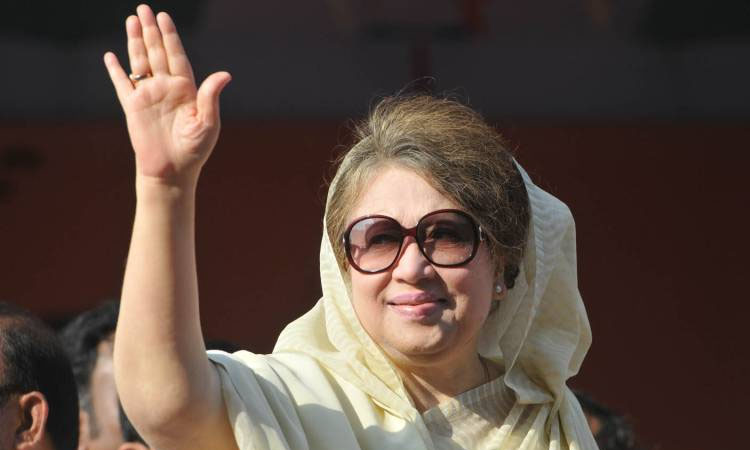
DHAKA, Dec 30, 2025 (BSS) - In the early 1990s, one major debate in Bangladesh was about the free-market economy. After a long struggle against the autocratic regime of Hussain Muhammad Ershad, Bangladesh had just begun its journey toward democracy. For the first time under the parliamentary system, a woman was elected Prime Minister and she was Begum Khaleda Zia. Under her leadership, the government began building the framework for a free-market economy in Bangladesh. The initiative aimed to transform the country into a modern, liberal, and economically vibrant state. However, this effort was widely criticized.
The criticism came mostly from left-leaning and the Awami League circles. During his one-party rule, Sheikh Mujibur Rahman adopted a policy of running industries and factories under government control. Due to corruption, irregularities, and lack of oversight, the economy had collapsed. After Ziaur Rahman came to power, he initiated liberal policies to connect Bangladesh with the modern world.
Later, Khaleda Zia took steps to institutionalize those liberal economic reforms. Pro-Mujib economists, theorists, and politicians criticized her. They argued that opening the market would harm local industries and would not improve workers' living standards. But their criticisms were weak and politically motivated. Had Bangladesh not integrated with the global economy at that time, it would have fallen further behind. The foundation for many later economic improvements was laid by Khaleda Zia.
Another significant event during Khaleda Zia's first term also sparked heavy criticism - "satellite culture." In 1992, Bangladesh entered the era of satellite cable networks. Using new technologies, Bangladesh Television (BTV) began broadcasting programmes from internationally renowned channels like CNN and BBC. This historic moment - when foreign channels first entered Bangladesh - was also made controversial. The debate was mainly initiated by progressive people. They argued that foreign channels would negatively influence Bangladeshi culture, introducing cultural pollution, and that local satellite channels would fail to grow.
Although their arguments had logic, the reality was different. The influence of foreign channels helped Bangladesh develop its own media market. Private television channels emerged using these technologies. The market for television and various other products expanded.
Khaleda Zia could be this farsighted largely because of her liberal outlook. When she formed the government in 1991, her party fell slightly short of the required majority. She had to form a government with the support of an Islamic party. From its beginning, the BNP brought together individuals from different parities and opinions - a model initiated by Ziaur Rahman. Although the political situation during Zia's era was eventful, it was comparatively less complex. In Khaleda Zia's time, global political dynamics had become more complicated. Forming an alliance or government with an Islamic party was risky in that context. But given Bangladesh's historical reality, it was the right decision. By making and implementing this decision, Khaleda Zia was able to protect Bangladesh from major dangers.
One example helps explain this clearly. In 1994, she introduced free education and stipends for rural girls up to the higher-secondary level. As a result, enrollment and retention of girls in rural schools increased. She also initiated the building of new schools for girls, separate toilet facilities, and increasing the number of female teachers. She took steps to make primary education compulsory. Free textbook distribution was her policy initiative. Literacy and adult-education programmes also began under her leadership.
Meanwhile, in neighboring countries-Pakistan, Afghanistan, even Myanmar-religious and political hardliners severely hindered girls' education. In those countries, there were direct attempts to shut down girls' education. Malala Yousafzai is a major example in the case of Pakistan. Afghanistan's situation needs no explanation. The condition of women's advancement and education in Myanmar is also widely known.
But due to Khaleda Zia's foresight, Bangladesh did not fall into such crises. On one hand, she formed a government and alliances with Islamic parties. On the other hand, she entrusted key leadership roles within the BNP to former leftist leaders. The second-highest position in the party under Khaleda Zia was always held by a former leftist. Through this balance, she was able to adopt progressive policies while keeping other political and religious groups included.
In one of her historic speeches, Khaleda Zia said: "We are neither right-wing nor left-wing. Those on our right are the right-wing; those on our left are the left-wing. Our position is to the left of the rightists and to the right of the leftists."
Meaning, she aimed to shape the BNP as a centrist, liberal political force. We can find similarities with the Labour Party in England, although it began through Ziaur Rahman. After abolishment of Sheikh Mujibur Rahman's one-party BAKSAL system, Zia restored multiparty politics-reviving the defunct Awami League and Islamic parties.
He implemented this centrist vision. Both Ziaur Rahman and Khaleda Zia were quiet by nature, believing in "less talk, more work." Of the rare couple, Khaleda Zia governed for a comparatively longer period, and she endured more political persecution, harassment, and propaganda. Yet, her contribution to establishing a centrist, liberal political trend in Bangladesh is the most significant.