News Flash
By Moutusi Jubaida Rahman
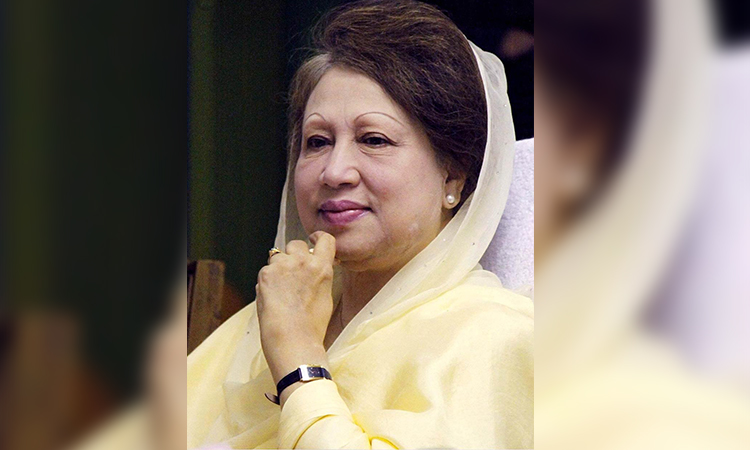
DHAKA, Dec 00, 2025 (BSS) - Respect cannot be gained by force, nor can it be earned through fanfare. It emerges naturally from the people's quiet judgment of one's actions, ideals and character. History repeatedly proves that forced reverence fades, but real respect endures.
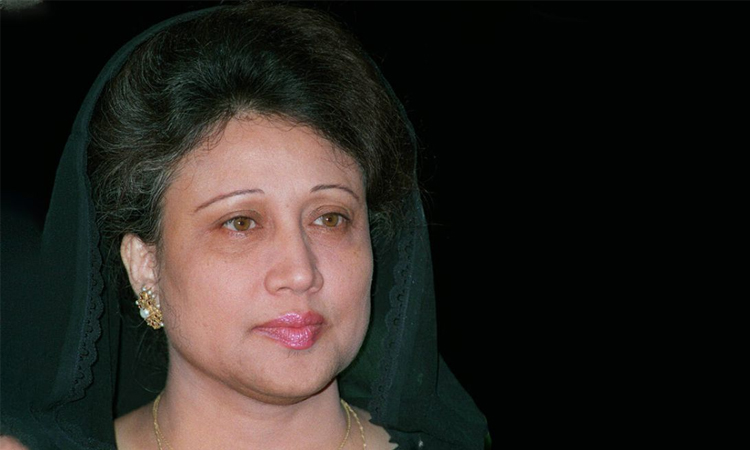
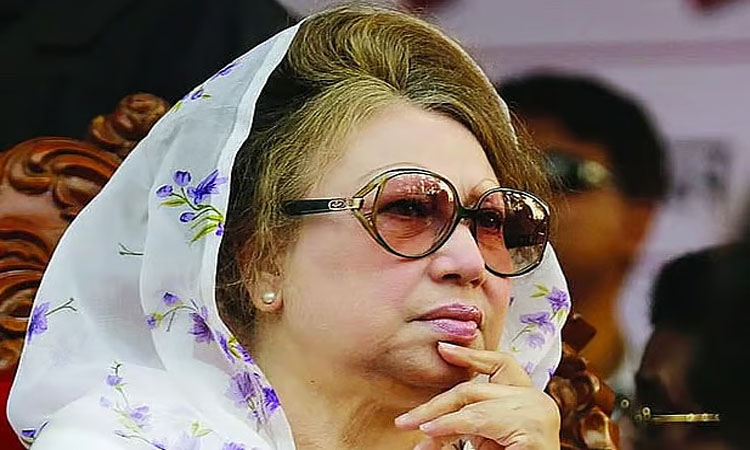
The political life of Begum Khaleda Zia over the past 17 years stands as an evidence to this truth. Yet her commitment, spirit and courage in the face of adversity have earned her a place of honour in the hearts of millions.
Early Life and a Turning Point (1945-1971)
Born on August 15, 1945 in Dinajpur, Khaleda Khanam Putul -- later known to the nation as Begum Khaleda Zia -- was the third of five siblings. Her father Iskandar Majumder was a businessman and her mother Tayeba Majumder a housewife. She began her education at Mission School in Dinajpur.
In August 1960, she married Pakistan Army Captain Ziaur Rahman. The couple lived in West Pakistan from 1965 to 1969 before returning to Dhaka.
Major Ziaur Rahman was serving in Chittagong on the night of March 25, 1971 when the Pakistan Army launched its brutal attack. Khaleda Zia alone in the cantonment with her two young sons -- Tarique Rahman, 5, and Arafat Rahman Koko, one year 5 months -- was detained and later confined in Dhaka Cantonment for five and a half months. Those months passed under constant fear of losing her husband and uncertainty about the fate of her children.
Unwilling entry into politics
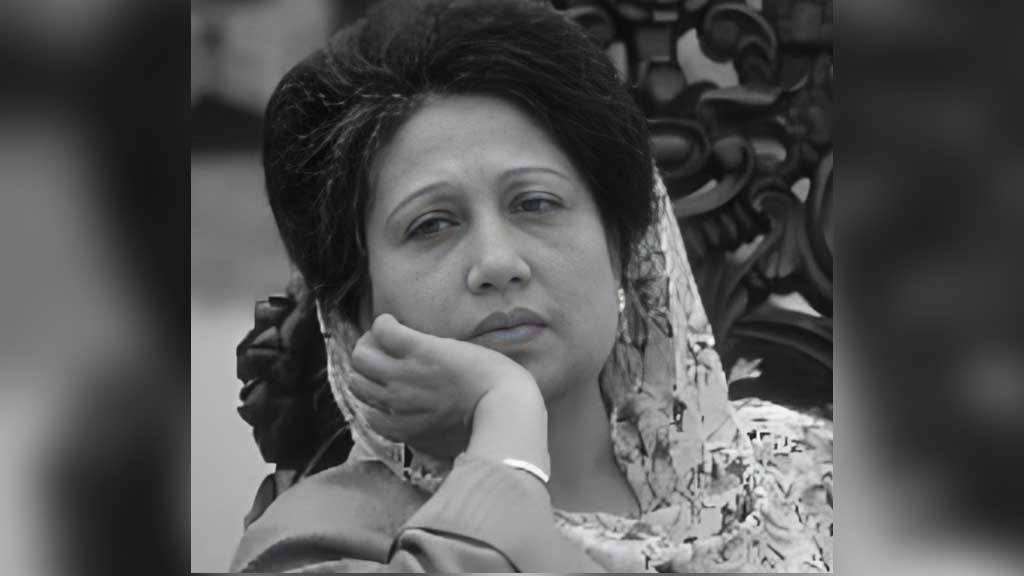
After independence, Khaleda Zia lived a quiet life, focused on her family. Even after the 1975 uprising that brought Ziaur Rahman to power, she remained a housewife who rarely appeared at public events.
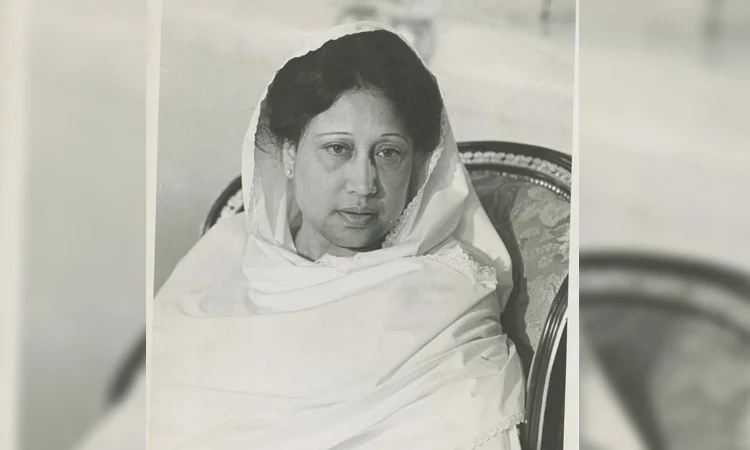
This life changed suddenly after the assassination of President Ziaur Rahman on May 30, 1981. As the BNP plunged into crisis, debates erupted about who would lead the party. According to various political accounts, the ruling circle feared Khaleda Zia's potential influence, despite her having shown no inclination toward politics.
Journalist Shafik Rehman described her then as "a shy housewife preoccupied with raising her two sons." Yet party leaders continued to urge her to take charge at a time of political turmoil.
Khaleda Zia's own unwillingness curtailed from deep grief and fears about the demands of political life, but the pressure persisted. She became Senior Vice-Chairman of the BNP in March 1983 and soon after acting chairperson. On May 10, 1984, she was elected Chairperson of the party and saved the BNP from disintegration, according to political analyst.
Political researcher Mohiuddin Ahmed said that while Ziaur Rahman launched the BNP, it was Khaleda Zia who transformed it into a fully functioning political organisation during the anti-Ershad movement. "The BNP we see today," he wrote, "was shaped by Khaleda Zia."
As the nation's first female Prime Minister, her leadership played a significant role in expanding women's participation in public life.
In her three terms in office, she carried out major people oriented tasks including the compulsory primary education act, free education for girls up to grade ten, establishment of Bangladesh Open University and National University, approval of private universities, expansion of healthcare facilities, electrification and safe drinking water, advancement of telecommunications through cellular and ISD services, over a thousand cyclone shelters built and measures promoting religious harmony.
Economically, her governments advanced Ziaur Rahman's vision by expanding privatization, lowering income tax, streamlining import duties and encouraging a free market economy.
Khaleda Zia also worked to preserve the legacy of the Liberation War. She created the Ministry of Liberation War Affairs in 2001, honoured Bir Protik Taraman Bibi and ensured the state burial of Bir Sreshtho Matiur Rahman after repatriating his remains in 2006.
Years of political turbulence
Awami League government for long has carried out political persecution against Khaleda Zia and her family. Her 2018 convictions in the Zia Orphanage Trust and Zia Charitable Trust cases removed her from active politics and kept her in prison during the 2018 national election. BNP leaders claimed the charges and subsequent restrictions were politically motivated.
Throughout the 2014, 2018, and 2024 elections, BNP and international rights groups accused the government of widespread repression, mass arrests, and curbs on political activity-allegations that raised questions about the fairness and competitiveness of the electoral process.
Her sentence was suspended in March 2020 on humanitarian grounds during the COVID-19 pandemic and later renewed until 2024. After the political turmoil of July 2024, she received a full presidential pardon. She travelled to London for medical treatment in January 2025 and returned in May, though she has not resumed active politics due to fragile health.
A legacy of resistance
To her supporters and millions of general people, Khaleda Zia embodied democratic resistance -- someone who did not waver in the face of imprisonment, legal battles and personal suffering.
They credit her with shaping Bangladesh's political scenario, inspiring millions and breaking ground for women in public leadership.
Her journey from an unassuming housewife to three-time Prime Minister remained a story of resilience, courage and conviction. Beyond political titles, her legacy lies in the message she leaves behind that integrity, perseverance and the pursuit of truth can withstand even the harshest storms.