News Flash
By Maruf Mallick
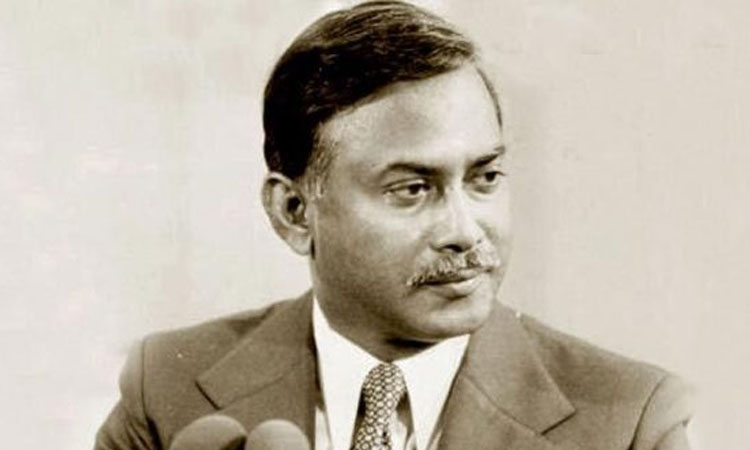
DHAKA, Jan 19, 2026 (BSS) - Shaheed President Ziaur Rahman Bir Uttam promoted liberal politics as he introduced multi-party democracy in the country. His greatest contribution to the politics is that he created a tolerant environment. He restored peace in multi-sectoral politics. He brought back a fair voting environment.
He started politics with the grassroots as he initiated his political programme from the very village. Along with politics, these programmes also had economic and social impacts.
He initiated a new trend in social life and started the work of restructuring the country by starting a center-left social democratic programme. The strong influence of this trend can be seen in his political, economic and social programmes.
Special importance was given to villages along with cities in Ziaur Rahman's national development process. Village development was the main basis of economic development as per Ziaur Rahman's philosophy. This was one of the philosophies of national development. It was believed that the economy would move forward if the overall situation of the village improved.
For the development of rural life, initiatives were taken for agricultural irrigation, canal digging, education, security, development of communication system, provision of electricity, maintenance of fertilizers, seeds and irrigation equipment.
In addition, initiatives were taken to create rural administration through administrative decentralization as there were two such programmes - the Village Government and the Village Defense Force.
Initiatives were taken to establish various social, political and economic institutions at the grassroots level for the development of villages.
The main objective was to increase the involvement of the people in the governance and to take the governance outside the government and political parties, especially to increase the participation of women and youths.
Immediately after the independence, the country's war-torn economy was chaotic and fragile. The policy system of the Awami League and the Baksal government was not very sustainable and suitable for the reconstruction of the economy in a country devastated by war. A centralized somewhat socialist-style economic policy was adopted.
A strong economic, social and political foundation is needed to implement socialist policies. But the overall situation of the country at that time was not suitable for the implementation of socialist economic policies. Socialism was popular as a slogan at that time and revolutions were being organized in various countries.
Jamal Abdel Nasser in Egypt, Muammar Gaddafi in Libya staged coups by talking about revolution. In Chile, Dictator Augusto Pinochet overthrew Salvador Allende. A few days ago, a revolution was completed in Cuba under the leadership of Fridel Castro and Che Guevara.
After the fall of colonialism, the revolutionaries were in the throes of struggle against imperialism and expansionism.
At that time, the revolutionary slogan of socialism shook the whole world. The newly independent Bangladesh could not go beyond this revolutionary spirit. But Bangladesh did not have the ability to accept or implement socialism at that moment. At that time, the policy makers were somewhat imaginary and dreamy.
Without considering anything before and after, they started implementing one economic policy after another. All factories and industries were nationalized. All political parties were banned and a one-party rule was established in the country. But it must be remembered that this was not a dictatorship of the proletariat. Rather, there was exclusive political and economic empowerment of the elite.
The overall situation in the country was not investment-friendly as no savings plan of the then government was noticed.
The country's first five-year plan was practically a continuation of the 4th five-year plan of the Pakistan period. There were no new plans and policies that were people-friendly.
However, the country gained independence through a bloodstained war and the infrastructure was completely destroyed and corruption had reached extreme levels. Inflation and deflation were extremely rampant. Mismanagement, unemployment, and misuse of state resources had increased.
There was a shortage of goods in the market. There was a food crisis. The price of salt had skyrocketed. The situation became deplorable due to smuggling, smuggling of food products, and illegal warehousing. Due to those the country faced famine in 1974. The cause of the famine was a managerial error. There was no shortage of goods.
According to official figures, 26,000 people died in the famine and in Rangpur division alone, 80,000 to 100,000 people died (Armatya Sen, 1986).
Political problems and administrative weakness led to a delicate situation. The economy went into a bad state due to the lack of proper punishment of the corrupt and the abuse of power (Professor Nurul Islam, First Vice Chairman of the Planning Commission).
In this situation, there was great pressure on Ziaur Rahman to restructure the country's economy and bring it to a stable level.
He had two options. Continuing the socialist centralized economic programmes introduced in various countries in Latin America and Africa or building a center-left social democratic economic and political structure following the model of Western Europe.
Ziaur Rahman chose the second path. He opened up the country's politics. He liberalized the economy. But he did not completely give up state control. For this, he implemented a state-controlled free market policy. He was successful in this. The people of the country also quickly benefited. Soon the prices of goods came down to a tolerable level. The supply of goods in the market also increased.
The first thing Ziaur Rahman did was to bring the whole country under one rule. Ziaur Rahman also hoped that everyone would follow the rules and give maximum labor for the country.
During Ziaur Rahman's tenure, the overall growth increased. The government and private sectors achieved significant progress. Agricultural production, especially rice production, increased. The number and production of various mills and textile mills increased.
His policies emphasized fair and equitable distribution of wealth. In the economy, he took the initiative to establish equal rights for men and women based on merit. The main goal was to create a production-oriented economy, increase exports, and improve the standard of living.
There have been a lot of talks about Ziaur Rahman's politics and economic reforms. But what is not discussed much is the environment-friendly development policy. During Ziaur Rahman's tenure, the development policy was adopted considering the character of the Bengal Delta.
Instead of harming the environment and nature, he took up various programs with greater importance. In this regard, the digging of canals can be mentioned. During Ziaur Rahman's tenure, 26,000 miles of canals were dug across the country. The political, economic, and social impact of these canals was deep and far-reaching. Initially, these canals were excellent examples of water management using local technology without harming the environment.
Here, our water comes from upstream. And there is salinity in the south. The canals expanded the area of water flow. They were used as reservoirs in the dry season. However, now we talk about creating water reserves by making a delta plan. Ziaur Rahman showed in 1977 how it is possible to create natural reservoirs across the country at low cost. Canal digging had a direct impact on agriculture. That is why canal digging became a national programme. Along with this, Ziaur Rahman gave importance to social forestry.
Ziaur Rahman suggested planting fruit trees on both sides of every highway, road and footpath in the country. As a result, in addition to maintaining the balance of the environment, the opportunity to eat nutritious fruits was created for the common people.
Ziaur Rahman did not talk about planting trees considering the economic aspect. He also considered its social benefits. Basically, the basis of Ziaur Rahman's plan was to advance development without causing as much damage to the soil, water, nature and environment as possible.
Besides setting the wheels of the economy in motion, the sustainable liberal development policy of the environment-friendly center-left trend took Ziaur Rahman to the people in the field in a real sense. Earlier, leaders used to stay on the stage and on the roads.
This was the first time that a ruler mingled with the common people in the field, canal, and beel. They cut canals together. They sat and ate together. This basically formed the political foundation of Ziaur Rahman.
(The author is a political analyst.)