News Flash
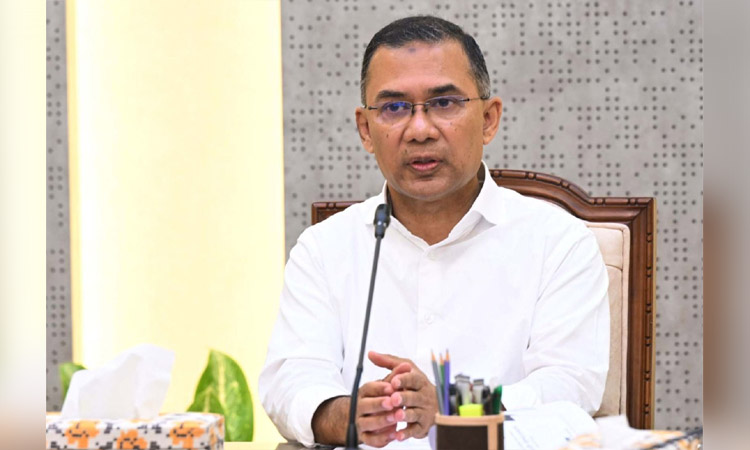
DHAKA, Feb 24, 2026 (BSS) – Prime Minister Tarique Rahman will inaugurate the distribution of the “Family Card” on March 10 on pilot basis with launching the programme in 14 upazilas across the country.
Under the scheme, each selected family will receive Taka 2,500 per month as financial assistance.
Social Welfare Minister Dr. A Z M Zahid Hossain disclosed the information to reporters at the Secretariat today following a meeting of the high-level Cabinet Committee chaired by the Prime Minister.
He said the final decision was taken at the meeting, while the Prime Minister approved the pilot programme based on recommendations made by a subcommittee led by the Finance Minister.
Dr. Zahid said the Prime Minister will formally launch the programme ahead of the Holy Eid-ul-Fitr. Initially, 14 upazilas -- selected from different divisions -- have been chosen for the pilot phase. In each upazila, the card will be distributed on a universal basis in one ward of a selected union.
He noted that the Family Card was one of the key electoral pledges of the Bangladesh Nationalist Party (BNP), and that Prime Minister Tarique Rahman has long been working on the framework of the project. The programme received formal approval at today’s meeting attended by relevant ministers and officials.
Highlighting women’s empowerment, he said the benefit will be provided to the mother or female head of each family. This, he added, will enhance women’s financial independence and positively impact the entire family and future generations.
The Minister said the pilot phase will be completed within four months, after which the programme will be expanded gradually to all upazilas across the country.
Regarding beneficiary selection, he said no lists would be prepared from homes. Instead, information will be collected through door-to-door visits. He emphasized that there would be no political or religious discrimination and that no party activists or intelligence agencies would be involved in the process to ensure transparency.
At the upazila level, the programme will be implemented by a committee led by the Upazila Nirbahi Officer (UNO), while at the union and ward levels, committees comprising government officials will carry out the activities. A first-class gazetted officer will be assigned to each ward for supervision, and a two-tier checking and rechecking system will be in place to avoid errors.
On funding, Dr. Zahid said that as the current fiscal year is nearing its end, the required funds have been allocated from the Finance Ministry’s block allocation. From the next fiscal year, the programme will be incorporated into the regular national budget.