News Flash
DHAKA, Feb 26, 2026 (BSS) - Members of the UK Parliament and envoys from several countries have underscored the urgent need to protect linguistic diversity, describing multilingualism as central to cultural identity, inclusion and peaceful coexistence worldwide.
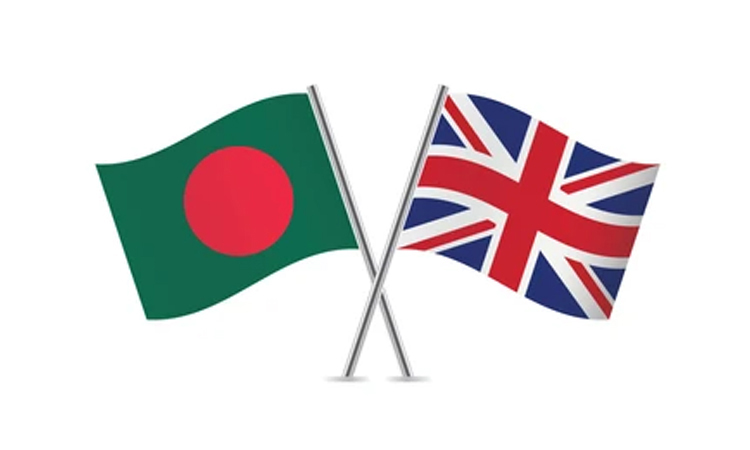
They made the remarks at a programme organised by the Bangladesh High Commission in London to mark International Mother Language Day 2026, held in a committee room of the House of Commons, according to a message received here today.
The event brought together British MPs and Lords, including Rupa Huq, Rushanara Ali, Shockat Adam, Mohammad Yasin and Imran Hussain, alongside Lord Rami Ranger, diplomats and senior officials.
Among the diplomatic representatives present were Ambassador of Costa Rica Rafael Ortiz F brega, Ambassador of Indonesia Desra Percaya, Ambassador of North Macedonia to the UK Katerina Stavreska and High Commissioner of Ghana Sabah Zita Benson. Senior officials from the UK's Foreign, Commonwealth and Development Office (FCDO) and the UK National Commission for UNESCO also attended.
The programme opened with a saxophone rendition of John Lennon's "Imagine", performed by Ambassador Percaya and his colleague Marlon Gabriel.
The session was moderated by Baroness Manzila Uddin.
In her address, Bangladesh High Commissioner Abida Islam reflected on Bangladesh's pioneering role in securing global recognition for International Mother Language Day.
She said the country's Language Movement was instrumental in shaping the international agenda for cultural and linguistic preservation.
Aligning her remarks with UNESCO's theme, "Youth Voices on Multilingual Education," she underscored the importance of multilingualism in Bangladesh and highlighted the pivotal role of young people in preserving and revitalising linguistic heritage.
Delivering the keynote speech, Professor Zhu Hua, Director of the UCL International Centre for Intercultural Studies, emphasised the right of every learner to be educated in a language they understand.
"Mother language learning is a space for intercultural and multilingual imagination for our shared future. Multilingualism is not just about 'being me', it is about imagining 'us'," she said.
Ambassador Rafael Ortiz F brega described the mother tongue as a reflection of identity rather than merely an academic concept.
"Multilingual education strengthens cultural identity, improves learning outcomes and promotes social cohesion," he said, noting Costa Rica's commitment to protecting indigenous languages.
Ambassador Desra Percaya highlighted Indonesia's linguistic richness, observing that more than 700 ethnic and local languages are spoken across the country. "Unity in diversity - diversity is an asset. Unity does not mean uniformity," he said.
Ambassador Katerina Stavreska said North Macedonia's modern state is built on tolerance and shared citizenship, where multiple languages have coexisted for centuries.
"Mother-tongue-based multilingual education is not a luxury. It is a necessity for inclusion, equality of opportunity and sustainable development," she said.
High Commissioner Sabah Zita Benson noted that around 80 indigenous languages are spoken in Ghana and praised Bangladesh's initiative that led UNESCO to recognise 21 February as International Mother Language Day.
"Multilingualism and multiculturalism are not contradictory to unity. They are a source of strength. Let us ensure that no language and no community is left behind," she said.
Lord Rami Ranger recalled that the Language Movement was at the heart of Bangladesh's struggle for independence and said diversity in the United Kingdom is respected and protected by law.
"There are countries that systematically discriminate against people. They cannot move forward," he said.
Other speakers, including British MPs and representatives from the FCDO and UNESCO, echoed similar views, stressing that safeguarding linguistic and cultural diversity is essential for inclusive development, intercultural dialogue and harmonious communities in an increasingly interconnected world.